Escape from the Highway Roadblock
Cry MachoEscape from the Highway Roadblock is the moment Mike and Rafo’s journey north becomes an escape from official scrutiny. Faced with an armed search focused on drivers and passengers, Mike must conceal his alarm, bring Rafo back to the truck, and abandon the highway without knowing whether the authorities are looking for them. The diversion saves them from the immediate checkpoint but leaves both travelers confronting the possibility of jail.
Causes and Background
Mike encounters the roadblock while driving north, about three-quarters of the way to San Luis Potosí. The interruption gathers force gradually: traffic slows, then stops altogether, and a single file of cars stretches hundreds of yards ahead. Drivers have left their vehicles to see what is happening. Mike gets out and wonders whether to walk to the front, but, knowing no Spanish, he cannot readily ask the other motorists what has caused the delay. At last he ambles forward as inconspicuously as he can.
The obstruction is an official checkpoint, not a traffic accident. At the head of the line, a national patrol car and a police motorcycle barricade the road. A policeman and three armed national troopers search the stopped cars. Mike notices that their attention is directed less toward the vehicles than toward the people inside them. The distinction changes the meaning of the scene: the danger is not simply that his truck might be inspected, but that he and Rafo might be identified.
Mike considers that the authorities could be looking for a boy, though he cannot know that this is their purpose. His suspicion connects the checkpoint to Lexa’s earlier threat to keep watch over him. He has seen no sign of Pacas for several days and has even forgotten about him, but now recognizes that Lexa never specified who would monitor him. The possibility makes him reassess how seriously he should have taken her warning; it does not establish that Pacas or Lexa arranged the roadblock. The uncertainty itself is what makes the search dangerous: Mike has to act without knowing what the officials know.
Recognition and Reunion at the Truck
Mike feels an urge to run back to the truck, but resists it and keeps walking. As he approaches, he sees Rafo coming toward him. The sight sharpens the immediate risk: if the officials notice the boy, Mike’s attempt to take him away could be exposed. He keeps his pace steady rather than letting his anxiety show.
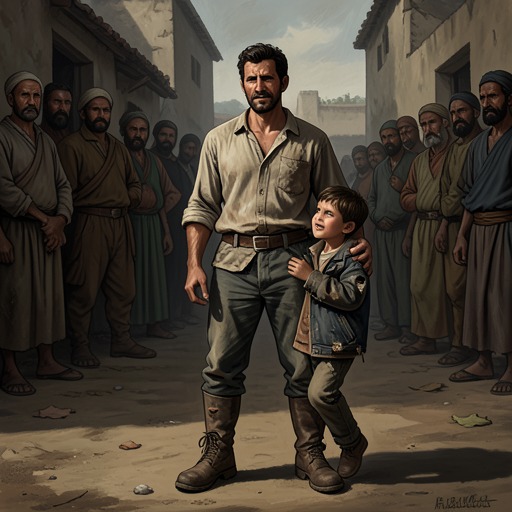
When Rafo gets close enough, he asks why the traffic has stopped. Mike answers that he thinks Rafo is the reason, then responds to the boy’s concern that he might be in trouble for stealing a rooster. Mike knows the more serious word—kidnapping—is too dangerous to whisper there. Instead, he points to the truck and quietly orders Rafo to get in. The command brings their conflict over Mike’s authority into the open: Rafo turns toward him, ready to resist, but a policeman’s sharp whistle from the front of the line changes the balance. Rafo hastily climbs into the back.
The Turn Off the Highway
Mike starts the engine but does not drive off at once. He has to judge whether they are far enough from the barricade to escape notice, and the text leaves that judgment uncertain. He backs up a few feet, coming close to the car behind him, turns the wheel outward, and begins a U-turn on the highway. The maneuver is improvised in the stalled line, where the stopped traffic both obstructs him and gives him a moment to attempt the turn.
A commotion in the back of the truck follows. Rafo is suddenly standing beside Mike, close enough for Mike to feel his breath at his neck, and asks what he is doing. Mike tells him to get off the main road and use the back roads. Rafo objects that the route will be rough; Mike answers by setting the discomfort of the bumpy road against the more frightening prospect of jail. Their exchange makes the choice plain without resolving whether either of them will actually be arrested.
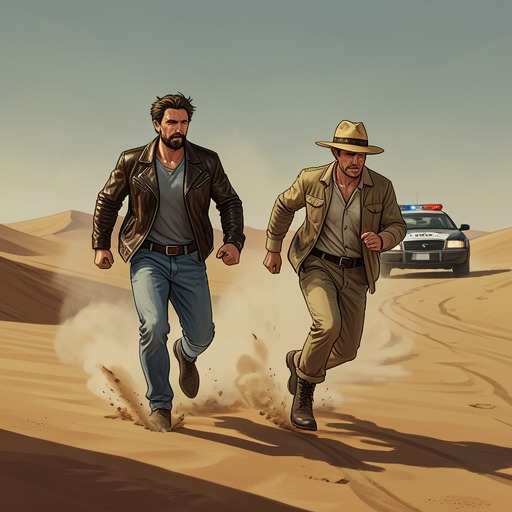
Once they are well away on a dusty back road, the truck jolts along exactly as Rafo predicted. The physical cost of the escape is immediate and concrete: the smoother highway has been exchanged for a road that bumps beneath them. Only after they are underway does Rafo more openly reveal his anxiety, asking whether Mike thinks he will go to jail. Mike admits that perhaps both of them will. Their escape, then, is not a declaration that the danger has passed; it is a move away from the checkpoint into a less certain situation.
Consequences and Narrative Significance
The episode turns a journey north into a partnership under pressure. Mike makes the decisive choices—returning to the truck without running, summoning Rafo without naming the peril aloud, and turning away from the highway—while Rafo’s presence makes those choices harder to conceal. Their exchange also shows that the authority between them is not settled: Rafo is prepared to dispute Mike’s command, yet responds when the whistle makes delay dangerous.
The scene’s tension depends on divided knowledge. Mike sees the officials examining people and suspects the boy may be their target, but the reason for the search remains unconfirmed. He cannot question the other drivers in Spanish, cannot safely name kidnapping, and cannot be sure the truck is beyond notice. The brief, practical directions and the rough road carry the action forward where certainty is unavailable. By the time Rafo asks about jail, the escape has succeeded only in the narrow sense that they have left the blocked highway; their fear, and the possibility of pursuit, travel with them.