Howard Polk
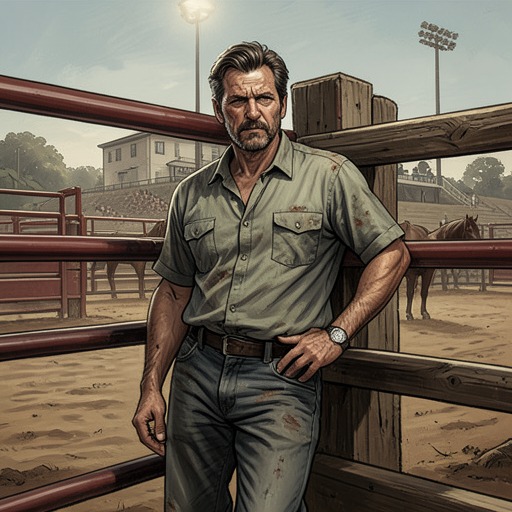
Cry MachoHoward Polk is the rodeo owner whose managerial success depends on seeing through the cowboy myth, even as his stadium sells that myth back to its audience. To the men who work for him, he is both an outsider who does not understand their world and a hard-minded operator who makes their performances profitable. His conflict with Mike Milo grows from the same tension: Howard recognizes Mike’s value, but treats him as labor to be managed; later, he asks Mike to take Rafo from his mother as leverage in a dispute over wealth and property.
Background and Arrival
Howard first appears to Mike Milo in a new, custom-built Mercedes, its copper-and-gray finish echoing the color of its owner’s hair. His arrival at the stadium is unusual: he normally keeps to the evenings, but now comes to a Sunday matinee after learning that Mike has not appeared. The visit signals that Howard is attentive to the operation and ready to confront a problem, while Mike anticipates that the owner will be angry. Howard’s polished car and his manner mark him as a conspicuous contrast to the rodeo workers around him.
His authority at the stadium followed the collapse of the resident rodeo company established by the Macmillan Brothers. They had tried to sustain a regular show in a town too small to attract the major rodeos consistently, and the company failed after Mike had spent eighteen months as a salaried rider. The mortgage holder took control; that mortgage holder was Howard. He was an Eastern outsider, tailored in New York and educated at an Ivy League institution, with little command of rodeo vocabulary. He used terms the cowboys considered wrong, calling a bronc a bronco and the cattle pens paddocks. Their contempt for his ignorance, however, did not prevent him from taking charge.
Management and the Rodeo’s New Image
Within two years of Howard’s takeover, the resident company was performing every night except Monday as well as on weekends. His success did not win the cowboys’ affection. Instead, he challenged the identity they had built around their work: if they wanted to compete at the highest level, he argued, they should enter the competitive circuit; their salaried place in the resident company showed that they lacked either the ability or nerve for that struggle. In his account, they were performers rather than cowboy heroes. The distinction punctured the men’s preferred self-image, recasting a world of spurs and competition as staged entertainment.
Howard made that managerial view tangible through rules and pay. Less than a month after taking over, he required the cowpunchers to sign an attendance ledger every half hour, ending their tolerated lateness. The men resented the procedure but complied. Mike Milo alone refused to sign, and Howard did not immediately challenge him. The eventual confrontation came through a twenty-five percent salary reduction imposed on everyone. No one left. Mike disliked the cut, but feared returning to the competitive circuit more; Howard kept him on, while Mike accepted the reduced pay. Each read the other’s restraint as weakness, leaving their uneasy balance intact rather than resolving their hostility.
The stadium’s public face made the tension between work and performance visible. A large banner bore the name Polk’s Cow Stadium, and a huge photograph showed Mike Milo on a rearing bronc, hat raised and grin fixed for the audience. The announcer later introduced him as the rodeo’s star, emphasizing his National Finals victory, Dallas Buckle, and Cattlemen Trophies before the Ride-Out. The show presented him as a champion even as Howard’s judgments reduced the resident cowboys’ heroic claims to a professional act. Howard’s business relied on the spectacle he demystified: the cowboy image remained useful as entertainment, even when he insisted that the men behind it were actors.
Howard and Mike Milo
Mike Milo cannot settle on a single view of his employer. At times Howard seems to him like a dilettante treating the rodeo as a parlor game; at others, he appears driven to make a success of an enterprise everyone expected to fail. Mike suspects that financial loss may have intensified that drive, though the account he hears of Howard’s past remains rumor: a divorced wife was said to have taken a considerable fortune and to be somewhere in Mexico. Mike’s uncertainty extends beyond Howard’s competence. He can begin to respect the owner’s imagination and ability, then recoil from him, distrusting a frankness that seems designed to cut people down.
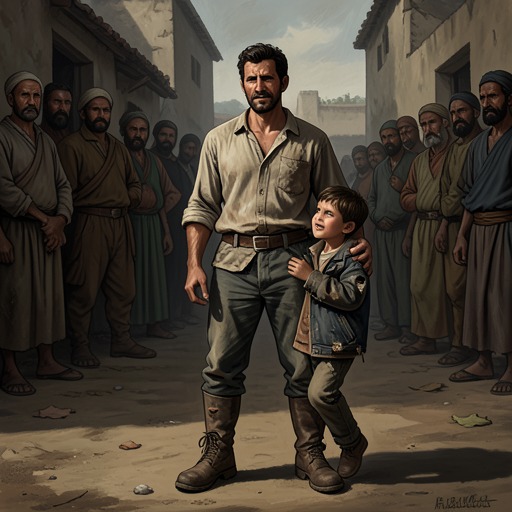
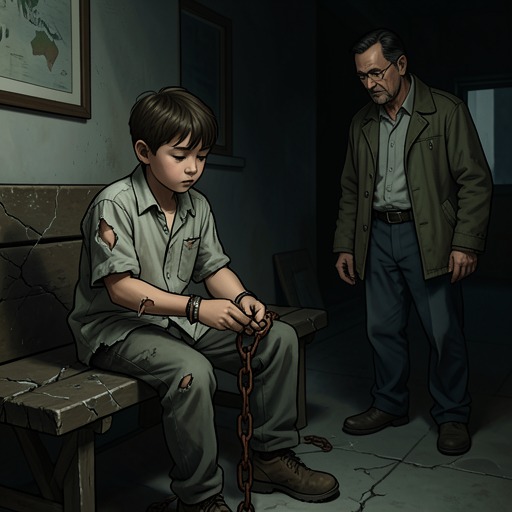
That history of mutual suspicion shapes Howard’s later visit to Mike’s room. Howard has never visited him before, and his arrival initially leaves Mike perplexed. He then calmly asks Mike to take Rafo from his mother. Howard frames the request as a way to recover what he considers his own and to force a return to negotiations. The proposal turns their employment relationship into a more serious moral conflict: Howard asks Mike not merely to perform a rodeo task, but to act in a family and financial struggle that Mike does not fully accept on Howard’s terms.
Marriage, Money, and Rafo
Howard tells Mike that he met his Mexican wife in Texas while both were traveling. They married, had a son, and lived first in Dallas and later in New York. During the marriage, Howard made substantial investments in Mexico City. Because he says Americans could not own property there, he placed the investments in his wife’s name. He describes the arrangement as a consequence of having believed their marriage would last, and says that although the marriage ended, the real-estate and mining-company contracts remained in place.
Howard says he has nothing his former wife wants in ordinary negotiations, whereas taking Rafo from her would make her return to the bargaining table. His explanation presents the son as leverage in a dispute rooted in property and the aftermath of divorce. It also complicates the image of Howard as simply a coldly competent businessman: the very frankness Mike distrusts exposes Howard’s resentment, but does not make his proposed means fair or harmless. The evidence establishes the request and its financial motive, not what Howard ultimately achieves through it.
Narrative Role and Significance
Howard embodies a contradiction within the rodeo’s public image. He is an outsider to its traditions, yet he makes the resident show commercially successful; he mocks the cowboys’ heroic self-conception, yet depends on their bodies and reputations to stage a popular spectacle. The banner, poster, and announcer’s grand introduction give the cowboy a theatrical prominence that Howard’s management philosophy simultaneously undercuts. His success therefore does not restore the old ideal so much as turn it into a more regular and organized performance.
That contradiction resonates with Mike Milo’s later response to the language of macho. Watching a cockfight, Mike connects the praise of toughness across animal contests and human arenas, then recognizes the cruelty hidden inside the heroic label. He thinks of the years he gave to arenas and of his willingness to return to breaking wild horses for money. These reflections do not make Howard the cause of every injury or loss in the rodeo world, but they sharpen the significance of his business: the spectacle can celebrate courage while treating risk and violence as part of the show. Howard’s role is to expose the cowboy myth as performance and, at the same time, to profit from keeping that performance alive.