Howard hires Mike to bring Rafo back from Mexico
Cry MachoHoward Polk hires Mike Milo to bring his son Rafael Polk back from Mexico, setting the novel’s journey in motion through a bargain that is at once presented as a father’s exercise of visitation rights and acknowledged as a kidnapping. Howard offers money, a vehicle, and a legal rationale; Mike sees the danger to himself and, more troublingly, the possibility of violence against a child. His departure does not resolve that conflict: on the way to the border, a small missing object becomes a test of whether he is willing to carry out what he has agreed to do.
The Visit and the Request
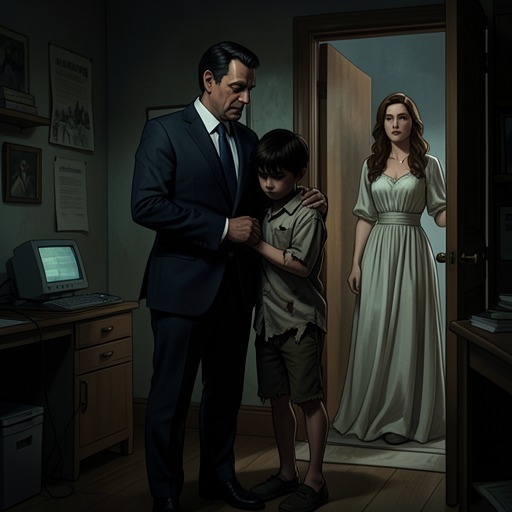
Howard appears at Mike’s apartment at night, standing outside the open door long enough that Mike does not hear him. Mike, alone and preparing for bed, is certain the indistinct figure in the darkness is a robber. The visitor turns out to be Howard, whose unexpected arrival shifts the scene from the immediate prospect of a break-in to a different kind of intrusion: a proposal that will enlist Mike in a dangerous act.
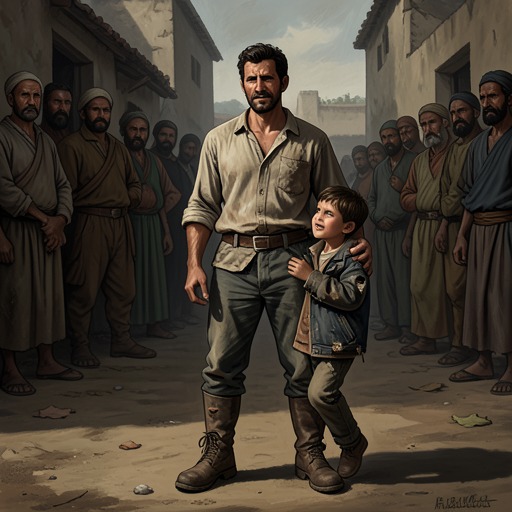
Howard asks Mike to look at a photograph. In the light, the snapshot shows a handsome, well-dressed and well-fed young boy, about six when it was taken. Howard identifies him as his son Rafael and says he is now about eleven. The photograph gives the request a human and particular object: Howard is not asking Mike to retrieve property, but to take a child from his mother. When Howard plainly tells Mike he wants him to kidnap the boy, Mike immediately asks whether this means taking him from his mother. The blunt wording strips away the euphemism before Howard can define the plan on his own terms.
The Bargain and Its Contradictions
Howard says he has spent more than two hundred thousand dollars in legal fees and argues that having Rafael with him would cost less. He offers Mike fifty thousand dollars. Mike refuses, and Howard presses him to name a price. The size of the proposed payment is not merely a reward: Howard later presents it as a stake that could help Mike through a difficult period, establish his own business, and find a new place for himself. The offer thus combines a practical appeal to Mike’s precarious prospects with pressure to accept a job he has already identified as kidnapping.
Howard’s choice of Mike carries its own contradiction. Mike recognizes that Howard has selected him because his honesty makes him suitable for a dishonest task. Howard tries to narrow the moral and legal meaning of the operation, saying that he is not sure it is illegal and describing Mike’s role as escorting a son back to his father. But Mike’s response focuses on the likely consequences if Mexican authorities catch him: Howard, he says, would keep his own hands clean and leave Mike exposed. Howard confirms that he would have to do so at least until the boy reached the United States. The arrangement therefore places the operational and legal risk on the hired man while preserving Howard’s distance from the act.
Mike rejects Howard’s attempt to make the plan sound harmless and tells him the boy will not be brought north by him. He is angry enough to threaten to hit Howard and kick him down the stairs. Howard answers not with a changed plan but with a pointed account of Mike’s vulnerability: without money or a secure future, Mike could slide back into the damaging life of other rodeo riders. The appeal is coercive as well as practical. Howard’s fifty thousand dollars is described as a chance to recover, giving Mike a reason to listen even after he has refused.
From Proposal to Departure
Howard’s pressure is paired with preparation. He has bought a panel truck for Mike to drive south on vacation, a vehicle chosen to look unobtrusive despite its extra power. The new truck is dark blue, conservative in appearance, and fitted with dual carburetion. Its ordinary color and enhanced performance embody the practical logic of the job: it is meant to pass unnoticed while being capable of the trip. Mike finds it pleasant to drive, a detail that makes the vehicle’s usefulness real without removing what it is being used for.
By the time Mike leaves, a day has gone by in a flurry of arrangements. He checks the truck and papers, sells his Porsche, and closes his apartment. These tasks occupy him so completely that he has not faced the moral question directly. His departure for Mexico shows that Howard’s offer has moved beyond a late-night proposal into action, although the evidence of that preparation does not erase Mike’s unresolved objections.
At dawn, Mike reaches the crossing between Laredo and Nuevo Laredo. Four vehicles are ahead of him, only one booth is open, and the border official and guard inspect the cars and documents carefully. Mike has spent nearly a day ensuring that his papers are in order and believes he carries no contraband. The exception is the 3-IN-ONE oil can containing Acetoform, whose presence makes the crossing feel vulnerable even before the border officials reach him.
The Missing Can and the Moral Threshold
After stopping, Mike opens the back of the truck and checks the toolbox: the oil can is gone. Recovering it would mean turning back to where he had parked, and at first the practical inconvenience seems minor. What unsettles him is that he debates whether to retrieve it. He suspects that leaving it behind may be a deliberate way of laying the groundwork for failure, as though he were creating a trail of carelessness that could make the mission collapse before he has to carry it through.
The forgotten object brings into focus what the preparations had postponed. Mike recognizes that unless he faces his responsibility, he may botch the job and leave evidence behind; he also understands that he can still withdraw before committing an act that might torment him or send him to jail. Howard has shown him divorce papers granting two months of visitation during school holidays, an arrangement Howard’s former wife has not consistently honored. That claim gives the mission a legal rationale, but it does not settle the moral question for Mike. His mind turns to the methods the word kidnapping implies: chloroform, tape over a boy’s mouth, and violence directed at a child. The hiring episode therefore ends not with a clean acceptance of Howard’s justification but with Mike confronting the possible human cost of the journey he has begun.