Janasco
Cry MachoJanasco is the town where Mike and Rafo’s journey north pauses long enough to become more than an escape. They arrive while trying to evade the police, but the place draws them into encounters with its residents, its poverty, and the wild horses of the mesa. Mike cannot imagine settling there, yet the detour becomes precious in retrospect: a difficult stretch of the journey that neither man would want to have missed.
Setting and Townscape
Janasco first appears at daybreak from the bus. Its main street is narrow and irregular, limiting the view ahead and making the town seem smaller than it is. Dust gives it a dry appearance, as if spring rain had not reached it. The public streets reveal only part of the place: the town’s greenery, modest squares, fountains, and flowering gardens are withdrawn from the traffic of touring buses, while its small shops make little display of their wares.
The fishmonger’s is an exception in visibility. Its trays have been filled with fish brought from different parts of Mexico, and a truck loaded with bananas stands outside the produce store. These details give Janasco a local economy of small shops, food, and daily deliveries rather than the grand public spectacle associated with Mike’s former life in rodeo arenas. Its streets are a setting for ordinary trade, but they also become a temporary route and hiding place for two fugitives.
Arrival and the Journey Through Town
Janasco is the destination named by the driver of the crowded bus carrying Mike and Rafo. The driver demands thirty pesos from each of them and threatens to put them off if they cannot pay. Mike asks Rafo to tell him that they will give what they have, and that Rafo’s wealthy grandmother will meet them in Janasco and pay the rest. The appeal combines a promise of money with a prayer; it is an improvised effort to keep moving toward the town rather than be stranded on the road.
The bus reaches Janasco shortly after daybreak. Rafo gets off first and calls back into the bus to announce that they have arrived safely. The other passengers, including elderly people and children, disembark before Mike, who helps encourage the still-intoxicated driver to get out as well. The scene establishes the town as a point of arrival shared by travelers with different circumstances, even as Mike and Rafo remain preoccupied with their escape.
Their pursuit later reaches the main street. A truck carrying horses stops outside the fishmonger’s, and several men climb out, calling to one another and laughing. The fishmonger’s thus serves not only as a marker of local commerce but as a conspicuous place in the boys’ effort to recover what has been taken from them. Janasco’s public streets repeatedly bring the fugitives into view, requiring them to manage the risks of remaining there.
The Town and the Mesa
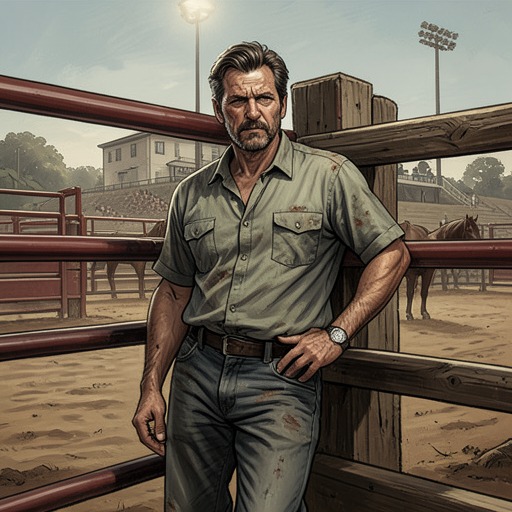
The Janasco mesa makes the town a base for Mike’s attempt to catch wild horses. He reasons that mustangs run toward open tablelands, and the surrounding high ground becomes the landscape in which he and Rafo try to find them. Mike eventually jumps onto a white mustang and holds on as it tries to throw off its burden. The capture matters practically: after realizing that his rodeo career no longer gives him a place or income, Mike thinks of breaking wild horses to earn enough money to leave.
The work is uncertain. After one horse has been captured, the herd seems to have abandoned the mesa. Mike and Rafo see no mustangs through the day or night. On their third day in Janasco, they find four horses together, but cannot bring the truck close enough; the animals scatter before they can catch them. Mike decides that their next attempt should use ropes. The delays make the mesa a place of labor and frustration as well as open country, and show how little control his old skills guarantee outside the arena.
The mesa also offers temporary shelter. While Rafo sleeps at the Santa María shrine on the mesa, Mike keeps watch outside. The shrine and surrounding tableland sit alongside the town’s populated streets as distinct parts of their stay: one offers a place for the boy to rest, while the open ground gives Mike room to watch for horses and consider their uncertain prospects.
Residents, Poverty, and Reconciliation
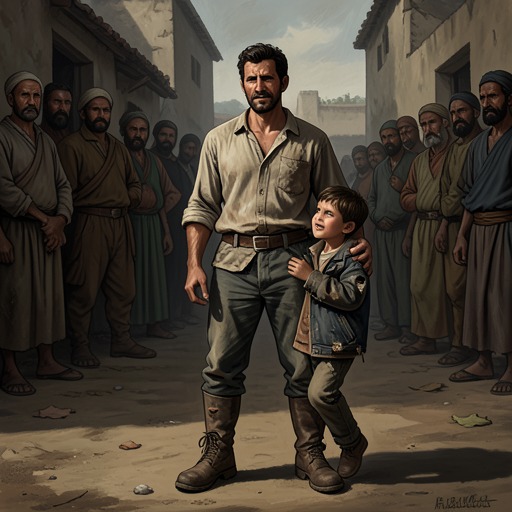
Janasco is not presented as an idyllic refuge. Mike recognizes its natural beauty and the warmth of its people, including Marta’s children, Jiménez, Porfirio, and the voices he associates with the town’s public square. At the same time, he sees poverty that makes daily survival precarious. A bowl of chickpea soup can stand between a family and hunger; children earn small amounts by tying bits of string, and the land may fail to yield a crop. Mike’s appreciation of the place is therefore inseparable from his awareness of the hardship lived there.
Marta’s household becomes important to Rafo and Mike. After a quarrel, Rafo leaves money on a table at Marta’s house; Mike understands the gesture as an attempt to make amends and approves. Their reconciliation needs little explanation between them: they leave the house together and return to the truck. The practical constraints of the flight remain immediate. Since the vehicle is parked on a pedestrian street and attracts suspicious attention, they move it to a wider road. Rafo then volunteers to scout alone, believing that a Mexican boy traveling by himself will draw less suspicion than the two of them together. When he returns, he reports that the police left soon after appearing at the Janasco Zócalo and had not even left their car.
Departure and Narrative Significance
Mike’s response to Janasco is divided. He is moved by its landscape and by the people he encounters, and a crisis involving Marta brings forward the kindness in himself that he can most readily accept. But he also knows that he cannot live there. The town’s beauty does not erase its poverty, and neither does Mike’s compassion erase his own attachment to home: he understands himself as a Texan, not a Mexican. His decision to leave is not a judgment that Janasco lacks value; it marks the limit of the life he can imagine making there.
When Mike and Rafo finally leave, the departure follows a moment of emotional exposure that frightens them both. Their stay ends, but Janasco does not become an incidental stop in memory. Later, Mike recognizes the irony that they endured detours, fear, and hardship to avoid a patrol that was not hunting them. They might have missed Janasco altogether. Instead, the mistaken course gave them a shared interval they expect to miss for the rest of their lives.
The town also sharpens the novel’s scrutiny of macho heroism. During his stay, Mike watches a cockfight and reconsiders the praise attached to the word macho. He connects the spectacle to the arenas in which he has spent his working life, including the performance culture that once presented him as a rodeo star. In Janasco, the heroic pose looks less secure: Mike grieves that nobody wants him anymore, yet still hopes to use his skill with horses to earn money. The town’s back streets and mesa place that contradiction beside the material struggles of ordinary life, making Janasco both a refuge on the route north and a measure of what Mike can admire without choosing as home.