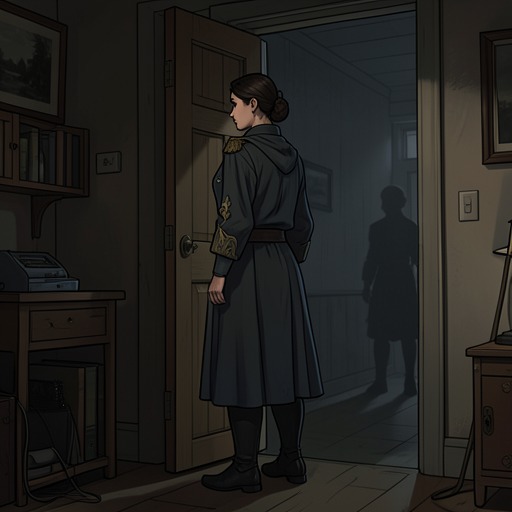
Lexa’s emotional turmoil over Rafo’s situation
Cry MachoLexa’s emotional turmoil over Rafo’s situation is expressed through a widening gap between what she says and what her body and actions disclose. She describes her son as irredeemable and insists that she does not care whether he lives, yet her hands shake when she speaks of him, and she eventually declares that no one else may take him. This conflict makes her more than an obstacle to Mike’s search: her claim over Rafo exposes the possessive bond beneath her rejection.
Rejection and Its Contradictions
When Mike asks about Rafo, Lexa rejects the picture of a well-mannered child from a respectable family. Instead, she presents him as a monster and directs Mike toward the streets, gambling places, and other precarious settings. Her account includes reports of Rafo running errands at El Picador and nearly being caught stealing at jai alai and Mercado de la Merced. These details give Mike leads, but Lexa frames them as evidence against her son rather than as reasons to help him.
Her certainty is less complete than her language suggests. As she tells Mike that she does not know where Rafo is and that he will not find him, the drink in her hand trembles enough that she has to set it down. The gesture undercuts her attempt to present herself as unmoved. Mike recognizes heartbreak beneath the anger, although Lexa does not openly offer him that vulnerability. Her refusal to assist and the physical signs that accompany it remain in tension: she both shuts down the search and cannot speak of Rafo without visible distress.
The Admission Behind the Anger
Mike asks when Lexa gave up on Rafo. Her answer first places that abandonment two or three years earlier, when Rafo would have been about eight or nine. When Mike points out how young that was, she revises the account: she had given him up on the day he was born. The shift moves the source of her distress beyond Rafo’s later conduct. Lexa presents rejection not as a response to the boy’s life on the streets, but as something that reaches back to his birth.
The admission is followed by a visible collapse of her controlled manner. She begins to quake, and Mike feels pity and nearly reaches toward her before stopping himself. He gathers his belongings and prepares to leave, judging that Lexa will not detain him or call the police. The moment briefly makes withdrawal seem possible: his sympathy draws him toward her, but his decision to leave recognizes that her distress does not amount to an invitation to closeness.
Information Given, Then Disowned
Later, as Mike remains unable to proceed without more information, Lexa arranges the carafe and their glasses on an elegant sideboard after drawing the curtains. The deliberate placement of the drinks and her careful, silent movements make the scene feel ceremonial to Mike. He wonders whether the gestures celebrate him and notices the sensual pleasure with which she performs them, but he cannot establish what she intends. Her silence gives the encounter an intimacy that her earlier hostility had seemed to foreclose, without resolving the uncertainty between them.
In this quieter setting, Lexa asks whether Mike has been to cockfights. She says she has heard that Rafo is involved in illegal fights in disreputable places, distinguishing them from legal events outside the city. She stops herself and curses under her breath, as though regretting that she has disclosed even this much. Mike suspects she may be trying to obtain something from him, but the exchange leaves her motive uncertain. What is clear is that her professed indifference does not prevent her from giving him a useful lead, even as she tries to regain control of what she has revealed.
Possession and Escalation
When Mike asks why Lexa will not go after Rafo herself, she insists that she does not care what happens to him, even if he is killed. The declaration is followed by another tremor in the hand holding her glass. This time she drinks it all, pours herself another, and turns away from Mike. When she faces him again, her expression appears fixed and masklike. Her voice remains measured, making composure itself part of the conflict: she can control how she speaks even as her body betrays agitation.
The contradiction becomes explicit when Lexa has Pacas and Alma attack Mike after he has tried to reach Rafo. She tells him to keep his hands off her son and claims Rafo as her property, while also saying that she hates him. She then warns Mike that he will be watched wherever he goes. The threat makes her attachment coercive rather than tender: denying concern does not loosen her claim, but intensifies her insistence that Rafo belongs to her and cannot be taken by someone else.
Significance of the Conflict
Lexa’s emotional state is not resolved by the information she gives Mike or by her forceful attempt to stop him. Her statements move between rejection, apparent indifference, and ownership, while repeated trembling links those opposing positions to a distress she cannot fully conceal. The contrast between her controlled voice and unsteady gestures keeps the emotional truth unsettled without making her motives wholly unknowable: she rejects Rafo, but resists losing control of him.
For Mike, that contradiction turns the search into a conflict with Rafo’s mother as well as a search for the boy himself. Lexa’s disclosures help direct him toward the illegal cockfights, while her threats establish that pursuing the lead will mean defying her claim. Her turmoil therefore shapes both the practical course of the search and its central question of possession: whether protecting Rafo requires taking him away from a mother who says she does not care, yet refuses to let him go.