Mexico–United States border
Cry MachoThe Mexico–United States border functions in the novel as more than a line separating two countries: it is a system of documents, inspections, patrols, and routes that determines who can move and how. Mike Milo first passes through an official crossing on his way into Mexico, but his later return with Rafo becomes a clandestine flight. The contrast between the orderly entry booth and the final escape through a ravine makes the border both a controlled passage and a terrain that can be traversed beyond the authorities’ chosen channels.
Geography and Routes
At dawn, Mike reaches the entry point between Laredo and Nuevo Laredo in the dark-blue panel truck provided by Howard Polk. The crossing is already in operation: four cars wait ahead, while only one booth is open. The setting is practical rather than remote, with a bridge beyond the inspection point and officials positioned to examine traffic moving between the two cities.
The border also appears as a route that can be approached from outside the formal station. Much later, Mike explains to Rafo that they will avoid the border post, leave the truck about a mile from the boundary, descend into a ravine, and climb out on the Texas side. In the final flight, the landscape becomes essential: scrub and trees offer possible cover, and the border runs through the thicket. The novel thus gives the boundary two complementary forms, a staffed crossing and a line embedded in uneven ground.
Inspection and Documentation
Mike’s first passage depends on preparation and compliance. He has spent nearly a day making sure his papers are in order and carries no prohibited goods; the one item that makes him uneasy is a small can of 3-IN-ONE Household Oil. At the booth, a uniformed guard examines the toolbox, handling its tools, electrical tape, nails, brads, screws, and oil can before closing it. Meanwhile, the border official reviews Mike’s driver’s license, truck registration, insurance policy, and automobile permit.
After the guard signals that the vehicle is acceptable, the official stamps Mike’s tourist card and asks his purpose in coming to Mexico. Mike identifies the trip as a vacation, although the businesslike truck draws a bemused response. The exchange ends without further obstacle. This first inspection establishes how movement across the border is made legible through papers and scrutiny, while also showing that a traveler’s stated purpose and the appearance of his vehicle may not neatly match.
Patrols and the Northward Journey
On the later journey, the danger does not begin at the border itself. Three-quarters of the way to San Luis Potosí, Mike encounters a long line of halted cars and discovers an official roadblock. A national patrol car and a police motorcycle block the road; a policeman and three national troopers, armed and searching vehicles, appear to be looking chiefly for people rather than contraband. Mike suspects that the search may be connected to Rafo and to the possibility that Lexa Polk has kept watch on him.
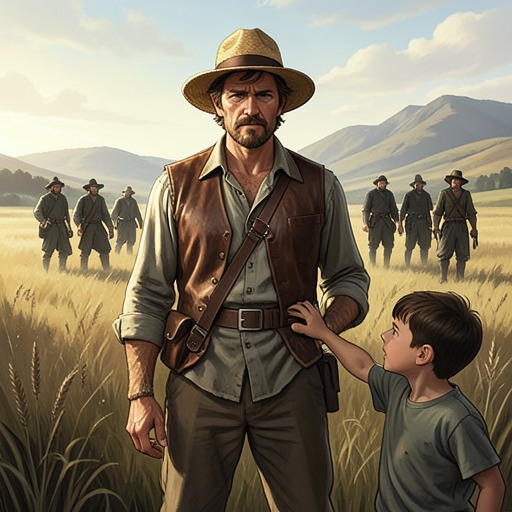
When Mike sees Rafo near the roadblock, he directs him into the back of the truck. A whistle from one of the troopers makes the boy move, and Mike backs up, turns around, and takes the truck off the main road. The maneuver links the interior roadblock to the eventual border crossing: the journey north is already shaped by surveillance and the need to avoid official routes. The boundary is not yet in sight, but the threat of being stopped changes the pair’s course.
Crossing Beyond the Station
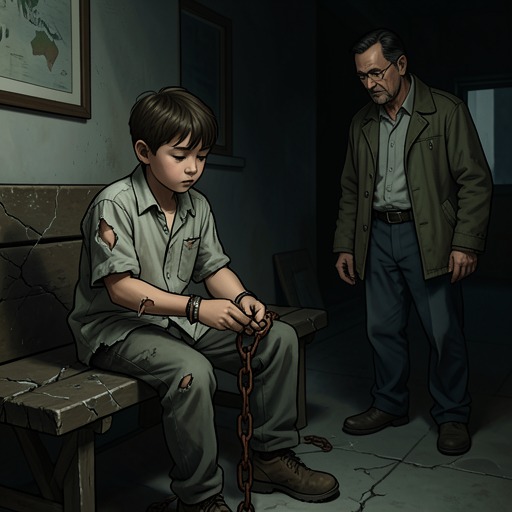
Near the border, Rafo worries about what to say if officials ask for his papers. Mike’s proposed answer is a route rather than an explanation: they will not use the station, but will leave the truck, descend into a ravine, and emerge in Texas. The plan gives Rafo a concrete account of the crossing, though his anxiety does not immediately disappear. He eventually nods, indicating that he will manage his fear himself.
The approach remains perilous. During a later encounter with a sergeant, Mike produces his tourist card when asked; the officer examines it by flashlight and then asks about the boy. The exchange shows that possession of valid documentation does not by itself resolve the question of Rafo’s status or their journey together. The pair continue, stopping at a Pemex station and paying an exorbitant price for fuel. Road signs mark their dwindling distance: first forty kilometers from the border, then only two. They stop near an inn before the final attempt.
The Boundary as Threshold
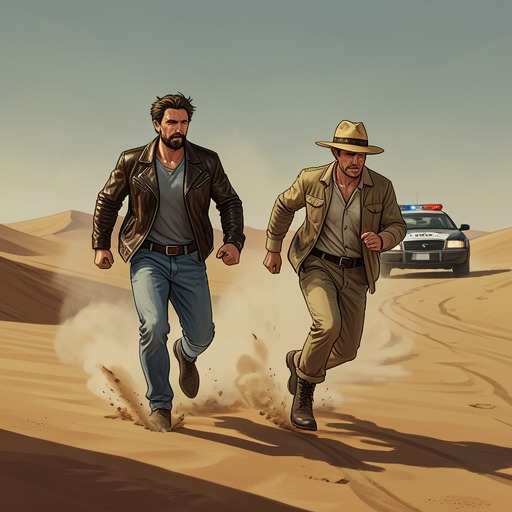
When the pursuit resumes, Mike drives toward the ravine, hoping the trees and scrub will conceal him and that the thicket will carry him across the line. He cannot tell at first whether he has reached the Texas side. The rising ground finally confirms that he is climbing out of the ravine into Texas; the shots stop, and he continues upward, concentrating on making it to the top.
The crossing’s significance lies in the difference between official passage and lived passage. At the first booth, a stamped tourist card and an acceptable vehicle allow Mike to proceed. On the return, his papers are checked, but the attempt to bring Rafo north unfolds amid patrols, pursuit, and a route that avoids the station. The border is therefore both an instrument of governance and a physical threshold whose terrain offers a precarious alternative. For Mike and Rafo, reaching Texas is not a routine administrative transition: it is the hard-won culmination of a journey in which every road, document, and delay has affected their chance to move.