Mike Milo
Cry MachoMike Milo is a veteran rodeo rider whose public image as a fearless champion outlasts the career and body that made it. Dismissed by Howard Polk and sent to retrieve Rafo, he moves from performing toughness to questioning what it has cost him, while the boy’s presence brings his own grief over Laurie back into view.
The performer and the arena
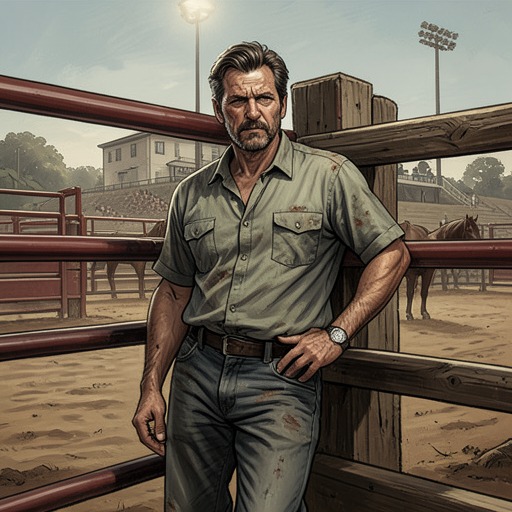
Mike’s work is both a livelihood and a public identity. At Polk’s Cow Stadium, an enormous poster shows him on a rearing bronc, hat aloft, frozen in the smiling pose of a cowboy hero. The image dates from before his arrival at the stadium, during a failing year on the competitive circuit. He had won little, endured injuries, and found the travel and sleepless nights increasingly difficult. The poster preserves the champion at the very moment the career behind that image was beginning to falter.
The stadium’s resident company gives Mike a steadier place in the rodeo world, but under Howard Polk its performances also become a managed business. Howard calls the riders actors rather than heroes and insists that the company operate with discipline, including an attendance ledger. Mike refuses to sign it, although he makes no public protest. His quiet defiance leaves the conflict unresolved until Howard eventually dismisses him.
Mike’s own celebrated entrance makes the tension between spectacle and danger explicit. Introduced as a champion with three National Finals victories, a Dallas Buckle, and nine Cattlemen Trophies, he rides Tabasco in the stadium’s special Ride-Out: he must stay on until the horse is thrown or goes quiet. The ceremony presents Mike as the star, while the event itself depends on the force of a contest between rider and animal. The applause and honors do not make the risk disappear; they turn it into the performance for which the audience has gathered.
Dismissal and the end of a role
Before his dismissal, Mike is already managing persistent arm pain. He applies a hot compress and avoids liniment because he does not want colleagues to notice and respond with pity. He also avoids taking another pill, concerned that it could slow his reactions in the arena; a pill taken the previous night had brought bad dreams rather than relief. The scene shows how thoroughly he measures private discomfort against the demands of riding, and how much he fears being regarded as no longer fit for the work.
When Mike tells Howard he intends to return the next day, Howard answers that he is finished. Mike initially treats the decision as if it must be a joke and points to his earlier success riding in a cast. Howard’s reply—that Mike is ten years older—makes clear that past achievements do not reverse the judgment. For Mike, losing the job means more than losing a paycheck: it closes the role through which he has long understood himself.
The following evening, he empties his locker in the deserted tackroom, choosing not to turn on the lights. He throws out his rigging, riding clothes, boots, and a magazine bearing his picture. He also tears down and discards an earlier photograph of himself. The awards are different: rather than throwing them away, he takes the buckles, trophies, and ribbons down and puts them into his rigging bag. The distinction is telling. He can remove the costume and the image, but the record of what he once accomplished remains difficult to abandon.
The commission and Rafo
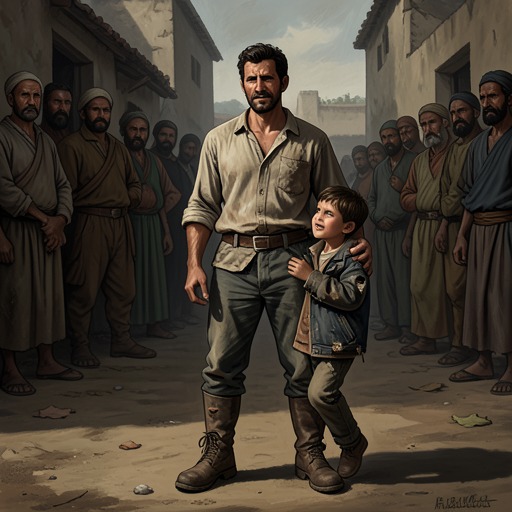
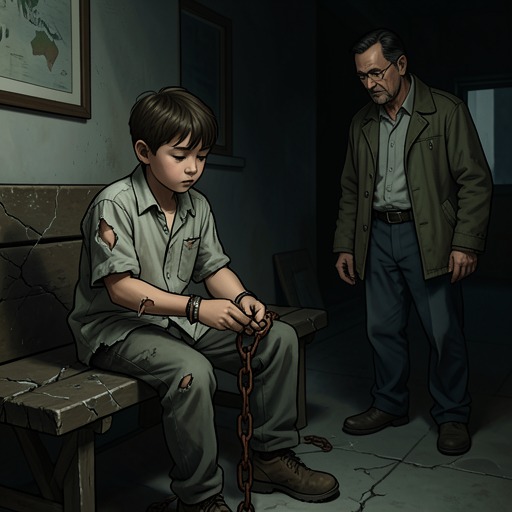
After losing his place at the stadium, Mike accepts work from Howard that is described plainly as a kidnapping: he is to take Rafo from his mother and bring him to his father. The assignment makes Mike an employee of the man whose authority he had resisted, and puts a child at the center of a bargain between adults. Mike carries it out by presenting himself as working for Howard, not by using violence against Rafo. When the boy doubts his story, Mike shows him his employment card and then a photograph of him. The proof establishes Mike’s connection to Howard and confirms that the boy is the person being sought, but it does not undo the deception involved in the mission.
On the journey north, Mike takes some satisfaction in having persuaded Rafo through his wits rather than force, and in having kept him from harm. His relief sits uneasily beside his recognition that he has lied. He tells himself that his responsibility is limited to delivering the boy safely, not to the relationship between Rafo and his father. He also reasons that warning Rafo about the father he will find, or the rodeo life he imagines, could make him run away again. That calculation protects the assignment and Mike’s chance of completing it, but it leaves Rafo without information Mike believes matters.
Mike’s thoughts about Howard’s surprise at receiving a very different boy from the one he remembers briefly make the trip entertaining to him. Yet he also understands the moral complication: although the original argument with Rafo over a rooster was separate from the abduction, the boy has been deceived about why he is being taken. Mike’s stated concern that Rafo remain unharmed is real, but it does not erase his participation in the fraud.
Rafo, Laurie, and the fear of loss
Rafo’s presence presses on an old vulnerability in Mike. When someone asks whether he likes children, the question leads him to reconsider a sharp remark he once made to Laurie about simple questions. He recognizes that such questions unsettled him not because he could not answer a child, but because answering them honestly required him to face what he thought and felt. His answer shifts between liking children and not liking them, then lands on loss: children grow up, grow distant, become misunderstood, or disappear before an adult is ready to speak with them.
The reflection ends with the knowledge that children also die. Laurie’s death gives that thought its particular weight. Mike recalls that, after she died, he had felt capable of turning his rage on life itself. His care for Rafo therefore exists alongside a painful awareness that attachment exposes a person to separation and grief. He can try to protect the boy during the journey, but he cannot make the bond between Rafo and his father answer to his own experience of fatherhood and loss.
The wild horse and the meaning of macho
Mike’s encounter with the white mustang offers another test of what he can still do. As the truck draws alongside the animal, he jumps onto its back and holds on as it struggles to free itself. The moment recalls the physical mastery on which his reputation was built, but it occurs beyond the formal arena and amid the precarious journey with Rafo. His continuing ability to take on a wild horse does not restore his former job or settle what the performance of mastery means.
After seeing a cockfight, Mike hears the crowd praise the rooster’s valor and use the word macho. The dead bird changes the word for him. He connects the rooster’s fight to his own arena career and to the larger spectacle of men and animals being made to dominate, injure, or defeat one another. His thoughts do not let him settle easily into either the identity of a hero or the judgment that he is cruel. He wonders whether the need to prove courage is driven by fear of being exposed as a coward, and whether the violence of the arena is an attempt to confront death by reenacting mastery over it.
The insight does not release Mike from the life he is questioning. He grieves that nobody wants him anymore and sees himself as a spent fighting bird in a small foreign town; even so, he expects to keep some of his machismo by breaking wild horses, in part to earn enough money to leave. His contradiction is the point: the arena’s promise of courage has become inseparable from cruelty and loss, yet the skills and habits it gave him remain his means of getting by. Mike’s story turns on that unresolved distance between the champion in the poster and the aging man who can still ride, but can no longer mistake the performance for proof that he has escaped fear or grief.