Mike Milo’s “lost year” of grief and self-destruction
Cry MachoMike Milo’s “lost year” of grief and self-destruction is the name Mike gives to the period after Laurie’s death when mourning spills into drinking, gambling, financial trouble, and persistent remorse. The phrase marks more than a stretch of time: its costs continue after the worst behavior has stopped, and its apparent closure arrives alongside a stark sense of loss rather than a confident new beginning.
Origins and Accumulating Costs
The period begins with Laurie’s death. Mike later recalls that he had believed he had forced the memory of that year out of his mind, only to find the term returning as he considers his debts and the payments he still owes Donna. In his account, the material consequences and the emotional ones compound each other: he is still paying for what happened, while remorse makes that burden feel heavier. He also distinguishes regret over his past from the continuing pain of losing Donna, whose payments remain an immediate practical concern as well as a reminder of their separation.
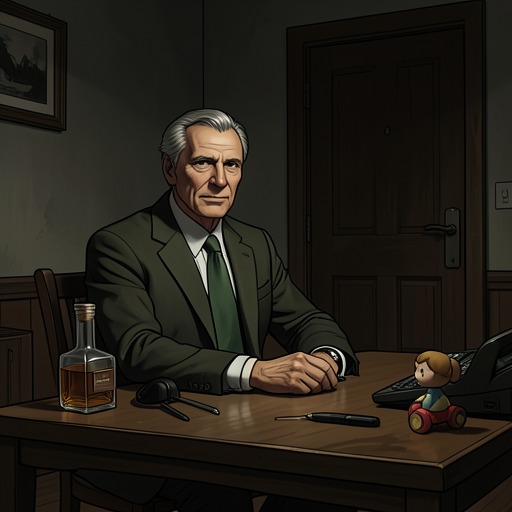
The lost year’s consequences become clearer in Mike’s account of its first stages. He had not been a habitual drinker, but began drinking after Laurie’s funeral. Two days after the funeral, he drank before the Cattlemen’s show; after five years of winning, he came away without a prize and with a cracked collarbone that kept him from riding for two months. Unable to ride, he turned to gambling. The account links these actions in sequence without suggesting that one consequence erased another: time away from competition gave gambling room to take hold, while drinking continued to undermine his judgment.
Gambling became a regular routine. Mike played poker twice a week at a boardinghouse off the Houston freeway and went to the upstairs blackjack table above Ro Duncan’s Sport Goods Shop on Saturdays. He later recognized that the gambling had become less about play than about self-destruction. One Saturday he discovered that he owed Ro Duncan sixty-one thousand dollars. He quit gambling and began repaying the debt in installments, but stopping one behavior did not end the broader pattern. After shows, he still went from the stadium to the Red Rio Bar, telling himself he was there to play darts. The gap between that explanation and his continuing drinking shows how readily he relied on self-deception during this period.
Grief, Separation, and Recurrence
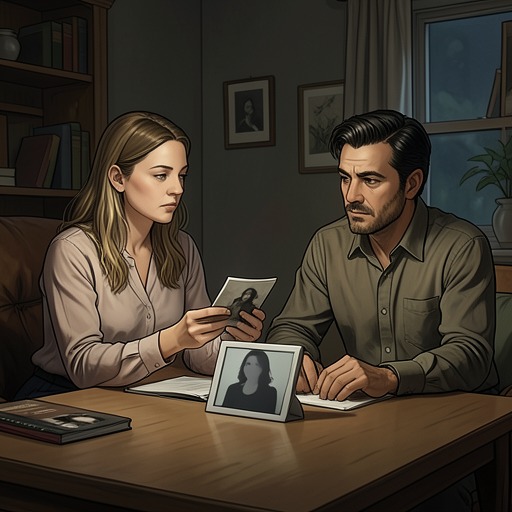
The lost year also takes shape through separations that do not resolve Mike’s grief. After receiving a letter from Rachel Perry, who had gone to Shreveport to think things over, Mike learned a month later that she had married her high-school sweetheart. On the morning he heard the news, he left Donna. Their parting was quiet and practical: Donna helped him pack, reminded him about clothes still at the cleaners, made a temporary hotel reservation, and gave him books he valued. Her gentle goodbye did not make the separation insignificant. The narration presents their parting as a moment when a closeness they had not felt for some time returns painfully.
That evening, Mike went to Laurie’s grave in the rain and directed his anger toward the child he had lost. The scene brings the lost year’s grief into the present rather than treating it as a finished episode. Later, at thirty-eight, Mike asks himself whether he is still blaming Laurie; the ache, he recognizes, remains. He considers returning for Laurie’s picture but decides to leave its place blank. That empty space gives visible form to a loss he cannot put away, while his uncertainty about what to do with the picture suggests that remembering and moving forward have not become simple alternatives.
Cissy Brewer and the Turning Point
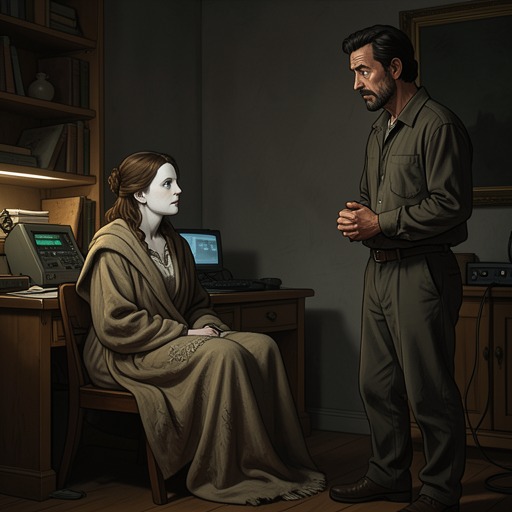
Mike later identifies Cissy Brewer as the person who, without knowing it, helped bring the lost year to an end. Remembering Cissy prompts him to leave his apartment and buy provisions for her at the only supermarket open: eggs, bread, butter, milk, fruit, vegetables, a smoked ham, and the peanut brittle she loved. The errand offers him a specific task directed toward another person. He feels relief at having found something useful to do, and understands that Cissy had once helped him through the worst period without intending to do so.
Cissy had appeared in Mike’s life at the Red Rio Bar about two weeks after Donna went to Nevada for the divorce. Mike liked her company, and she adored him; their connection was not presented as a promise that would undo his losses. Cissy was direct about charging for her time and about refusing to disguise that arrangement as love. This frankness matters to Mike’s memory of her: she offered companionship without asking him to mistake it for a cure or a conventional romantic future. Her earlier, unknowing help and his later effort to bring her food form a reciprocal pattern of care, even though the two acts occur under different circumstances.
Closure and the Empty Future
The lost year closes with Mike’s final visit to Cissy. After leaving her, he finds himself unable to move on from the visit or to cry. The immobilization recalls his state after Laurie died, making the ending a recurrence as well as a point of closure. Mike knows that when the welfare people take Cissy away, he will not see her again. The knowledge that this is their last meeting sharpens the ending: Cissy’s part in his life has mattered, but he cannot preserve the relationship by making one more visit.
At the same time, the other supports that might have connected Mike to the future seem to have fallen away. Donna is going to marry; Mike believes he has likely seen her for the last time. He has received only one letter from Rachel Perry and expects no more. His medals and trophies have been sold, his locker is empty, and he believes he will not return to the arena. He also rules out going back to Laurie’s grave. These details gather separate forms of loss—relationships, career, possessions, and mourning—into a single inventory of what is no longer available to him. He says, in effect, that he has nothing to return to and cannot yet identify anything to anticipate.
Narrative Significance
The lost year is disclosed through delayed recollection: present financial anxiety calls up the period Mike thought he had put out of mind, while later encounters revive its emotional pattern. Its structure resists a clean division between past and present. The debt remains payable, the grief returns, and the paralysis after Cissy’s visit echoes Mike’s earlier immobilization. Ending the period therefore does not mean that its effects have vanished.
The account also places small acts beside large absences. Mike’s grocery trip for Cissy does not restore Laurie, Donna, Rachel Perry, or his former place in the arena; it gives him a concrete reason to act for someone else. That modest change helps distinguish closure from recovery. The lost year has an ending, but its final meaning lies in the tension between an exhausted past and a future Mike cannot yet imagine.