Mike Milo’s severe arm pain
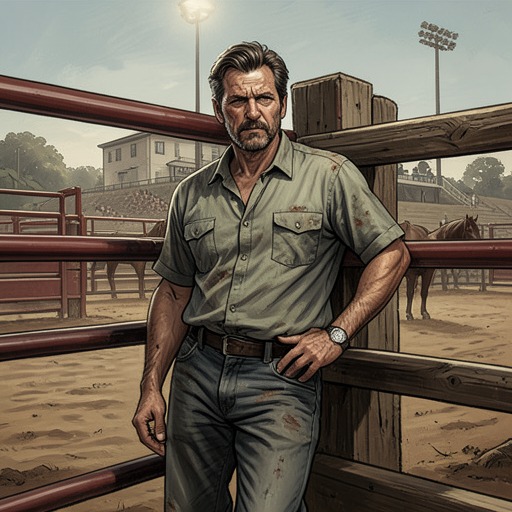
Cry MachoMike Milo’s severe arm pain is both a physical affliction and a threat to the identity he has built around rodeo. It interrupts ordinary life, complicates the routines that prepare him to ride, and forces him to confront the possibility that his body is no longer keeping pace with his ambitions. His response is marked by concealment and resistance: he tries to manage the pain without attracting attention, and recoils from diagnoses that would make aging feel undeniable.
Pain and attempted treatment
The pain is already dominating Mike Milo’s attention in a scene set three months earlier. While the phone rings, he applies a compress from a basin of hot water, then weighs whether to replace the cooling water or use liniment. He rejects the liniment partly because its smell would prompt questions and sympathetic attention. He imagines that people might privately speculate about how soon a wild horse would end his career. The concern is therefore not simply that others will know he hurts, but that they will treat the pain as evidence that his riding days are numbered.
Medication offers no easy alternative. Mike Milo considers taking a pill, but believes it could slow him down or interfere with his timing in the arena. He has taken pills the previous night, including a second against his doctor’s orders, without relief; he also associates them with bad dreams and a prolonged, disorienting search through his apartment. In the later scene, he opens a box of small yellow pills, considers one, and closes the box without taking it. His hesitation reflects both frustration with ineffective treatment and fear of what medication might do to his ability to function.
He wants another doctor who will give him a strong injection and remove the pain. At the same time, he resents the label tennis elbow, which seems too mild and ordinary to describe what he is experiencing. The possibility of arthritis is worse: to him, the word carries the implication of middle age, a status he cannot reconcile with being a rodeo star. The evidence does not establish a diagnosis at this point; it shows his dread of one and the way a medical name becomes entangled with his sense of professional identity.
At home: pain and loss of control
The apartment provides little refuge. Its furnishings and rodeo trophies remind Mike Milo of a version of himself he finds embarrassing, while the room offers no comfortable place to read or sit quietly with his thoughts. During the painful episode, he massages his forearm without relief, then strikes and beats at it in an attempt to make the pain stop. Unable to decide whether to take a pill, he throws the pillbox across the room. The basin overturns and spills as the phone continues ringing. These actions do not solve the pain; they show how it narrows his attention until he feels unable to cope with the arm and the demands around him at the same time.
When the phone finally falls silent, the quiet is not a comfort. Mike Milo can scarcely tolerate either the pain or the stillness that follows it. The scene sets the ringing phone, the rejected medication, and the spilled water against his inability to regain control. Rather than presenting pain as a passing inconvenience, it shows an experience that reorganizes the room around itself and leaves even silence difficult to bear.
Concealment at the rodeo
At the arena, Mike Milo continues trying to keep the arm from revealing his condition. In the tackroom he swings his right arm more vigorously than usual to hide that it hurts, then recognizes that no one is there to see him. The gesture captures the pressure of performance even outside the ride itself: he manages how his body appears before there is an audience. His locker, a large double-doored space marked by a tarnished brass star, holds the equipment and awards of his career. When the pain returns sharply as he opens it, he curses but pulls with the affected arm rather than stopping.
He has to prepare for the first event, bareback bronc riding. Pants are easy to put on, but his boots are harder; he leaves his shirt until last, hoping he can guide his right arm into its sleeve without provoking the pain. Dressing thus becomes a practical measure of what the arm can still do. In front of the mirror, his all-white outfit presents the composed figure of a fearless, expert rider. The contrast is pointed: the image depends on effortless command, while the act of getting dressed has already exposed a limit he is trying not to acknowledge.
Age intensifies that conflict. At thirty-eight, Mike Milo thinks of himself as old by rodeo standards and doubts that he will win again except perhaps in an exhibition. He recalls that he might have completed a college course in animal husbandry and pursued veterinary work, a path that would have made his age signify something different. In the arena, however, pain in his arm belongs to a feared decline in a career measured by the capacity to ride. Concealing it protects the appearance of competence, but does not remove the physical difficulty of preparing to compete.
Relief and remaining symptoms
The arm pain eventually responds to treatment. After two injections, it is almost forgotten forty-eight hours after the second. Mike Milo feels better than he has in years, a marked reversal from the earlier scenes in which compresses, pills, and attempts to endure the pain had failed. The improvement is specific: the arm no longer dominates his attention as it did before.
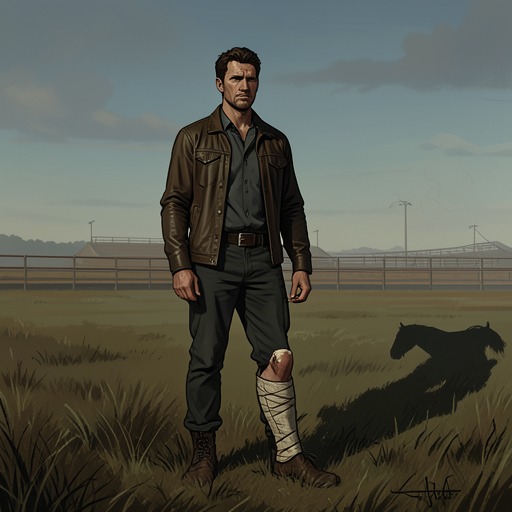
That relief does not amount to a complete restoration of health. When Mike Milo returns to the stadium after leaving the hospital and having his cast removed, he is still limping and trying to hide it. He says that the elbow pain is gone, but the dizziness remains. The sequence distinguishes the arm’s successful treatment from his broader physical condition, and leaves the larger tension intact: relief can silence one symptom without returning him to an uncomplicated confidence in his body.