Mike’s failed attempt to enter Lexa’s house
Cry MachoMike Milo’s first attempt to enter Alexandra Muños de Santis Polk’s house is a failed burglary that nevertheless changes the terms of his mission to retrieve Rafo. Howard Polk’s detailed instructions give Mike a route in, but dogs, a police response, and a sudden bout of vertigo defeat the plan. When Alexandra discovers him, the intruder’s exposed identity and her anger turn the failed break-in into an uneasy permission to take her son.
Reconnaissance and the Plan
Mike first approaches the house in Lomas de Chapultepec by taxi, then gets out about half a mile from his destination. Howard’s marked street map guides him, while an auto-club map and camera make him look conspicuously like a tourist. He reminds himself to act accordingly, stopping to gape rather than appear to be watching the property. The neighborhood’s greenery and spacious houses give way to Alexandra’s especially ornate residence, set behind a high wall of red volcanic stone and elaborate iron gates.
Howard has described a second, rear entrance in an alley. Mike follows the wall until the rising pavement makes it low enough to climb, then finds the narrow private passage and the iron gate. The gate is too narrow to open from outside and is operated by an interior intercom button, details that match Howard’s diagram. Mike studies the bars, expecting the information he has been given to carry him through the next steps. Instead, two huge dogs bite his hand before he sees them. They bark and throw themselves at the gate only after he pulls away, leaving him bleeding and with a new, unanticipated obstacle. Hearing someone call from the house, he runs from the alley and escapes in a taxi.
Improvisation Under Pressure
Mike returns to the property and tries to draw the dogs away from the back. He tests the hoods and doors of parked cars, looking for one close enough to the gate to serve his purpose; the first cars are locked, and a streetlight makes another choice risky. An old car on the side street offers the opportunity he needs. With a flashlight, pliers, pocketknife, and screwdriver, he examines its wiring briefly, then works by touch, cutting and splicing wires until the horn sounds.
The noise initially seems to accomplish nothing. Mike starts up the sloping side street, anxious that his diversion has failed, before hearing the dogs race toward the front gate. He hurries to a low point in the wall where a small opening offers a foothold. The horn and barking continue, but a siren brings a new danger: a police car turns into the street and passes him toward the commotion. Two officers get out near the car horn as spectators begin to gather. Mike slips through the light, climbs using the opening in the wall, and drops into a flower garden inside the property.
From the garden, the house appears to him as a white, storybook castle in moonlight. But the next part of Howard’s plan is wrong: there is no bougainvillea trellis to climb, and the smooth stucco offers no ledge. With the dogs potentially returning, Mike cuts two of roughly half a dozen clotheslines in a utility yard, knots them, and twists them into a lariat. Although he has not handled a catch rope for ten years, he loops it around a balcony’s metal corner post, tests his weight, and climbs over the balustrade. Having overcome two unexpected obstacles through improvisation, he is momentarily pleased with his resourcefulness.
The Fall and the Discovery
That confidence does not carry him through the final approach. As Mike turns toward the French doors, the vertigo that has troubled him before strikes with painful force. He feels himself falling forward, hears glass crash, and then loses sensation. The account of the episode shifts into a brief passage of silence and drifting impressions before he regains awareness. His collapse, rather than the dogs or the police, ends the attempted entry before he reaches the house’s interior.
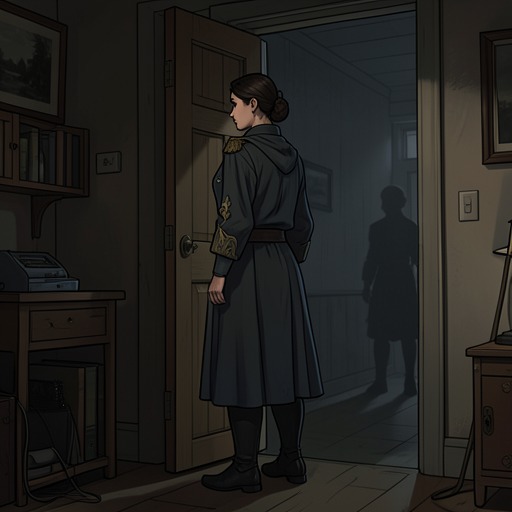
Alexandra knows who he is. On a table she has laid out the contents of his pockets: tools, flashlight, handkerchief, the 3-IN-ONE oil can containing Acetoform, coins, a money clip with dollars and paper pesos, and a wallet with his tourist card, credit cards, driver’s license, and employment cards. Mike recognizes the display as evidence of his own carelessness. He had brought his identification with him, making it easy for Alexandra to identify the man who came to her house to take her son. The failure is therefore not only physical: the concealed operation has become an exposed, personal confrontation.
Permission and the Changed Mission
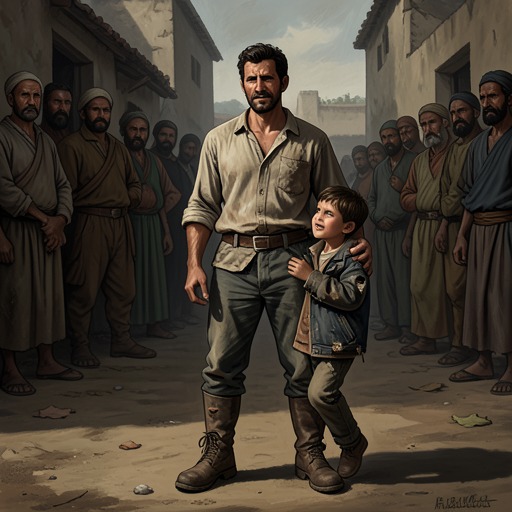
Alexandra questions Mike about the assignment, and he acknowledges that he is to be paid for bringing Rafo back. She then tells him to collect her son, making clear that he need not have tried to sneak in through the back. The permission does not make the encounter a reconciliation: Alexandra speaks of Rafo with fury, rejects the image of him as a sweet, well-mannered child, and calls him a monster. When Mike asks where to find him, she says he is in a gutter. Her answer gives Mike a destination only in the bleakest sense, while revealing how sharply her view of her son differs from the idealized child suggested by the photograph.
The reversal gives the failed break-in its consequence. Mike does not get Rafo from the house, and his elaborate plan has instead put his identity and purpose in Alexandra’s hands. Yet the exchange secures what stealth could not: Alexandra’s explicit permission to collect him. The episode also punctures Mike’s confidence in Howard’s supposedly complete directions. The unmentioned dogs, the unusable trellis, the police response, and Mike’s recurring dizziness each interrupt his design; improvisation gets him over the wall, but not safely to the doors. The mission can continue, though now under a permission hard-won through exposure rather than a successful intrusion.