Mike’s guilt over deceiving Rafo
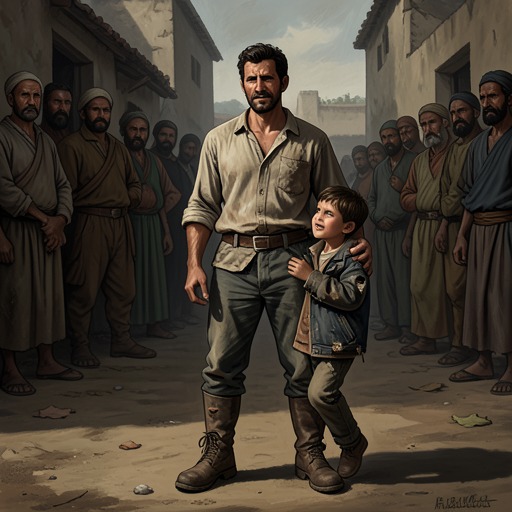
Cry MachoMike’s guilt over deceiving Rafo is the point at which Mike’s defense of his mission begins to fail. He has told himself that he is merely fulfilling a contract to bring a boy to his father, but Rafo’s charge of kidnapping forces him to confront how little choice the boy has been given. The guilt is not simply regret over a lie: it exposes the false premise on which Mike has built his claim that Rafo is going willingly, and makes money, kindness, and responsibility newly difficult to separate.
The Contract as a Defense
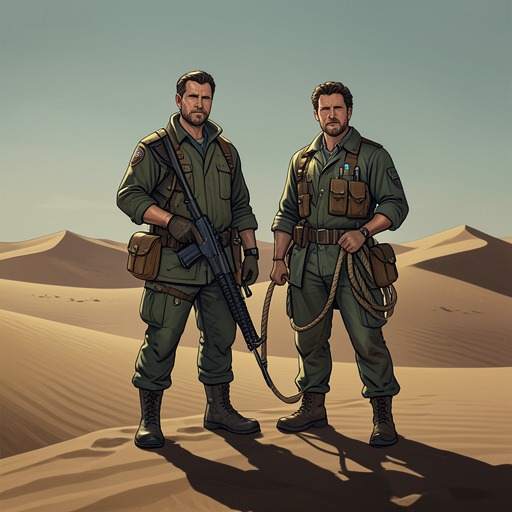
Mike first frames his responsibility narrowly. He has agreed to bring Rafo safely to his father; what happens to the boy’s relationship with his parents, he reasons, is not his burden. If Rafo had been Mike’s own son, Mike insists to himself, the boy would have had love—but that imagined standard does not alter the limited duty Mike claims for himself. Once the handover is complete, he expects to have washed his hands of the matter.
That boundary helps Mike avoid warning Rafo that his father may not be the loving parent the boy imagines and may not offer the rodeo life he dreams about. Mike tells himself that revealing the truth would only make Rafo run away, perhaps disappearing into the city’s alleys beyond recovery. He casts silence as practical necessity and treats the boy’s eventual disappointment as something he should learn from his father. The reasoning protects the mission and Mike’s chance of completing it, but it also leaves Rafo making a consequential decision without knowing the facts that would shape it.
Mike can see the possible future embedded in this omission. He imagines Rafo sent to an expensive, strict boarding school while lawyers argue over dollars and pesos, then becoming a hardened runaway: a boy brutalized by his mother, abandoned by his father, and embittered against society. The prospect does not automatically make Mike act differently. Instead, it sharpens the contradiction he has been keeping at a distance: Rafo may be harmed by the very return Mike has contracted to arrange. Mike admits that he is part of the fraud, even as he tries to separate that admission from any obligation to intervene.
The Accusation and the False Choice
The conflict becomes immediate after Mike has started the truck in a narrow passageway in Janasco. He is nearly ready to back out before remembering the danger posed by the police. Rather than risk the highways or walk to the town square to check whether the police have left, he decides to hide in the back of the truck and wait through the night. As he lies on a blanket, he notices that Rafo’s words have unsettled him enough to make him forget the danger and nearly leave their hiding place recklessly.
Rafo has asked whether Mike came to Mexico for love. Mike knows the blunt answer is money. He also recognizes that the label of kidnapper is not new to him; he has called himself that. What changes is hearing Rafo apply the label and condemn the grown man as a symbol of greed. Mike initially resists the accusation by resenting what he sees as the boy’s self-righteousness and hypocrisy. Yet the intensity of that reaction makes the accusation harder to dismiss: perhaps Mike has repeated his own excuses so often that he has not believed their plain meaning until Rafo says it to him.
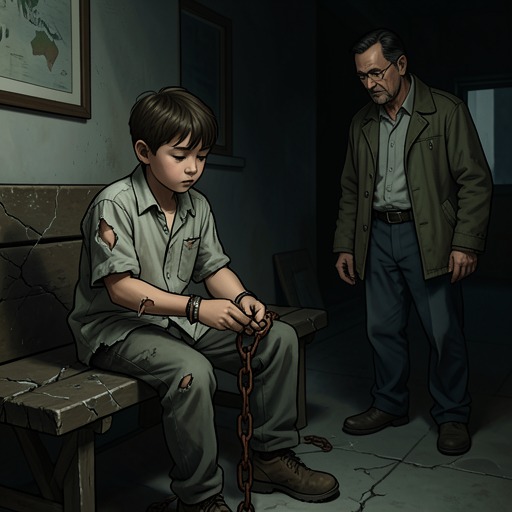
The decisive recognition concerns consent. Mike has treated Rafo’s journey as the boy’s own choice because Rafo accepted the prospect of a father who loved him rather than life in the alleys. But Rafo does not know that his father may not love him. If he knew that and refused to go, Mike admits, he would have had to take him by force. The choice Mike has claimed for Rafo is therefore conditional on a deception: the boy is not merely missing information but has been led to expect a different father. Mike’s contract does not erase that coercion.
Money, Conscience, and the Night Visit
Mike’s reckoning reaches beyond the word kidnapping. He hears the broader charge that he has put money before love, kindness, charity, and the goodness he has professed to believe in. He does not arrive at a settled moral resolution; instead, he searches for an action that might answer at least part of the accusation. He considers giving money to a widow, then recognizes that the gesture may be less a gift to her than a sop to his own conscience. That self-correction matters: even the impulse toward generosity remains entangled with Mike’s wish to relieve his guilt.
He decides he cannot sleep without seeing Rafo again and telling him that Mike is wrong and the boy is right. But the resolve remains inward at this point in the scene. Mike does not yet have a fully defined account of what Rafo is right about, or of what correcting the wrong would require. His proposed acknowledgment is real, but it is still an intention rather than a completed confession or a demonstrated change in the arrangement.
Mike gets out of the truck and walks downhill toward the house an older man had described. In the darkness he cannot distinguish the brown door at first because Rafo has left it open and its color blends into the shadowed room. Inside, Mike finds Rafo asleep sitting against the wall. A girl about the boy’s age sleeps close beside him, and a baby lies across Rafo’s lap; two other children are asleep nearby. There are no beds or pillows, yet the children look comfortable. The scene gives Mike a concrete image of the boy among other children, cared for in the immediate moment, while his own plan has been organized around a distant father whose love Rafo has been led to expect.
An Unfinished Moral Turn
Mike’s guilt does not undo the deception or establish what he will do next. It does, however, change the terms in which he understands his task. Before Rafo’s accusation, Mike can present himself as responsible only to the man who hired him and treat the boy’s future as outside the contract. Afterward, he sees that the promised choice depends on Rafo believing something untrue, and that the alternative to the boy’s refusal would be force. The difference between escorting a willing child and kidnapping one can no longer be hidden by Mike’s preferred description of the arrangement.
The scene ends with Mike looking at Rafo and the sleeping children, not with a recorded apology or a completed act of restitution. The contemplated gift to the widow remains an uncertain attempt at repair, and Mike’s wish to tell Rafo he is right has not yet become speech. That incompletion preserves the force of the episode: guilt has made Mike’s self-exonerating story untenable, but recognition alone has not settled what he owes the boy. His moral turning point lies in seeing that the contract cannot make Rafo’s misled consent genuine.