Rachel Perry
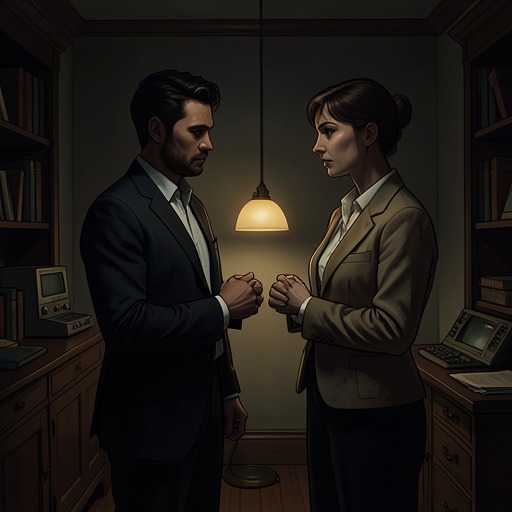
Cry MachoRachel Perry is a widow whose meeting with Mike Milo develops into the most consequential love he has encountered outside his marriage. Her intelligence, humor, and self-acceptance unsettle his assumptions about attraction and intimacy; their affection is real, but their different wishes about having children leave Mike unable to commit, and Rachel eventually marries someone else.
Identity and First Encounter
Rachel is the widow of a bronc rider who was killed on the day he won the first cup at the Cattlemen’s Exhibition Show. Mike had placed second, but an error sent him the dead rider’s trophy. He brought it to Rachel and said that he did not mind coming second to her husband, whom he had liked. The remark was meant innocently, yet it seemed to trouble her. A second misunderstanding and then a third gave way to a new understanding between them. Their connection begins not with a planned courtship but with an awkward encounter shaped by the dead rider’s award and the two strangers’ attempts to interpret one another.
Rachel’s manner contrasts with the arena culture that surrounds Mike. The narration describes her as not conventionally pretty, even a little dowdy, but at peace with herself. She is deep-rooted and has a quizzical sense of humor; her jokes can take Mike days to understand, so that laughter arrives belatedly. Her wit can sting, and she regards humanity—including herself—as ludicrous, but its sharpness is usually directed inward. It does not cancel her kindness. Rachel is the first woman Mike has met whom he considers brighter than himself without feeling diminished by the comparison. Her steadiness and intelligence, rather than conventional glamour, define the attraction the story gives her.
An Unexpected Love
Mike did not set out to make Rachel one of his lovers. Before meeting her, he and Donna had arrived at a tacit arrangement: they were friends as well as strangers, and Mike could take his women elsewhere. His casual affairs did not usually require concealment. Rachel changes that pattern. She matters enough that Mike is dishonest about her for the first time, a small but telling breach that marks the difference between an incidental affair and an attachment capable of altering his life.
His feelings also surprise him. Mike discovers that he can fall in love with a woman who does not initially excite him sexually. The discovery brings him perplexed but profound joy: loving Rachel expands, in his own unexpected realization, into an absurdly generous love of women generally, and even gives him a way to love himself. When their relationship deepens, it exceeds his expectations. Rachel therefore changes more than his romantic prospects. Her presence lets him experience affection as something that does not depend on the appetite, conquest, or performance that had shaped his earlier understanding of women.
The Question of Children
Mike wants to marry Rachel and begins thinking about divorce, but the possibility brings nearly a year of turmoil. Rachel wants children. In confronting that wish, Mike recognizes that his reluctance to have more children is not simply Donna’s position: he is unwilling too. The prospect of losing Rachel makes the conflict painful, but it does not resolve it. He is caught between wanting a future with her and fearing the loss bound up with the family she hopes to have.
Mike eventually tells Rachel the truth impulsively. She does not appear troubled by his admission and remains hopeful that he will change his mind after they have been married for a while. His hope, however, cannot substitute for a decision. Mike understands that marrying her without first changing his mind would subject them both to a misery neither could bear. He continues to worry and delay. The impasse is not a lack of affection: it is the gap between Rachel’s expressed desire for children and Mike’s recognition that he cannot promise them. His hesitation gives the relationship no stable way forward.
Departure and Narrative Significance
Rachel leaves for Shreveport, her hometown, to spend several weeks with her sister and brother-in-law and think matters over. Mike learns of her trip in a letter he opens after collecting his mail at the stadium. A month later, Rachel has married her high-school sweetheart. The account does not supply a further explanation for her decision; its force lies in the contrast between Mike’s prolonged deliberation and the decisive change that has occurred while she is away.
On the morning Mike hears of the marriage, when he can no longer act in a way that would matter, he leaves Donna. Donna is not angry, and neither is Mike. She helps him pack, remembers his jackets at the cleaners, makes sure he takes books he cherishes, and reserves a room at the hotel where he will stay temporarily. Their gentle parting reveals an affection that had been muted during their life together. Rachel’s marriage is thus a hinge in the narrative: it closes Mike’s possible future with Rachel and coincides with his separation from Donna, while exposing the depth of feeling that remains in that earlier relationship. Later that day, Mike goes to Laurie’s grave, placing the loss associated with Rachel’s departure beside the grief he still carries for his dead child. Rachel’s limited time in the story nonetheless makes her a decisive figure: through her, Mike encounters a love that enlarges him, and a choice he cannot make in time.