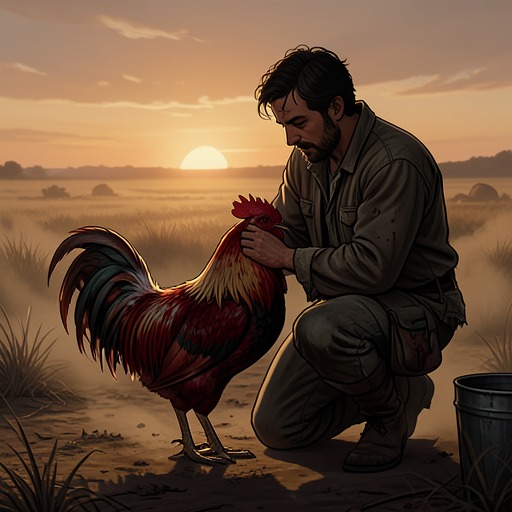
Rafo’s devotion to Macho and grief over his death
Cry MachoRafo’s devotion to Macho becomes unmistakable when a vulture takes the rooster from the truck. Rafo tries to follow, calling the bird’s name and running along the ledge, then struggles to make sense of what he has witnessed. Their bond gives the loss its force: Macho is not simply a fighting rooster or a participant in a game, but an animal Rafo loves and cannot protect.
A Bond Made Visible
The scene shows Rafo and Macho together at the rear of the truck. When Rafo turns, he sees Macho at the open doorway, coming down to the ground. A vulture swoops toward him. Macho is tied by one leg, and the rope holds as the bird of prey pulls. Rafo cries out for him and runs toward the truck, but cannot intervene before the vulture carries Macho away.
The account offers little background on how Rafo’s attachment began; its force is conveyed through what he does when Macho is in danger. He keeps calling the rooster’s name and runs after the vulture’s flight along the ledge. His response is immediate and sustained, not a passing expression of alarm. In that moment, Rafo’s attention narrows to Macho and the possibility of following him.
The Loss
As the vulture rises into the sky with Macho, Rafo continues running and screaming. Mike calls him back, but Rafo goes on toward the farthest ledge, where there is nowhere further to run. The scene makes the limits of his devotion plain: he can pursue Macho, but cannot reach or rescue him. Mike’s calls register the danger of Rafo’s own flight after the bird, while the distance between the boy and the vulture makes the separation irreversible.
Afterward, Rafo eats little from the food they have with them: a few Fritos and part of a bottle of Orange Crush. Then he becomes still and asks why the vulture did not kill Macho immediately. The question keeps the loss present. Rafo is trying to understand not only that Macho is gone, but also the prolonged suffering he saw before the vulture carried him off.
Game and Grief
Rafo’s reflections turn on the difference between a contest and a real death. He says that animals should be killed quickly, and observes that some people do the same. He then distinguishes Macho’s earlier fight with the black rooster, which he calls a game, from the other bird killing Macho, which is not. The contrast gives his grief a precise shape: the rules and excitement of a cockfight cannot make every death part of play.
Mike recognizes that Rafo may be trying to reconcile what he has just seen with what he had been told about vultures. The narration presents Mike as aware that his earlier assurance—that vultures take only dead animals—does not explain Macho’s fate. Mike’s response is an admission that he was wrong and that the rules do not hold when vultures are starving. Rafo’s attachment to Macho therefore exposes the cost of an explanation that no longer fits what happened. The rooster’s death remains both a personal bereavement and a rupture in Rafo’s understanding of the boundary between a game and genuine harm.