Rafo’s idealized image of his father
Cry MachoRafo’s idealized image of his father turns a history of broken promises into a hope for belated recognition. He imagines Howard Polk as a powerful, affectionate rodeo man who will welcome him into a life of horses and action; the image sustains Rafo’s willingness to go north even while he remembers the disappointments that created his anger. Its force comes from the distance between the father Rafo longs for and the man the story presents.
Promises and the Father's Image
Rafo’s memories make the rodeo promise the center of his conflicted picture of Howard Polk. Howard had promised to return by Saturday but appeared only the following Tuesday, and he had promised to bring Rafo a Texas sheriff’s badge without delivering it. The most important promise came after Howard had left Rafo’s mother: he said he would come for his son and take him north to the rodeo. Rafo treasured this promise because it joined two powerful desires, reunion with his father and entry into a world he already loved.
His attachment to that imagined future has roots in his childhood enthusiasm for animals and horses. Rafo had kept a variety of animals, learned to ride before he could read, and reacted to his first visit to the racetrack with such excitement that he ran onto the field and had to be restrained. A father who would take him to a rodeo therefore meant more than a chance to travel north: it offered the possibility of sharing the activity that had already become central to Rafo’s sense of himself.
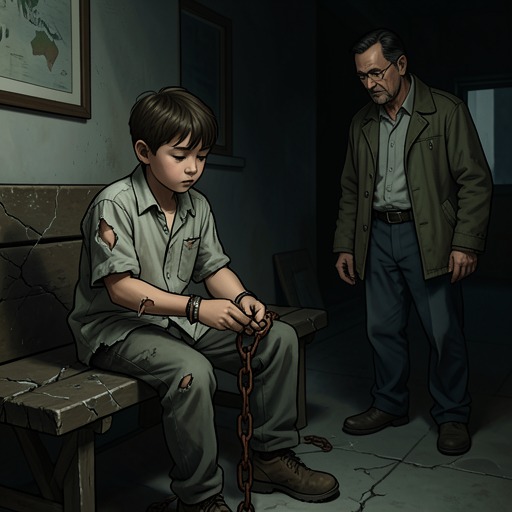
For Rafo, promises are a measure of adult responsibility. He cannot understand how grown people can make them and then forget them; he imagines that boys in his own group would punish such carelessness. His bitter conclusion that adulthood might mean forgetting promises gives his father’s failure a broader meaning. The injury is not only that Howard did not come. It is that an adult has failed to honor what Rafo regards as the heart of a relationship.
Anger and Continuing Hope
Rafo speaks of Howard as a liar and resents him as a promise-breaker, yet his rejection never becomes complete. He still wants to see his father again, even while allowing that the meeting might simply give him another reason to reject him. That unresolved possibility is the condition in which the ideal image survives: resentment protects Rafo from trusting too readily, while hope keeps open the prospect that Howard might still become the father he once promised to be.
When Mike Milo tells Rafo that Howard still has a rodeo, Rafo asks whether his father wants him. Mike answers that Howard has no other children, and Rafo nods, persuaded by the claim. The exchange shows how little reassurance is needed to revive the hope, but also how carefully that hope must be managed. Mike is not merely conveying information; he is trying to make the journey north possible by recasting the old promise as one that can still be fulfilled, if late.
Rafo later tests the reassurance with practical questions. If Howard wants him, why did he not write or telephone, and why did he not come for Rafo himself? Mike points out that Howard would not have known where to reach him while he was living in an alley. Rafo accepts that explanation, but the second question preserves the more painful issue: the father who supposedly wants him has not personally crossed the distance between them. The questions expose the gap between a hope Mike can encourage and evidence Rafo can trust.
The Rodeo Father Rafo Imagines
Rafo’s fantasy supplies Howard with the qualities Rafo most wants in a father. He pictures a large, accomplished rider on horses and bulls, a man of physical skill and action who would wake him, share breakfast, take him to the rodeo grounds, and show him off as the owner’s son. In that imagined setting, the stables would be open to him, fine horses would be his to choose, and the employees would teach him roping, handling bulls, and riding wild broncs. The fantasy is not simply that Howard will take him somewhere; it is that Howard will make him belong there.
The imagined father also offers a way around the future Rafo fears. Rafo resists the prospect of school, and Mike recognizes that the picture of a loving father and rodeo life has helped provide the materials for a dream that excludes the classroom. Rafo’s imagined days are filled with horses, instruction in rodeo skills, and a father who treats him as a companion. School, by contrast, represents a life he does not want. The father fantasy thus promises affection and identity at once: Howard would not only claim Rafo but make him an apprentice and heir to a world of action.
The Gap Between Fantasy and Reality
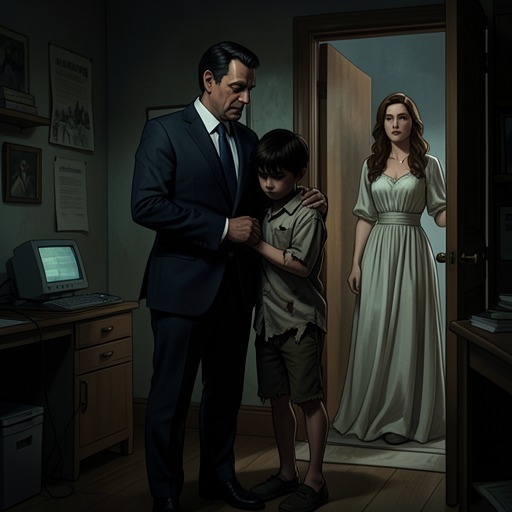
The story sharply distinguishes this dreamed-of Howard from the actual one. Howard Polk is an Ivy-educated, New York-tailored outsider who manages a rodeo without sharing the cowboys’ culture. He calls broncs broncos, rigging riggin’, and the cattle pens paddocks; his success as a manager does not make him a rodeo rider. The narrative states that he cannot ride a horse, dislikes the smell of bulls, and has little affection for the rodeo or for his son. Rafo’s envisioned companion-father therefore reverses the essential facts of Howard’s character and interests.
Mike Milo contributes to the idealization, and later recognizes that he has done so. By telling Rafo that Howard is taking him to the rodeo, Mike gives the boy grounds to picture a father who has belatedly longed for him and sent for him. But the promised welcome is uncertain. The narrative anticipates that Rafo may receive a cool, appraising smile rather than an embrace, and warns that even a small gesture of affection from him could leave him hurt if Howard does not return it. This contrast makes Mike’s reassurance both useful and precarious: it may bring Rafo north, but it cannot make Howard match the image.
Narrative Significance
Rafo’s imagined father is also shaped by the story’s public language of rodeo heroism. Polk’s Cow Stadium displays a large photograph of Mike Milo on a rearing bronc, presenting the cowboy as a grinning spectacle; the Ride-Out announcement similarly promotes Mike as a champion and star. Howard, meanwhile, calls the resident cowboys actors rather than heroes, puncturing the identity they claim for themselves. These details place Rafo’s desired father inside a culture that sells rodeo skill as masculine glory even as the story distinguishes performance from the reality of the people involved.
That distinction becomes more severe when Mike reflects on the idea of Macho/machismo after seeing the damage of a cockfight. The heroic label, he recognizes, can celebrate not only courage but cruelty toward other men and animals. Mike’s attempt to capture a wild mustang demonstrates the physical action Rafo imagines in his father, but the novel does not present such action as a guarantee of tenderness or dependable love. The fantasy joins rodeo prowess to paternal affection; the narrative keeps those qualities separate.
Rafo’s idealization therefore has a double role. It gives him a reason to consider going north and a language for the father he wants, while exposing how much of that hoped-for reunion has been supplied by promises, Mike’s persuasion, and Rafo’s own desires. In the evidence presented here, the image remains unresolved: Rafo has begun to believe that Howard may want him, but his questions about the missing letter, telephone call, and personal visit remain unanswered in any deeper sense. The hoped-for father is vivid; whether the real one can inhabit that role is the conflict the image leaves open.