Rafo’s parental abuse and abandonment
Cry MachoRafo’s parental abuse and abandonment leave him caught between longing for parental care and anger at the adults who fail him. Howard Polk’s broken promises become a lasting betrayal, while escalating conflict at home with Alexandra Muños de Santis Polk culminates in Rafo’s departure and a struggle to survive on the streets.
Broken Promises and an Absent Father
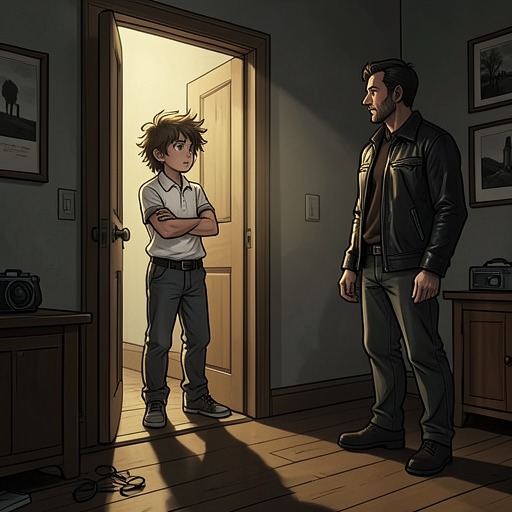
Rafo remembers Howard Polk as handsome, immaculate, and difficult to approach, but the father he idealizes is also the one who repeatedly disappoints him. Howard promises to return by Saturday and arrives days later; he promises Rafo a Texas sheriff’s badge and never brings it. After leaving Rafo’s mother, he makes a more consequential promise: to take Rafo north to a rodeo. For Rafo, who loves animals and has been passionate about horses since childhood, that prospect carries exceptional weight. Howard fails to keep this promise too.
Rafo treats a promise as the foundation of trust and cannot understand how an adult can break one. He reasons that boys who failed to keep their word among his peers would face severe consequences, and concludes that adulthood may mean forgetting promises. His rejection of adults follows directly from this contrast between his own serious regard for a pledge and his father’s repeated failures.
Conflict at Home
Rafo describes a household where his mother brought home different men and expected him to address them as fathers. He resents both the demand and the men’s authority over him; after he insults one of them, the man hits him. Rafo says that he retaliates verbally and publicly, and that his mother hates him for it. When Mike asks whether she will interfere with his taking Rafo away, Rafo insists that he himself will resist. The exchange shows that his defiance is not simply opposition to Mike: it has been shaped by conflict at home and a belief that he cannot rely on his mother to protect him.
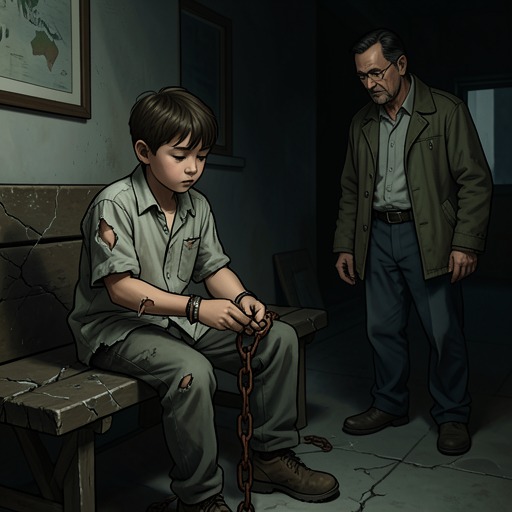
Rafo also recalls a volatile cycle with Alexandra Muños de Santis Polk: she would beat him, then cry over him and kiss him, and later beat him again. One night, after he accidentally broke a crystal carafe and she slapped him, their confrontation escalated around the broken vessel. Rafo identifies that night as the point when he left home. The account presents departure not as a sudden bid for freedom but as a response to a home where affection and violence were entangled.
Life After Leaving
Life outside the home is miserable at first. Rafo lacks reliable food and a regular place to sleep, moving among an abandoned warehouse, the basement beneath El Picador, and bus-station toilets. He has to evade police, fight for acceptance among street boys, and contend with people who prey on his vulnerability. These conditions make his flight an escape from one unsafe environment into another, rather than a clean break into independence.
Even after leaving, Rafo remains emotionally tied to the family he resents. He feels guilt about hating his mother and still wanting her love, and wonders whether he can hate either parent without also wanting to see them again. That unresolved attachment gives his anger its force: abandonment does not erase his desire for care, and the desire does not undo the harm he describes.
Significance
Rafo’s family history helps explain why promises, authority, and trust carry such weight for him. Howard’s failure to take him to the rodeo turns a particular disappointment into a wider judgment about adults; the violence at home makes leaving necessary, but the streets offer no secure substitute. His account holds anger and longing together, showing the emotional cost of parental neglect without presenting survival as proof that the abandonment has been overcome.