
Cyrano’s Public Defiance
Cyrano de BergeracThis thread traces how Cyrano de Bergerac turns public provocation into a declaration of independence from powerful patrons and social convention.
increasing Bearing strength in each event
 decreasing
Bearing strength in each eventdecreasingThe Forbidden Performance
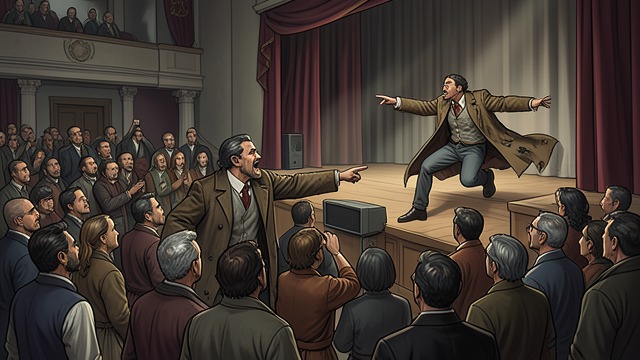
The Forbidden Performance
A public challenge
Cyrano de Bergerac interrupts Montfleury and orders him offstage, making a private grievance into a spectacle before Parisian society.
Defiance at a cost
He pays the theater to compensate its owners, but accepts neither their protection nor the approval of the gathered elite.
The Nose Insult
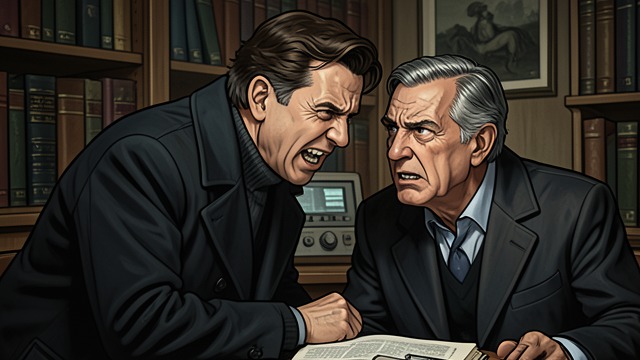
The Nose Insult
An insult answered
When Viscount de Valvert calls his nose large, Cyrano answers with an elaborate catalogue of sharper jokes, exposing the viscount’s lack of wit.
Wit becomes action
The verbal contest leads directly to a duel, where Cyrano makes his skill with language inseparable from his skill with a sword.
The Verse Duel
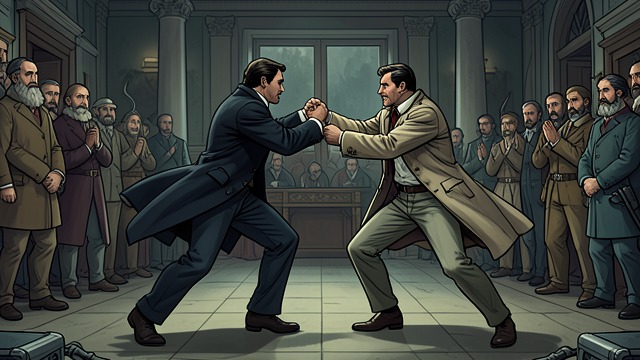
The Verse Duel
A performance in combat
Cyrano improvises a ballade as he fights Viscount de Valvert, promising to land his final stroke with the poem’s final line.
Triumph without patronage
He wins before the theater crowd by his own talent, dramatizing a code in which courage and authorship matter more than social sponsorship.
The Patron’s Offer
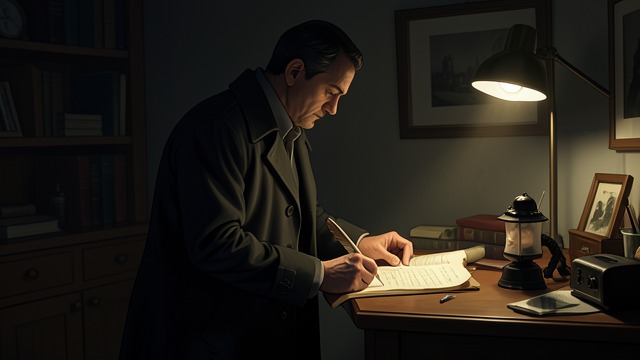
The Patron’s Offer
A tempting route upward
Count de Guiche offers to recommend Cyrano to a powerful patron, presenting advancement as the reward for his sudden notoriety.
Refusal as principle
Cyrano will not let another hand revise his writing or purchase his independence. The refusal costs him influence but defines the terms on which he will live.
The Solitary Standard
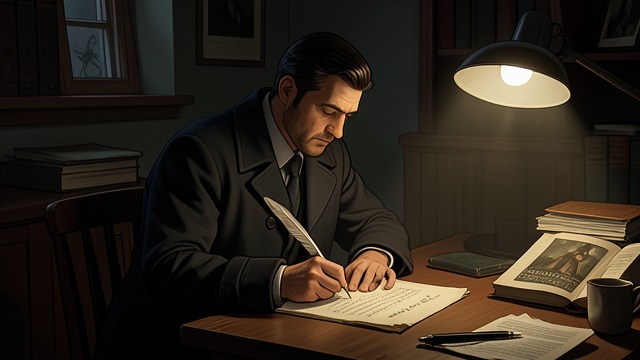
The Solitary Standard
A chosen isolation
Cyrano explains to Le Bret that he would rather remain free and unsupported than flatter patrons, beg editors, or bend his work to gain favor.
Independence tested
His pride is not a pose without consequences: it leaves him exposed to poverty and enemies. Yet he regards self-respect as a better reward than borrowed status.
Early Act I, at the Hotel de Bourgogne
Minutes after the interrupted performance
Later that evening in Act I
The morning after the duel
Later that morning in Act II
