Arras
Cyrano de BergeracArras is both a fortified city on the horizon and the pressure point of the play’s siege narrative. In Act IV, the company of Carbon de Castel-Jaloux holds a post outside its walls, caught in a military situation where the besiegers are themselves besieged. The setting makes the war’s material realities visible: trenches, scattered arms, hunger, uncertain supplies, and the danger of leaving the camp understaffed. Arras is not simply a distant objective; it is the place where military vulnerability becomes immediate and where the characters’ choices take place under its constraints.
The fortified stage
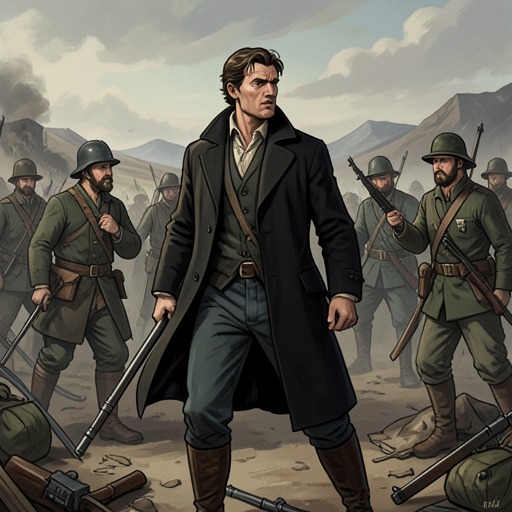
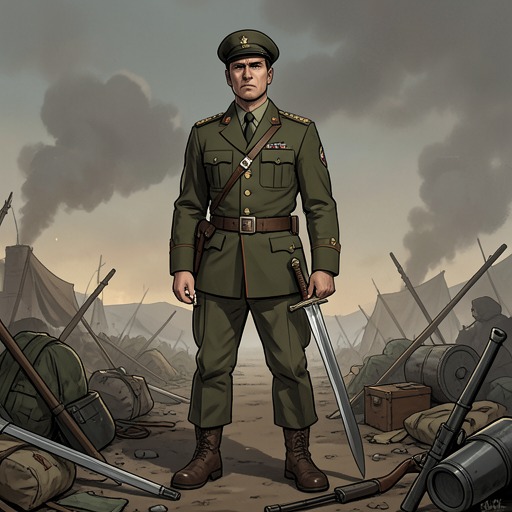
Act IV opens at the post occupied by Carbon de Castel-Jaloux’s company during the siege. An embankment crosses the stage; beyond it, the plain stretches toward the horizon, its country covered with entrenchments. The walls of Arras and the outlines of its roofs appear in the distance. Tents, arms, and drums occupy the foreground, and day is breaking. The stage places the city within sight but not within reach: its walls mark the objective, while the encampment and earthworks show the labor and danger of surrounding it.
That distance also gives the scene its military scale. Arras is not represented by an interior or by a close view of urban life. Instead, the audience sees its defensive outline across a landscape altered by siege works. The embankment and trenches organize the space as a contested military position, while the equipment strewn around the post suggests a camp at war rather than a secure base. The dawn setting establishes the moment of action without softening the exposed, provisional character of the position.
A siege that turns back on its besiegers
The conflict’s defining reversal is stated by Le Bret: the army besieging Arras has itself been trapped and besieged by the Cardinal Infante of Spain. The city therefore gives the military situation its name, but the danger does not stop at its walls. The besiegers are also under pressure, and their position can be threatened from outside. Carbon calls it disgraceful that the company should be starving while conducting a siege; Le Bret’s description makes clear that hunger is part of a larger encirclement, not an isolated discomfort.
Count de Guiche reports a further source of danger. The previous evening, the Marshal had secretly made a final effort to bring provisions to the camp, taking a considerable force with him. As a result, half the army is absent. The attempted relief may address the need for supplies, but it also leaves the remaining force more exposed: Carbon observes that the situation would be disastrous if the Spaniards knew. Arras thus concentrates a recurring conflict between immediate logistical necessity and military security. Getting food to the besieged force requires action, yet the effort itself creates a vulnerability.
Hunger, provisions, and defense
The cadets’ hunger is made explicit rather than left as background atmosphere. Carbon objects that they are starving as they besiege the city, while Count de Guiche’s account of the Marshal’s attempt to victual the camp confirms that provisioning is a serious military concern. The episode sets the grand scale of the siege—the city, the surrounding army, and the opposing force—against the practical question of whether the soldiers can be fed.
Roxane’s presence sharpens that contrast. She says the camp air has made her famished and asks for pasties, cold fricassee, and old wines. The food she requests is particular and abundant, a deliberate counterpoint to the cadets’ complaint that they are starving. In the scene, Arras is at once a place of deprivation and the setting for a meal: the needs of the camp remain visible even as food is brought forward. The contrast does not erase the hardship; it makes the scarcity harder to overlook.
The camp’s defensive resources are limited enough to receive explicit attention. Count de Guiche points out that he has one cannon left and has had it carried to a corner, where the men can use it if necessary. The cannon is a concrete provision for emergency defense, but the statement also underscores the narrowness of what remains available. Against the exposure created by the missing troops and the possibility that the Spaniards may learn of their absence, the single gun stands for preparedness under constraint, not security.
A place remembered through injury
Arras remains present beyond the immediate siege scenes. In a later conversation, Cyrano refers to an old wound from Arras that sometimes troubles him. The play does not elaborate on the wound in this brief reference, but it links the place to a bodily consequence that persists after the action has moved on. The fortified city first appears as a distant objective and the center of a precarious military position; it later returns in Cyrano’s speech as part of his personal history.
That recurrence gives Arras a double role in the drama. Its walls and entrenchments define the public geography of the siege, while the wound carries the conflict into the characters’ later lives. Hunger, a depleted force, an emergency cannon, and an old injury are distinct traces of the same setting. Arras matters not only because an army is sent to besiege it, but because the conditions gathered there—danger, shortage, and bodily cost—continue to shape what the play remembers.