Cyrano and Christian’s joint courtship of Roxane
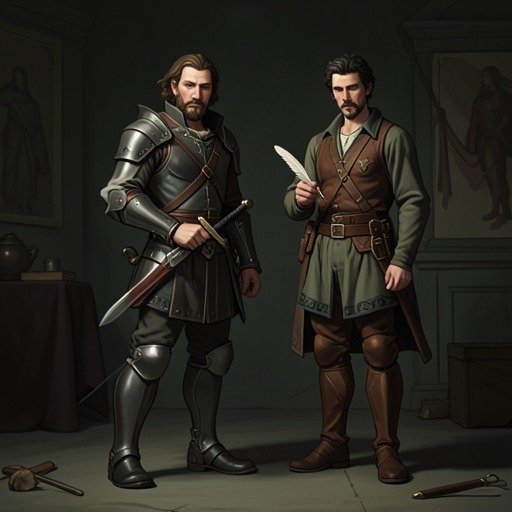
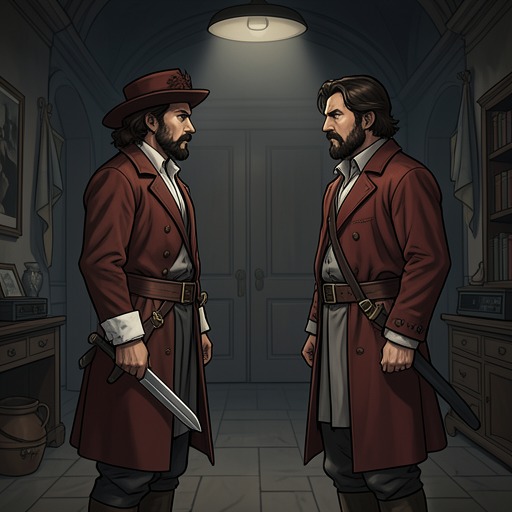
Cyrano de BergeracCyrano and Christian’s joint courtship of Roxane is a proposed partnership built around what each man believes the other can supply: Christian’s handsome appearance and Cyrano’s eloquence. When Christian confesses that he is tongue-tied and cannot tell his love, Cyrano offers to help him woo Roxane, promising that she will not be disillusioned. The arrangement gives their courtship a double voice: one man supplies the words, the other the visible presence they are meant to serve.
The Problem of Expression
Christian names his difficulty plainly: he is among those who can never tell their love. His despairing question about where to find eloquence makes the obstacle not a lack of feeling but an inability to give that feeling persuasive form. The distinction matters to the proposed courtship. Christian wants Roxane, but recognizes that sincerity by itself may not communicate what he feels.
Cyrano answers with an offer rather than a lesson. His abrupt promise, “That I lend,” makes eloquence something that can be lent across the boundary between the two men. The exchange reframes Christian’s inadequacy as a problem that another person’s skill can address. Instead of asking Christian to become a different speaker, Cyrano proposes that they act together, joining capacities neither man claims to possess alone.
The Terms of the Pact
Cyrano describes the arrangement as reciprocal: he will lend eloquence if Christian lends him his handsome “victor-charms.” The conditional structure makes the bargain more than simple assistance. Each man is to contribute a quality the other lacks, and Cyrano later makes that mutual dependence explicit by asking whether Christian will let him complete Christian as Christian completes him. Their proposed courtship is therefore organized around exchange and complementarity, not around one man merely coaching the other.
The division of roles is stated with a striking contrast. Christian marches victoriously, while Cyrano says he goes in Christian’s shadow. This image gives the proposal its practical shape: Christian will occupy the forward, publicly visible position, and Cyrano’s contribution will support him from behind it. The language also makes the arrangement unequal in visibility even as Cyrano presents it as mutually completing. The pact offers Christian the advantage of Cyrano’s words, but places Cyrano’s part in the courtship in the shadow of Christian’s appearance.
Poetry as a Resource
Cyrano insists that Roxane shall never have a disillusion, then asks whether the two of them will woo her “double-handed.” The promise is directed toward the experience they hope to create for Roxane: the collaboration is meant to prevent a gap between what she encounters and what she expects. His assurance is confident, but the scene identifies the means behind it as a partnership, not as an independent transformation of Christian’s speech.
Cyrano presents the plan as attractive to a poet, calling it an enterprise that would amuse him and tempt him. He explains that poets have their pockets full of love letters addressed to imagined Chloes and Daphnes, “creations of our noddle-heads.” The detail connects his offer to a practiced imaginative faculty: he can produce the language of love even when its imagined recipients are creations of the poet’s mind. In this courtship, that literary resource is redirected toward Roxane, while Christian’s appearance gives the proposed words a speaker and presence.
Agreement and Dramatic Tension
Christian’s response is emotional rather than contractual. He calls Cyrano his friend, throws himself into Cyrano’s arms, and remains there with him. The stage direction makes the pact visible as an immediate bond between the men: Christian’s embrace follows Cyrano’s offer and confirms the force of the proposal for him. Their collaboration begins not with a written agreement or a successful declaration to Roxane, but with this physical gesture of trust.
The scene establishes the design and promise of their joint courtship, not its eventual outcome. Its central tension lies in the separation of qualities the lovers’ courtship ordinarily seems to unite: eloquent language comes from Cyrano, while the handsome appearance belongs to Christian. The two men call this division a way to complete one another and protect Roxane from disillusion, yet the image of Cyrano in Christian’s shadow already marks the unequal visibility on which the plan depends. The partnership is both an act of friendship and a carefully staged substitution of one man’s expressive power for another’s.