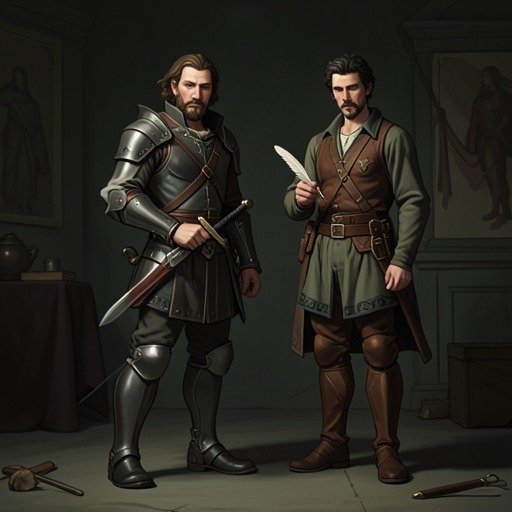
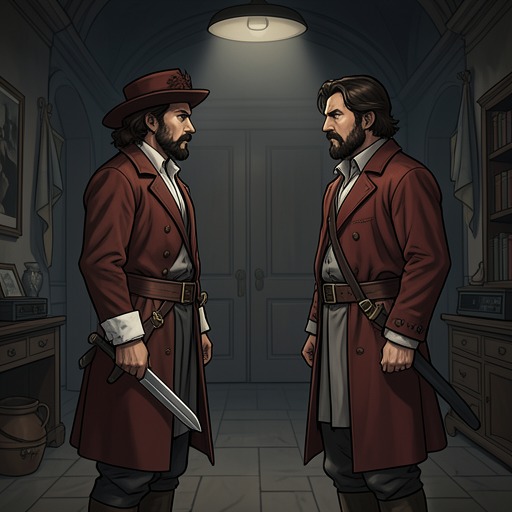
Cyrano reveals the truth about the letters to Christian
Cyrano de BergeracCyrano reveals the truth about the letters to Christian when Cyrano de Bergerac admits that he has been writing to Roxane more often than Christian realizes, giving Christian knowledge of the hidden authorship behind their courtship. The confession turns the letters from Christian’s apparent expression into evidence of Cyrano’s sustained, concealed work—and immediately raises the question of whether Roxane should be told.
Confession and Hidden Authorship
Cyrano explains that he had taken it upon himself to express Christian’s passion for Roxane. His admission goes beyond having helped with a few lines: at times, he says, he wrote without even saying that he was writing. The distinction matters to the scene. Christian had been receiving the outward credit for words whose composition Cyrano had quietly assumed, so the confession reveals both the extent of Cyrano’s involvement and the concealed division between the letters’ apparent speaker and their actual writer.
The Scale of the Writing
Christian asks whether Cyrano wrote every day. Cyrano answers that he wrote twice a day. That specific frequency gives the deception a rhythm and duration: the letters were not an isolated intervention but a repeated practice. Christian’s surprise registers the gap between what he believed about the correspondence and what Cyrano had been doing in his name.
Disclosure Put to a Choice
After learning the truth, Christian insists that Roxane should hear it and choose between the two men. He wants to be loved in his own right, or not at all, and proposes speaking to her before allowing her to decide. Cyrano refuses to tell her, asking Christian to spare him that disclosure. The exchange therefore does not resolve the concealed authorship; it makes the conflict over whether to reveal it explicit.
The Scene’s Unfinished Outcome
Christian tells Roxane that Cyrano has something important to say to her, then leaves. His action brings Roxane directly to Cyrano and creates the opportunity for the truth to pass from one man to her, but this scene ends before Cyrano speaks. The distinction is consequential: Christian now knows who wrote the letters and has urged disclosure, while Roxane has only been summoned to hear what Cyrano may choose to tell her.