Cyrano’s love letters to Roxane
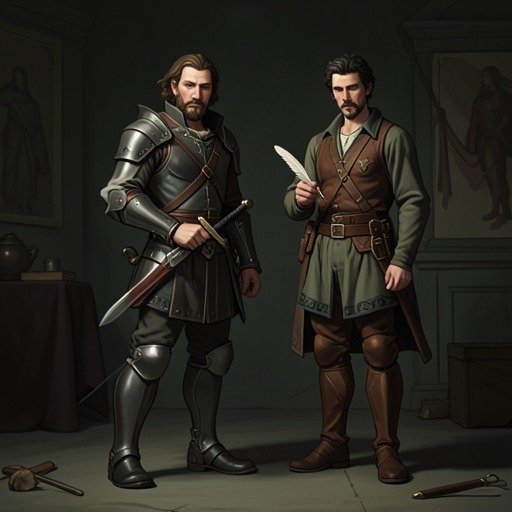
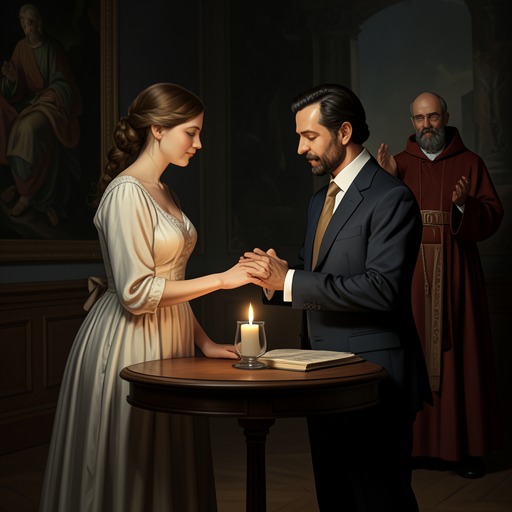
Cyrano de BergeracCyrano’s love letters to Roxane are both a means of courtship and the material record of a concealed authorship: Cyrano de Bergerac writes the words, while Christian de Neuvillette appears to speak them. Their changing status—from a letter Cyrano has long composed in imagination, to correspondence passed into another man’s hands, to a surviving document that reveals the secret—makes the letters central to the play’s treatment of eloquence, love, and recognition.
Composition and the Unsent Letter
Cyrano’s writing begins before pen touches paper. When he finally takes it up, he says that he has written and rewritten the love letter in his own mind so often that it is ready for pen and ink. The imagined text is therefore not a sudden improvisation: it has been repeatedly rehearsed inwardly, held as a private expression of a love he has not openly declared to Roxane. The movement from thought to writing gives physical form to words that have already become familiar to their author.
The letter’s first practical obstacle is not its language but its destination. Cyrano produces a letter he has written and tells Christian, “Take it! Look, it wants but the address.” The declaration makes the separation between authorship and apparent sender concrete: Cyrano has supplied the words, but the letter can be addressed so that it reaches Roxane under Christian’s name. A private composition is thus made available for another man’s courtship.
Cyrano describes the handover as a transformation rather than a simple forgery. He tells Christian, “Take it, and change feigned love-words into true,” and assures him that Christian will see Cyrano was present in the lines. The words are “feigned” insofar as they will be received as Christian’s own, yet they express Cyrano’s genuine feeling. The letter can consequently carry two meanings at once: a persuasive declaration to Roxane and a concealed confession from its actual writer.
Borrowed Correspondence and Its Risks
The arrangement extends beyond the single addressed letter. Cyrano’s remark that their pockets are full points to a body of correspondence, while his later complaint, “I am aweary of these borrowed letters,” registers the strain of sustaining it. The letters are useful precisely because Christian can present their eloquence as his own; that same usefulness binds Cyrano to repeated acts of concealment and makes the division between his words and Christian’s public identity harder to bear.
The correspondence also becomes a recurring undertaking with physical and personal risk. Cyrano refers to taking letters at each day’s dawn and to the danger involved. The phrase establishes a repeated rhythm rather than a one-time exchange: letters continue to travel, and their delivery requires action as well as composition. Their movement keeps the relationship between Roxane and Christian active, while Cyrano remains present through the writing without receiving recognition as its source.
Christian eventually identifies the power the letters have acquired over Roxane. He tells Cyrano that the letters brought her there and that they turned her head during the preceding month. In this account, the correspondence has consequences beyond expressing affection: it helps shape Roxane’s attachment and her actions. Yet Christian’s words do not erase the difference between the apparent lover and the writer. The letters persuade as Christian’s, even though Cyrano has taken it upon himself to express Christian’s passion.
The Farewell Letter and the Secret’s Survival
A letter in Christian’s doublet becomes especially important in the later scenes. Cyrano draws a letter from his own doublet and opens it to read; Christian identifies it as a sad farewell letter. The exchange connects the correspondence with parting and loss, giving a particular letter a role beyond the continuing courtship. The text does not make every letter interchangeable: this farewell carries its own emotional weight and remains bound to Christian’s absence.
The surviving letter returns much later as a material clue. Roxane sees a letter in Christian’s doublet, and, years afterward, points to “this letter brown with age.” Its aged appearance marks the time that has passed, while its continued presence keeps the earlier correspondence available for reconsideration. Roxane recalls that Christian had promised her a letter one day, and Cyrano reads from the document. The old letter therefore links the present scene to the promises and losses embedded in the earlier exchange.
Its words make the secret legible. The passage Cyrano reads includes, “Here, dying, and there, in the land on high,” and Roxane recognizes the truth with the cry, “’Twas you!” The letter’s significance changes at that moment: what had served as apparent evidence of Christian’s love becomes evidence of Cyrano’s authorship. Roxane then asks why Cyrano kept silent for all those fourteen years. Her question establishes the duration of the concealment, while the letter itself supplies the recognition that speech had not provided.
Authorship, Love, and Recognition
The letters’ central tension lies in the distance between the voice Roxane encounters and the person who composes it. Christian can receive the benefit of the written eloquence, while Cyrano places his own feeling into lines that circulate under another man’s name. The arrangement is not merely a device for making Christian more persuasive: Cyrano explicitly says that he is present in the lettered lines and that he undertook to express Christian’s flame. The correspondence thus records an intimate collaboration whose terms conceal an unequal distribution of authorship and credit.
That concealment gives the letters a double life across the play. In circulation, they help sustain Roxane’s belief in Christian’s expressive love; in retrospect, they reveal how much of that love’s language came from Cyrano. Their effect depends on Roxane reading them without knowing their true writer, while their final force depends on the preserved letter being read again with that knowledge. The old, brown document does not simply recall the past: it alters the meaning of the past correspondence and makes Cyrano’s long-hidden presence unmistakable.