De Guiche’s plan to use the Gascon cadets as a delaying force
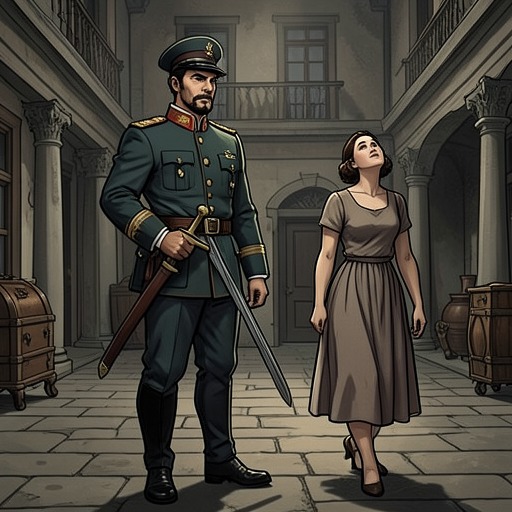
Cyrano de BergeracCount de Guiche’s plan to use the Gascon cadets as a delaying force makes the danger at Arras brutally explicit: the cadets are to hold off an attack long enough for the Marshal to return, and Count de Guiche expects them to be killed doing it. The order arises from a siege already marked by hunger and encirclement, but it is not presented as a purely military calculation. Count de Guiche says he serves both his king and his personal grudge, making the threatened sacrifice at once a tactical necessity and an act entangled with resentment.
A camp short of food and time
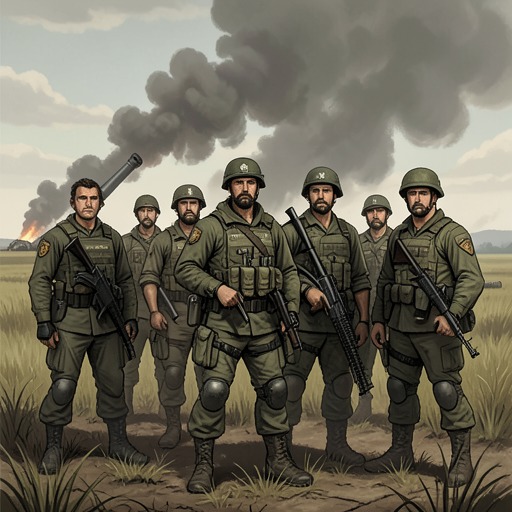
The plan takes shape amid a crisis of supply and position. Carbon de Castel-Jaloux calls it disgraceful that the French should starve while besieging, while Le Bret points out the paradox: the besiegers themselves are trapped and besieged by the Cardinal Infante of Spain. The French camp is therefore under pressure from two directions—hunger within and the threat of attack without. This context gives the cadets’ impending assignment its material stakes: they are not being sent into danger from a secure position, but asked to hold a vulnerable camp in an already desperate siege.
The immediate opening for the Spanish attack comes from a failed effort to provision the French. Count de Guiche reports that the Marshal attempted a final effort the previous evening to bring food, taking a substantial force with him. Half the army is consequently absent from the camp. Carbon asks whether the Spanish know; Count de Guiche answers that they do, and that they will attack. The peril is thus not merely a possibility inferred by the officers: Count de Guiche presents the enemy’s knowledge and the approaching assault as facts, while the absent troops cannot return in time to prevent the danger.
The order to hold the enemy
Count de Guiche identifies time as the resource the camp must gain. The Marshal will return, but the attack is expected within an hour. The cadets are first told to make ready; after the alarm of swords and belts being buckled, they sit down again and resume their games. The abrupt return to cards and dice gives the scene a striking contrast: their apparent leisure unfolds under a stated deadline, with the prospect of battle so near that preparation has already begun and yet the men return to their game.
Count de Guiche’s actual instruction makes the cost of delay unmistakable: the cadets are to let themselves be killed. The order does not promise them reinforcement before the fighting or describe a safe withdrawal; their deaths are built into the time-buying purpose. In military terms, they are to keep the Spanish attack occupied until the Marshal returns. In dramatic terms, the bluntness strips away any comforting language of routine duty and makes the commanders’ calculation audible. The plan depends on the cadets’ courage, but it also treats their lives as the price of the camp’s survival until the absent force comes back.
Resentment within command
The proposed sacrifice is complicated by Count de Guiche’s admission that he serves his king and his grudge as well. He has already confronted the cadets as rebels, accusing them of scoffing at him and invoking his conduct in war. Their hostility is not simply an abstract disagreement: one cadet recalls the moment Count de Guiche’s scarf fell and says he would have picked it up and put it on. The gesture turns an earlier public slight into a pointed display of contempt, and Count de Guiche’s response makes clear that the conflict has not disappeared beneath military command.
By acknowledging both loyalty and resentment, Count de Guiche does not deny the strategic reason for the order; he reveals that another motive accompanies it. His selection of the cadets is framed in the scene alongside their reputation for courage, but the personal grudge prevents the assignment from reading as neutral deployment alone. Cyrano’s gratitude is reported in response to Count de Guiche’s declaration, a reaction that registers the force of his candor without erasing the danger the cadets face. The episode leaves the tension intact: an urgent military need and a private antagonism converge on the same order.
Provisions and a weapon for the defense
The camp’s hunger is answered, at least in the immediate scene, by Roxane’s arrival and her demand for food. She says that the camp air has sharpened her appetite and calls for pasties, cold fricassee, and old wines. Her words recast the starving camp as a place where a meal can be laid out, directly contrasting Carbon’s complaint with an abundant bill of fare. The scene supplies no basis for treating this food as a solution to the army’s wider shortage; its significance lies in the sudden provision and the change it brings to the cadets’ immediate circumstances.
Count de Guiche also identifies a cannon that has been carried to a corner and makes it available for the cadets to use if needed. This detail qualifies the picture of a force sent to die without means: the cadets are still assigned a perilous delaying role, but the scene gives them a weapon for their defense. The order, the expected attack, the returning Marshal, the food, and the cannon together define the plan’s stakes and limits. The text establishes what the cadets are asked to do and what resources are placed within reach; it does not, in this exchange, settle the outcome of the coming fight.
Significance of the plan
The episode makes siege warfare concrete through its dependencies: food must reach the camp, half the army’s absence creates an opening, enemy knowledge turns that opening into an imminent attack, and the Marshal’s return sets the time the defenders must gain. Against this chain of logistical pressures, the cadets’ bravery is neither detached spectacle nor a substitute for military supplies. Their stand is required because the camp cannot presently call on its full force and must endure until relief returns.
At the same time, the plan exposes the human cost concealed by the language of command. Count de Guiche names the cadets’ likely deaths plainly, and his admission of personal grievance makes the order morally uneasy even as the threat is real. Roxane’s food and the cannon sharpen the contrast between practical support and sacrificial duty: the camp receives immediate provisions and a means of resistance, but neither detail cancels the assignment to delay the enemy. The scene ends with the plan established, not its result; its force lies in making the coming defense a conscious wager of the cadets’ lives for time.