My panache
Cyrano de BergeracMy panache is Cyrano de Bergerac’s final answer to loss: after declaring that his enemies can take his laurel and rose, he insists that one unstained thing remains his. The brief phrase turns panache from a quality of style into a final claim of inward freedom, delivered as Roxane bends over him and the play reaches its curtain.
The Last Possession
Cyrano’s declaration follows a sequence of surrender and resistance. He says that the laurel and rose have been stripped from him, then accepts the loss with a defiant “Take all!” Yet he does not treat everything as taken. He imagines entering heaven with his casque doffed and bowing at its threshold, and says that he will bear away one thing “void of stain or smutch.” In this immediate context, panache is not an award or an object that can be seized; it is the irreducible quality he claims to have kept for himself.
The phrase answers the threat of total dispossession without denying the losses that precede it. Cyrano does not reclaim the laurel or rose. Instead, he distinguishes outward tokens from the inward thing they cannot determine. His repeated insistence that he holds it “despite you” makes the claim an act of resistance: even at the point of collapse, he defines what remains by his own terms.
Gesture, Recognition, and the Final Word
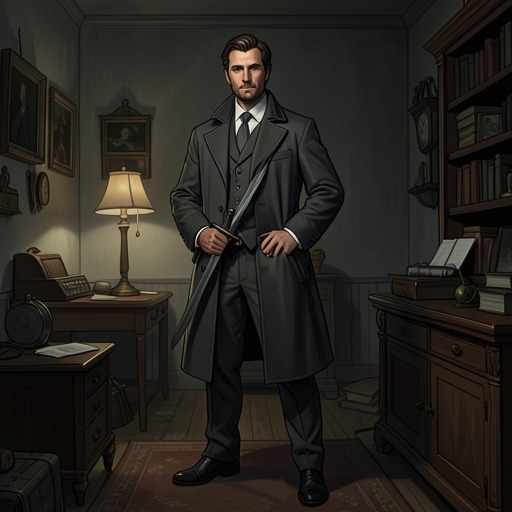
The word is prepared by physical action. Cyrano declares that he is still falling while fighting; he makes passes in the air, then stops, breathless. After naming what remains unstained, he springs forward with his sword raised. The sword falls from his hand, and he staggers. The stage action thus places the limit of bodily resistance directly before the final exchange: he can no longer sustain the fight, but the assertion of panache survives its failure.
Roxane bends and kisses his forehead. Cyrano opens his eyes, recognizes her, and smiles before speaking the words “MY PANACHE.” The recognition gives the utterance an intimate setting, but his answer is not a declaration of love or a request for comfort. It returns to the thing he has defended throughout the preceding speech. The last word is therefore both a response to Roxane’s presence and the conclusion of his argument about what cannot be taken from him.
Theatrical and Thematic Force
The final phrase is short enough to land as a concentrated answer to the longer speech. Its emphasis falls not on the losses named earlier but on the surviving quality: Cyrano’s final spoken claim gathers defiance, self-possession, and style into two words. The capitalized delivery gives it the force of a final declaration rather than an explanation.
The ending also holds physical defeat and moral self-definition together. Cyrano’s sword has fallen, his body is failing, and the curtain follows his recognition and reply; nevertheless, the scene does not close on the image of defeat alone. Panache is presented as the one possession he believes he can carry beyond the losses of the world, and his smile makes that assertion the play’s final note.