Ragueneau's pastry shop
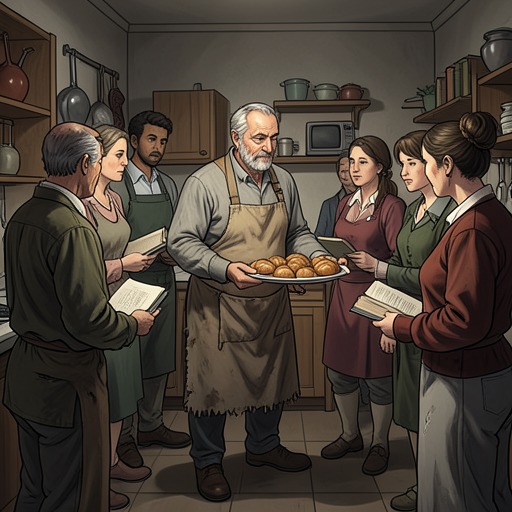
Cyrano de BergeracRagueneau's pastry shop is Act II's bustling theatrical setting, introduced as The Poet's Eating-House and described as Ragueneau's cook and pastry-shop. A large kitchen occupies the corner of the Rue St. Honore and the Rue de l'Arbre Sec; through its glass door, the streets appear in the gray dawn. The shop is more than a backdrop for food preparation: scenes there bring Cyrano de Bergerac's private hopes and his collaboration in courtship into the same practical, public-facing space.
Setting and Layout
The stage description establishes the shop as a large kitchen, with the two streets visible beyond the glass door. The gray dawn gives the opening of Act II a specific time and light: the city is visible outside while the action is situated among the shop's working arrangements. The location's name, The Poet's Eating-House, joins the worlds of food and poetry before the characters' conversations make that conjunction consequential.
The interior includes an iron hoop suspended from the ceiling by a string, which can be drawn up and down, with big game hung around it. The shop also has a wooden gallery continuing the staircase and apparently leading to other similar little rooms. Beneath the stairs, ovens glow red in the darkness. These details make the setting vertically layered: the ceiling-hung hoop, the gallery and rooms above, and the ovens below give the kitchen a working architecture rather than the emptiness of a neutral stage.
Scenes and Encounters
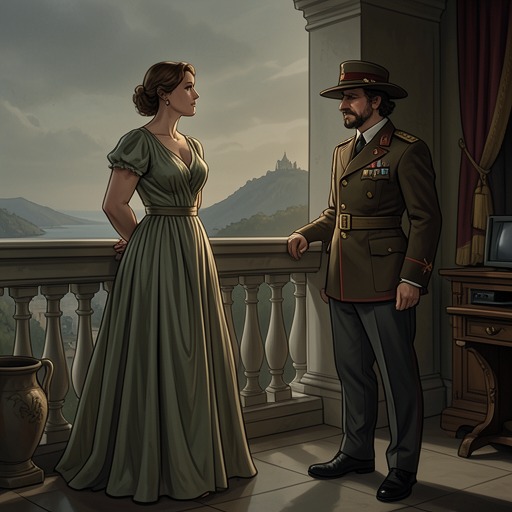
The shop's scene list places Cyrano, Roxane, and the duenna together there. This brings Cyrano into a meeting with Roxane within the everyday surroundings of Ragueneau's establishment. The location thereby holds a contrast between the ordinary business of a cook and pastry-shop and the emotionally charged encounter of the characters; its kitchen setting does not remove the intimacy of the scene, but gives that intimacy a concrete place in the city.
The shop also frames Cyrano's offer to lend eloquence in return for another man's handsome, victorious charms. He proposes that the two qualities, combined, can make a romantic hero. The exchange gives the setting a further dramatic function: the place associated with a poet and an eating-house becomes the site where verbal skill is offered as something that can be shared, alongside physical attractiveness. Cyrano's promise makes the shop a point of departure for the partnership between eloquence and appearance that shapes the courtship.
Dramatic Function
The shop gathers contrasting kinds of activity without erasing their differences. Its ovens, suspended game, and working kitchen establish a material environment, while the scenes staged within it turn toward personal hope and the making of romantic speech. The view through the glass door keeps the streets in sight; inside, the characters meet and words are exchanged. In that arrangement, the location links the outwardly practical world of the shop to Cyrano's imaginative labor on behalf of love.
The shop's importance rests not on a change to its physical setting but on the different encounters it accommodates. It is identified through its culinary work and distinctive fittings, then associated with Cyrano and Roxane's meeting and Cyrano's offer of eloquence. Those uses make Ragueneau's pastry shop one of Act II's central settings: a kitchen that becomes, through the scenes played there, a place where affection and artistic invention meet.