Roxane Discovers Cyrano Wrote the Letters
Cyrano de BergeracRoxane Discovers Cyrano Wrote the Letters is the disclosure that gives a new meaning to Cyrano de Bergerac’s long silence: Roxane recognizes him as the author of the letters she associated with Christian and identifies his voice as the one that once thrilled her. The truth emerges not through a planned confession but through a letter read aloud, a familiar voice, and Roxane’s increasingly certain interpretation of what she sees and hears. By the time she names Cyrano, the evening darkness has turned recognition into the scene’s governing drama.
The Reading and the Change of Light
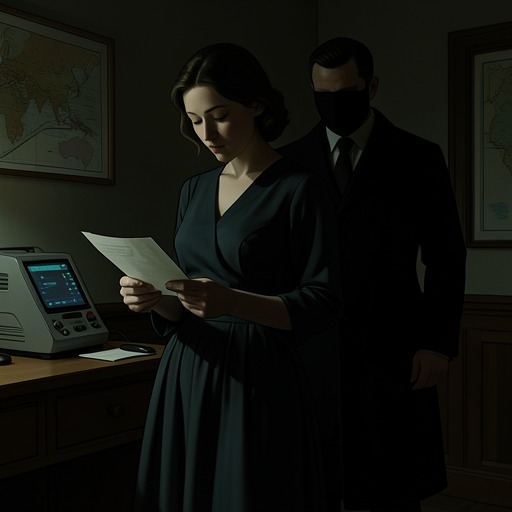
The scene begins with Roxane returning to her tapestry frame, folding it up and sorting her wools. Cyrano reads a letter addressed to her, a farewell that says its writer must die that very night. The letter’s intimate language makes the reading emotionally charged, but the decisive clue is not simply what the words say: Roxane notices how Cyrano reads them. She remarks on the strangeness of his voice and realizes that she has heard it before. The reading therefore brings together written expression and vocal presence, two traces that had seemed to belong to different men.
As Cyrano continues, the letter speaks of a life and love given wholly to Roxane. The shades of evening fall almost imperceptibly. That gradual change matters to the action: Roxane’s suspicion develops while the scene itself slips into darkness, and the reading continues as ordinary visibility recedes. She comes closer without Cyrano noticing, passes behind his chair, and looks over the letter. The stage direction makes her discovery an act of quiet observation before it becomes a spoken accusation. She does not interrupt the reading at the first sign of recognition; instead, she listens and looks, testing the connection between the voice and the written page.
Roxane Identifies the Author
The recognition gathers force in stages. Roxane first identifies the voice as one she has heard before, then connects it to the words of the letters. In the darkness, she concludes that for fourteen years Cyrano has played the part of the kind old friend who comes to laugh and chat. The discovery reaches beyond authorship: the familiar visitor’s role has concealed a devotion that Roxane had not understood. Her description of those years makes the revelation retrospective, altering the meaning of their long-standing friendship without changing its outward history.
Cyrano swears, but Roxane says she sees through the generous counterfeit and identifies the letters as his. She then names the voice that once thrilled the night as his as well. Cyrano denies her conclusion, swearing that she is mistaken. The contrast between her increasingly precise recognition and his denial gives the exchange its tension: she is no longer relying on a vague impression but assembling distinct signs—the writing and the voice—into a single explanation. His resistance does not erase the evidence she has gathered; it makes the difference between what she now understands and what he will admit more visible.
The Letter, the Bloodstains, and the Silence
Roxane’s understanding expands as memories return. She asks why Cyrano kept silent through all those years, especially when the letter was one Christian never wrote and its bloodstains were Christian’s. The physical marks and the authorship thus point in different directions: the words belong to Cyrano, while the blood recalls Christian. The letter is not merely a message being read in the present. Its writing and stains preserve separate parts of the past, and Roxane’s recognition brings those parts together.
She asks why Cyrano maintained his noble silence for so long and why it is broken only now. The question makes the duration of his concealment part of the revelation itself. Roxane has discovered who wrote the letters, but the scene also exposes the cost and persistence of the hidden arrangement: Cyrano has remained beside her as a friend while the voice and language she remembers have been his. His brief denial cannot restore the earlier understanding, because Roxane has already connected the voice, the letters, Christian’s absence as their writer, and the bloodstains.
Dramatic Significance
The disclosure is staged through a convergence of sound, text, movement, and diminishing light. Roxane hears before she fully sees; she approaches silently, reads over Cyrano’s shoulder, and only then speaks her conclusion. The audience follows that progression from an uneasy recognition of the voice to an explicit identification of the writer. The letter’s reading slows the revelation rather than delivering it as a single announcement, allowing each clue to change the meaning of the preceding one.
The scene also turns the act of reading into evidence. Cyrano’s voice makes the words present in a way that the page alone could not, while the page gives Roxane something to inspect and connect with the remembered voice. Her recognition therefore depends on more than a sudden declaration: it emerges from the relation between how the letter sounds and what its material traces reveal. The deepening dusk gives this recognition a concentrated dramatic setting, as Roxane moves from hearing an uncanny familiarity to naming the concealed author. At the scene’s close, the central fact is no longer only that Cyrano wrote the letters; it is that Roxane has understood the silence surrounding them and has begun asking him to account for it.