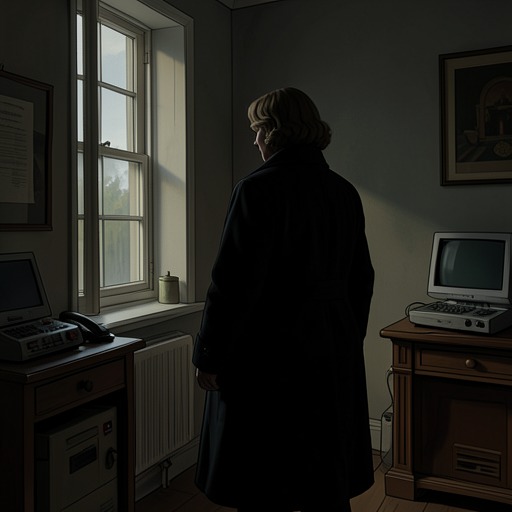
Roxane crosses the Spanish lines to reach Arras
Cyrano de BergeracRoxane crosses the Spanish lines to reach Arras at a moment when the French camp is both hungry and exposed. Driving her carriage through devastated country, she passes Spanish sentries by telling them she is going to see her lover; when she arrives, the carriage yields food and Ragueneau to soldiers who have been complaining of starvation. The journey brings personal devotion into the material crisis of the siege, where food, troop strength, and the ability to move safely are matters of immediate consequence.
The siege and its precarious position
The camp’s predicament is established before Roxane explains her route. Carbon calls it disgraceful that the French should starve while besieging, while Le Bret remarks on the siege’s reversal: the besiegers have themselves been trapped and besieged by the Cardinal Infante of Spain. Their words make the camp’s hardship more than an inconvenience. The French are short of provisions inside a siege whose surrounding forces can also constrain their movement and supply.
De Guiche adds a further danger. He reports that the previous evening the Marshal secretly made a final effort to victual the French, taking a substantial force of troops with him. As a result, half the army is absent from the camp. De Guiche observes that an attack at that moment would give the enemy an opportunity, and Carbon recognizes the danger if the Spaniards discover the force’s absence. Roxane’s arrival therefore takes place amid a double vulnerability: the camp needs supplies, and a large part of its army is away.
Roxane’s passage through Spanish-held country
When asked how she found her way to the army, Roxane calls the method simple: she continued onward as far as she could see the country laid waste. She also says that the devastation was so terrible that she could scarcely have believed it without seeing it. Her account gives the journey a physical route and a stark landscape, rather than presenting her arrival as an unexplained appearance at the camp.
She traveled quietly in her carriage. Spanish hidalgos sometimes tried to stop her, but she met them at the carriage window with her sweetest smile. Asked whether they demanded an account of her destination, she says they did so often. Her answer was that she was going to see her lover. In her telling, even the fiercest Spaniard would then solemnly shut the carriage door and signal his men to lower it. The passage depends on a striking contrast: armed sentries have the power to halt a traveler, yet her avowed romantic purpose wins her passage. Roxane presents the repeated encounters as the means by which she crossed the enemy lines, not as an armed escape or a military operation.
Arrival with food and Ragueneau
At the camp, the news that Roxane has arrived is followed by the practical question of what the soldiers can eat. She answers that the camp air has made her hungry too and names pasties, cold fricassee, and old wines as her bill of fare. When the others ask where such food could be found, she replies, “In my carriage.” The answer transforms the carriage from the vehicle that carried her across dangerous country into the source of a meal for the camp.
Roxane also points out that the sauces can be served hot. The cadets rush pell-mell to the carriage and recognize Ragueneau, greeting his presence with acclamations. The scene thus reveals that the provision is not limited to a list of dishes: Ragueneau is there as a welcome figure associated with their arrival and preparation. The hungry soldiers’ rush gives the discovery its visible consequence. Their earlier talk of starvation gives way to an immediate prospect of food, while the carriage becomes a small, mobile store of hospitality inside a besieged camp.
Significance of the arrival
Roxane’s journey joins two forms of passage through danger. She moves across territory held by the Spanish by presenting herself as a woman traveling to her lover; she then brings the contents of her carriage into a camp whose soldiers lack provisions. The account does not describe a battle or a change in the military balance. Instead, it makes the siege’s strain concrete through the contrast between the devastated land she crossed, the absent half of the army, and the food suddenly available to the cadets.
The arrival also shifts the scene’s emphasis from military shortage to a brief, tangible relief. Carbon has called starvation disgraceful; Le Bret has described the French as besieged in turn; De Guiche has disclosed the camp’s reduced strength. Against those pressures, Roxane’s carriage contains pasties, fricassee, wine, and Ragueneau. De Guiche later points out that he has had one cannon carried to a corner for the men to use if needed, keeping the military danger in view even as the arrival offers a respite. Roxane’s crossing is therefore significant not because it ends the siege, but because it brings companionship and food into a camp where both need and danger have been made unmistakable.