
From First to Aurora
Daisy Jones & the SixDaisy Jones’s recording career moves from a label-controlled debut to a collaborative record that finally makes her songwriting central.
increasing Bearing strength in each event
 decreasing
Bearing strength in each eventdecreasingThe Unwanted Demo

The Unwanted Demo
A voice packaged for sale
Daisy Jones rejects a demo session when Hank Allen asks her to sing more smoothly and sweetly. She refuses to reshape her voice merely to satisfy someone else’s commercial expectations.
A boundary precedes a contract
Her refusal signals a desire to control how she sounds, even before she has the leverage to determine what she records. It anticipates the larger struggle over her first album.
A Contract She Does Not Read

A Contract She Does Not Read
Signing without attention
Daisy Jones signs with Runner Records but does not read the contract. She wants to write songs and get high, not manage the business arrangements that will govern her career.
Freedom has a structure
Her avoidance leaves her vulnerable when the label chooses the material. Daisy learns that artistic independence also requires attention to the conditions under which work is made.
The Album She Resists

The Album She Resists
A label’s repertoire
Runner Records expects Daisy to record songs from its catalogue, not the contents of Daisy's songbook. She feels that the people who signed her do not care about her as a songwriter.
A reluctant compromise
Teddy Price argues that her existing songs need more development and offers a path toward a later album of her own material. Daisy eventually accepts the immediate obligation while holding onto the larger goal.
First Is a Beginning

First Is a Beginning
An imperfect debut
Daisy Jones records ten ballads for First, a record marketed in a conventional style. She does not consider it the album she truly wanted to make, but she can hear herself within it.
Recognition arrives gradually
The album earns her public attention and demonstrates that her moment may still come. Its title expresses an intention to make more records, not to treat compromise as the end of her career.
Aurora Gives Her Equal Credit
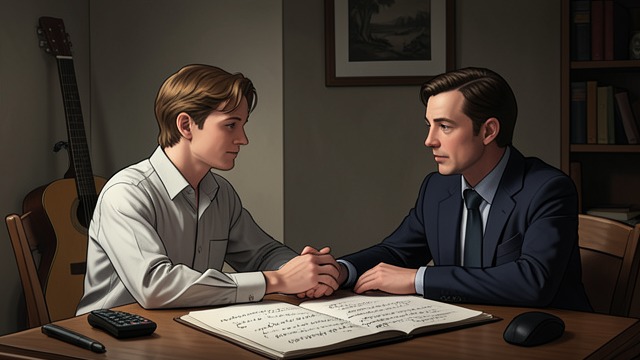
Aurora Gives Her Equal Credit
A full creative partnership
Daisy Jones joins The Six as a member and writes alongside Billy Dunne. Her contributions shape songs, arrangements, and the emotional identity of Aurora.
The recognition she sought
Aurora makes Daisy’s songwriting impossible to dismiss, bringing the recognition she wanted since the label rejected her early work. The achievement is real, even though the collaboration also exposes her to new emotional and personal risks.
1973, before Daisy’s signing
1973, after the demo session
1974
early 1975
1977 to June 1978
