
The Meaning of the Middle
Daisy Jones & the SixThe oral-history structure keeps competing memories in tension, showing that the band’s history cannot be reduced to one person’s account.
increasing Bearing strength in each event
 decreasing
Bearing strength in each eventdecreasingA Record Built from Voices

A Record Built from Voices
Many witnesses
The book draws on interviews with band members, family, friends, and industry figures, alongside documents and lyrics. Each voice supplies details that another speaker may omit or remember differently.
A portrait with limits
The biographer acknowledges missing witnesses and uneven willingness to speak. The form makes incompleteness visible rather than pretending that distance has produced a perfectly neutral record.
The Same Event, Different Memories
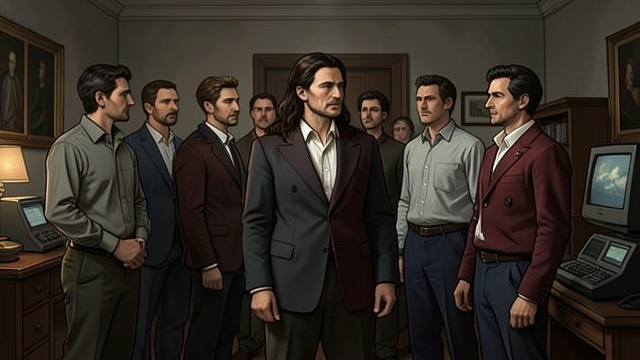
The Same Event, Different Memories
Memory diverges
Participants disagree about timing, motives, and details, from the band’s early recording schedule to who initiated particular decisions. The discrepancies reveal how experience is filtered through each person’s position.
Contradiction becomes evidence
A conflict between accounts does not automatically make one witness dishonest. It can show that people remember the same event through different loyalties, guilt, or pain.
The Kiss That May Have Happened

The Kiss That May Have Happened
Two accounts remain
Daisy Jones remembers leaning in and feeling Billy Dunne’s lips nearly meet hers. Billy describes losing himself briefly before pulling back, but each account holds its own emphasis.
The uncertainty matters
The event cannot be resolved into a clean verdict about desire or restraint. Its importance lies in the way both remember the dangerous possibility and the decision not to cross further.
The Chicago Night Reconstructed
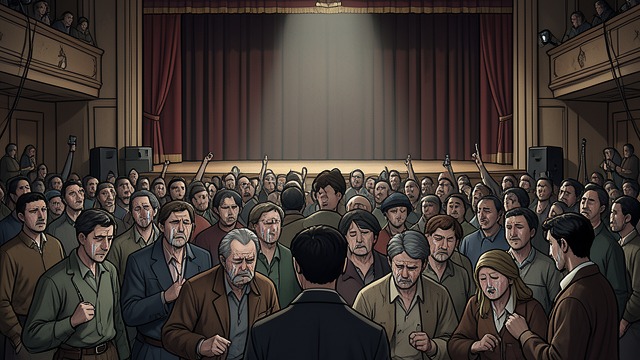
The Chicago Night Reconstructed
Several crises overlap
The accounts of the final show, Karen’s decision, Graham’s grief, Billy’s near relapse, and Daisy’s departure arrive from different witnesses. No single narrator sees the whole night.
The truth emerges between them
Contradictory memories nonetheless establish the central pattern: each person reaches a private limit, and the band cannot contain all of their simultaneous losses.
The Daughter Behind the Book
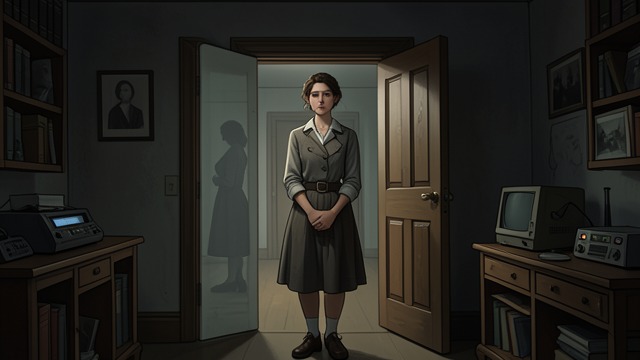
The Daughter Behind the Book
A hidden point of view
The biographer is revealed as Julia Dunne Rodriguez, Billy and Camila’s daughter. Camila’s death means Julia cannot ask her mother about the most consequential Chicago events.
Personal history completes the account
Daisy Jones confirms that Camila opened the hotel door for her and stayed with her. The discovery makes the book not only a reconstruction of a famous band but also a daughter’s inheritance of her parents’ past.
the biographer’s eight-year research period
accounts of the band’s touring years
the Aurora recording period
July 12–13, 1979
after Camila’s death in 2012
