Artie Snyder
Daisy Jones & the SixArtie Snyder is a lead engineer whose work places him inside the practical and creative processes behind The Six’s recordings and Aurora. His account joins technical precision to close observation: he remembers the placement of microphones and instruments, the long adjustments needed to make a recording sound clear, and the distinct contributions of Teddy Price, Billy Dunne, and the other musicians. Through his testimony, the finished album emerges not as a single act of inspiration but as a sound patiently assembled by people working together.
Identity and Studio Work
Artie is identified as the lead engineer for The Six, SevenEightNine, and Aurora. During The Six’s move into a rented house in Topanga Canyon and preparations for their debut, Teddy Price and a team of technicians established themselves at Sound City Studios, with Artie among the engineers. His role put him close to both the band’s performances and the production decisions that shaped them, though his recollections distinguish engineering work from the authority Teddy and Billy exercised over arrangements and mixes.
Artie’s account of the recording process emphasizes how much could depend on details that listeners might never notice directly. At the start of Aurora, he was still learning the sound of the album and adjusting to new people, a different studio, and unfamiliar sonic combinations. The early takes struck him as tinny. Until the sound came through cleanly in the headphones, he could not give his attention to the larger achievement of the music. That concentration on levels and microphones was not incidental to the record: it was the condition he needed before he could hear the performances as a whole.
A Witness to Teddy’s Priorities
Artie knew Teddy through long sessions in the control room and time spent together after the band had gone home. They sometimes went out for a drink or a burger; Artie remembers Teddy as someone more likely to suggest steaks when others proposed drinks. The anecdote gives their professional relationship a personal texture, while also explaining why Artie felt able to speak about Teddy’s judgments from sustained proximity rather than a passing encounter.
From that vantage, Artie observed that Teddy singled Billy out. Teddy asked for Billy’s opinion when he did not solicit the others’, and while speaking to the whole band, he tended to look toward Billy. Artie is careful not to turn this into a claim that Teddy doubted everyone else: he recalls using one of Karen’s keyboard tracks as an example for another keyboardist, and hearing Teddy predict that Pete and Warren could become rock’s best rhythm section. The distinction in his testimony is between valuing the ensemble and concentrating particular creative attention on Billy. Artie’s account helps explain how Billy’s influence in the studio could grow even while the band included other musicians Teddy considered talented.
Working with Daisy Jones
Artie’s account of Daisy Jones captures a small studio delay that reveals her manner with the people around her. He placed a microphone for her in an isolation booth, but it failed during the test runs. While he spent roughly forty-five minutes getting it to work, Daisy stood by and helped, singing brief microphone checks. Artie recalls Billy becoming increasingly tense as the repair dragged on, whereas Daisy remained calm. She told Artie that the process would take the time it took and that he would get it when he got it.
The episode matters to Artie less as a display of star power than as evidence of consideration. He remembers Daisy as someone who made him feel that she cared how his day was going, a courtesy he says many people did not offer. His recollection gives the recording session a human dimension: in a workplace where delay could heighten pressure, Daisy’s patience made the engineer feel seen rather than blamed.
Artie also describes the production choices made when Daisy’s voice was combined with Billy’s on a song. The pairing was compelling enough that Teddy wanted to strip away much of the surrounding arrangement. Artie softened the drums, raised the keys, and removed some of Graham’s more distracting flourishes. The result centered the two singers against acoustic guitar and percussive piano. The rhythm remained, but the vocal relationship became the principal focus; in Artie’s description, the listeners were drawn into the sound of Billy and Daisy together. The change shows engineering as more than correcting a technical fault: adjustments to balance and instrumentation could redirect what a song seemed to be about.
Recording Aurora
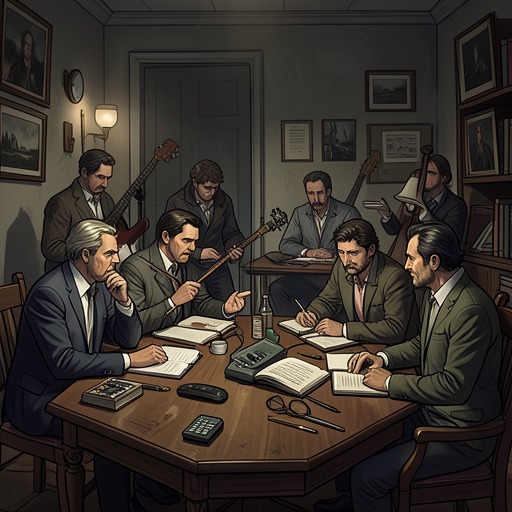
The Aurora sessions required careful coordination as well as attention to sound. Artie recalls setting up the musicians around the studio: Karen and Graham to one side, Pete and Warren behind them, Eddie toward the front, and Billy and Daisy in isolation booths where they could still see the others. This arrangement made separation possible without making the singers visually cut off from the ensemble. The band could be recorded in distinct spaces while retaining a line of sight across the room.
The first take began only after Artie and his team had repeatedly changed the setup. In the control room, Teddy sat beside him, smoking and dropping ash on the boards as Artie wiped it away. The detail sits alongside Artie’s exacting attention to the recording equipment: the session depended on getting the configuration right, even as the people overseeing it brought their own habits and distractions into the room. When everything was in place, Artie called for the first take of “Aurora.”
Artie initially focused on the technical imperfections of the early recordings, particularly their tinny quality. In retrospect, he was astonished that he had not recognized they were making a major hit record. That gap between the engineer’s immediate task and the eventual scale of the album’s success is characteristic of his perspective: while others might hear a performance gathering momentum, he was listening for clean sound and workable levels. Daisy, by contrast, remembered knowing even then that the record would be huge.
Layering, Mixing, and Contribution
After the initial recording, Teddy and Billy returned to the material and reshaped it through extensive mixing. Artie remembers that when the musicians left and came back, the album had become more nuanced, layered, and innovative. Teddy and Billy added sounds including cowbells, shakers, claves, and scrapers; at one point they recorded the sound of Billy’s fist striking the arm of a chair because they liked its hollow quality. The choice turns an ordinary object and gesture into a possible part of the album’s texture, illustrating how closely the production attended to sound beyond conventional instruments.
Artie describes Teddy and Billy as having a clear vision for how songs should build, with Teddy especially focused on momentum. “Regret Me,” for example, began with a single vocal and a relatively simple shuffle. Teddy pushed Billy to record a second vocal layer, although Billy initially resisted. Billy then rewrote and recorded the main riff, while he and Teddy held back Warren’s drums until the pre-chorus. Artie’s account presents the track as transformed through successive decisions about voice, riff, and rhythmic entrance, rather than merely captured as a finished performance.
The changes to “Aurora” itself were similarly consequential: Billy slowed the song, reduced the prominence of Karen’s keys, and brought Graham up in the mix, leaving a cleaner result. Artie does not claim these choices as his own. Instead, he describes how close collaboration with Teddy and Billy developed into a shorthand that eventually included him as well. That working fluency made the process enjoyable and, in Artie’s judgment, could be heard in the final cut. His significance lies in this combination of attentive witness and participating engineer: he records both the uneven distribution of creative authority and the collective technical labor through which the album took its final shape.