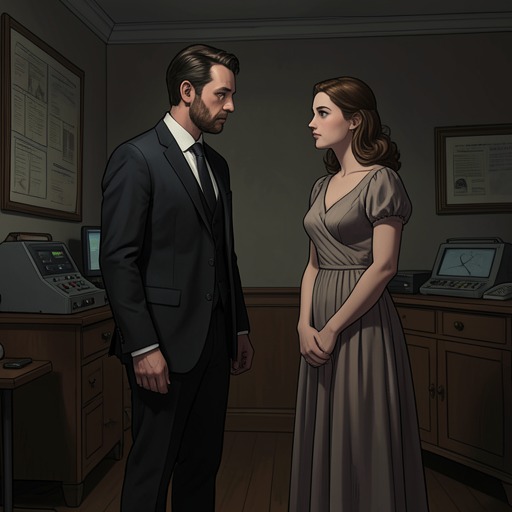
Billy Dunne and Graham Dunne
Daisy Jones & the SixBilly Dunne and Graham Dunne are brothers whose musical partnership grows out of childhood abandonment, shared practice, and a fierce loyalty that persists even when their roles in The Six become unequal. Graham is at once Billy’s musical collaborator, the brother Billy instinctively protects, and one of the people who helps him return to family life after rehabilitation.
Identity and Early Bond
The brothers were raised in Pittsburgh by their single mother, Marlene Dunne, after William Dunne Sr. left the family in 1954. Billy Dunne was seven and Graham Dunne was five. Billy remembered asking whether he could go with their father to Georgia and being told no. The departure left a practical as well as emotional inheritance: William Dunne Sr. left behind an old Silvertone guitar, and the boys fought over who would play it. They taught themselves rather than receiving formal instruction, making music one of the activities they shared from an early age.
When Graham Dunne was still young, Billy Dunne also intervened physically when another boy tried to rob him of a few nickels. The same protective reflex surfaced years later during a gig: while Graham played his part in a dive bar, an intoxicated man began swinging punches and came toward him. Billy knocked the man to the ground. These episodes frame Billy’s loyalty as action rather than sentiment alone; when Graham was threatened, Billy stepped between him and the danger.
Building a Musical Partnership
Around the time Billy Dunne was fifteen, Marlene Dunne saved enough to buy the brothers an old Strat for Christmas. Graham Dunne wanted the Silvertone but understood that it mattered more to Billy, so he took the Strat and left the older guitar with his brother. Once each had an instrument, they began writing songs together. The exchange was modest, but it established an enduring pattern: Graham could recognize the personal value an object held for Billy, and their separate guitars became the basis for a shared creative practice.
Their musical interests were not identical. Billy Dunne concentrated on lyrics and admired Bob Dylan, while Graham Dunne favored Roy Orbison. Both dreamed of becoming stars on the scale of the Beatles, and then the Rolling Stones. The partnership therefore joined different tastes rather than erasing them. Their earliest songwriting developed within that contrast, as two brothers learned to build a band from related but distinct musical instincts.
The brothers played parties and bars for about six months, sometimes accepting beer as payment while they were underage. As the group began to attract local attention, Billy Dunne became its lead singer and the musicians cultivated a recognizable look, including longer hair. Graham Dunne’s place in the group was never merely that of a protected younger brother, however. He was its lead guitarist and a songwriting partner, even as the band’s original identity and internal authority remained closely associated with the two Dunnes.
Loyalty, Ownership, and Unequal Authority
Warren Rhodes recalled that, early on, Graham Dunne was not yet a strong player. When Warren Rhodes and Pete Loving suggested replacing him, Billy Dunne warned that Graham and Billy would replace them instead. Warren Rhodes regarded the response as a sign of how firmly the brothers considered the band theirs. He did not resent that arrangement, preferring to think of himself as a drummer for hire and to enjoy playing with the group. The episode makes their kinship a structural force within the band: Billy’s protection of Graham also established a boundary around who could challenge the brothers’ place at its center.
That solidarity coexisted with a marked imbalance in creative authority. During the recording of an early album, Billy Dunne took control of the songs and dictated much of the other musicians’ parts. Eddie Loving observed that Billy wrote nearly everyone’s contribution, while Teddy Price backed his decisions and the rest of the band largely went along. Artie Snyder recalled that Teddy Price singled Billy out for opinions and focused on him when addressing the group, even while valuing the other musicians. These accounts do not establish Graham Dunne’s precise response to each decision, but they show the professional setting in which the brothers’ partnership operated: Billy’s importance as songwriter and leader was reinforced, while Graham’s position as his brother and lead guitarist did not make the band’s creative power equal.
Addiction and the Work of Reconnection
Billy Dunne’s addiction placed a different strain on the brothers’ closeness. Graham Dunne said he did not know how to help or whether to trust Billy’s assurances. Being Billy’s brother did not allow him to tell reliably when Billy was high or lying, and Graham felt embarrassed that he failed to recognize what was happening. The helplessness matters precisely because it contradicts the childhood image of Billy as the brother who could always intervene. Graham’s loyalty remained, but it could not give him control over Billy’s recovery.
When Billy Dunne was due to leave rehabilitation, Graham Dunne picked up Camila Dunne and the baby so they could go to the facility together. Outside, Camila Dunne sat with Julia Dunne on her lap beside a small picnic table and umbrella while Graham went in to get Billy. Graham saw that Billy was wearing the same clothes he had worn the last time Graham had seen him in Hartford, but that he had gained weight and looked healthier. Before they went back outside, Graham put an arm around him and told him he would be a great father. Graham later felt he should have said that sooner.
Billy Dunne was sixty-three days old as a father when he met Julia Dunne. He recalled the meeting as a moment that broke through his emotional defenses and made him confront the family he had built. Graham’s quiet reassurance helped frame Billy’s return not as proof that the past had been repaired, but as an opportunity to become the father his daughter would know. In this scene, Graham’s support takes a different form from his earlier physical defense of Billy: he offers encouragement at a moment when Billy must face responsibility rather than fight an external threat.
Changing Roles Within The Six
As Billy Dunne spent time with his family and Daisy Jones joined the band’s orbit, Graham Dunne took on more of the work of reassembling The Six. He coordinated the musicians’ return to discussions about a new album and worked with Rod Reyes and Teddy Price on timelines. Graham described the opportunity as a chance to occupy a more central role. His account also conveys the personal weight of that change: the work felt enjoyable because he was happy, and the group’s shifting circumstances gave him room to act beyond his established position beside Billy.
Billy Dunne still arrived at the next album process with a strong private agenda, having already written about ten or twelve songs. He was reluctant to announce that the album was effectively written, conscious of how controlling that would seem after his earlier practice. When Daisy Jones offered her notebook of ideas, Billy did not look through it; instead, he argued that the two songwriters should shape the words together, while the band developed arrangements and chose among the finished songs. This arrangement again reveals Billy’s instinct to control the creative process, even as he tried to make more room for collaboration. Graham Dunne’s work coordinating the band’s return and his longstanding role as Billy’s musical partner place him within that changing collective, though the evidence does not suggest that the brothers’ authority became equal.
Their history holds two truths together: Graham Dunne is not simply an extension of Billy Dunne, but neither is their relationship separable from the structures they built as brothers and bandmates. Shared guitars and songwriting gave them a beginning; protection and trust sustained their bond; addiction exposed the limits of what brotherhood could accomplish; and rehabilitation brought Graham into the practical work of welcoming Billy back to his family. Within The Six, their closeness made the brothers a source of solidarity and a center of power, while the growth of Graham’s responsibilities marked a gradual shift in how that partnership could function.