Billy and Camila's wedding
Daisy Jones & the SixBilly and Camila's wedding takes place on the night before the band is due to leave for tour. Its immediate cause is Camila telling Billy she is seven weeks pregnant; its deeper significance is the contrast between the public promise of a family and Billy's private fear that he is not fit to become a father. Remembered years later by several people in the oral history, the ceremony is at once affectionate, improvised, and unsettled: the group makes a wedding out of what is available, while Billy struggles to imagine the future the vows imply.
Background and Decision
The wedding had not originally been planned for that night. Billy and Camila had expected to marry sometime after the tour. In bed the evening before departure, however, Camila tells him that she is seven weeks pregnant. Billy recalls that he was happy, or trying to be happy, but that fear overwhelmed his response. He decides they should marry immediately, explaining in retrospect that he felt they needed to be a proper family. The shift is abrupt: a future ceremony becomes an urgent answer to news that has made the future feel newly consequential.
Billy’s recollection also places the decision within the pressure of leaving. The band is preparing to get on the bus in the morning; there is little time to arrange anything. Camila’s pregnancy is not presented as a reason she demands marriage. Rather, Billy describes the decision as his own response to the news, an attempt to make family life feel secure and defined before the tour begins. The wedding therefore joins commitment with apprehension from the outset: he wants to establish a family even as he doubts his ability to inhabit the role of a father.
An Improvised Ceremony
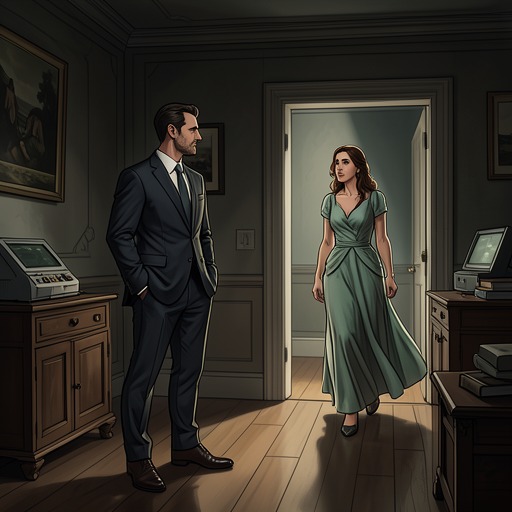
Camila recalls that Karen knows an ordained minister through a friend. The group gets his number and calls him late that night; Eddie remembers the hour as four in the morning. Karen decorates the porch out back, threading strips of aluminum foil through the trees. She later acknowledges the makeshift material with humor, while insisting that it looked pretty. Graham asks Warren for the Christmas lights Warren had packed away after using them to light his drum kit. Warren grumbles that Billy and Camila’s decision to marry in the middle of the night is not his problem. By the time Karen and Graham finish, Karen remembers the setting as looking like somewhere a couple might choose even with plenty of time to plan.
The ceremony is assembled through the band’s practical contributions and teasing exchanges. Its informality does not make it insignificant: Karen finds a minister, Graham and Karen make a setting, and Warren’s lights become part of the arrangements. These details show the group responding collectively to a decision made with almost no notice. The wedding is not separated from the band’s shared life; it takes shape within it, on the eve of a tour that will soon pull Billy away from home.
The Ceremony in Memory
The witnesses preserve different details of what Camila wore. Billy remembers her coming to the patio in a white T-shirt and jeans, while Karen remembers a yellow crochet top. Camila says she was not nervous. The discrepancy is characteristic of the event’s later presentation: the accounts do not produce a single polished scene, but they agree on the quick, intimate nature of the gathering and on the affection surrounding the couple.
Eddie has one piece of film left in his Polaroid and takes a photograph, but accidentally cuts off the couple’s heads. The surviving image, as he describes it, shows Camila’s legs and hair, part of Billy’s chest, and the two of them holding hands and facing each other. He is frustrated that their faces are missing. The imperfect photograph becomes a compact record of the event as the witnesses remember it: an attempt to preserve the moment that captures the couple together but not their expressions.
Graham recalls Camila speaking about loving Billy and about the baby making them a team. He notices Pete crying and trying unsuccessfully to hide it; Warren also remembers Pete crying throughout the ceremony. Karen says Camila tears up when she and Billy kiss. Billy picks her up and carries her upstairs, prompting laughter from the others. Karen has to pay the minister because the newlyweds forget. These small recollections make the wedding both solemn and unceremonious: the promise of a family is surrounded by laughter, tears, and the ordinary confusion of a celebration arranged at four in the morning.
Billy’s Fear and the Wedding’s Aftermath
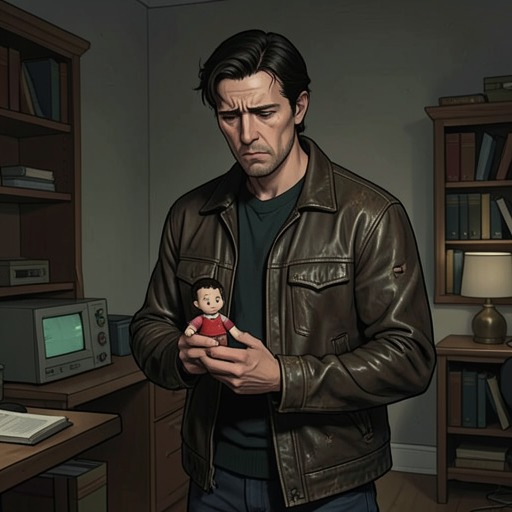
The most consequential part of Billy’s account is not the ceremony itself but the fear he carries through it. As Camila gets dressed, he goes into the bathroom and looks at himself in the mirror, repeating to himself that he can do this. During the wedding, he hears an inner voice warning that he should not be anyone’s father and that he will ruin things. He connects that fear to his own lack of a father: he wonders how someone without a father can become one. Graham later describes the difficulty of entering fatherhood without a model to follow, and observes that Billy had no one to look to at that point.
Billy identifies the period beginning here as a bad time, but resists describing it as a state in which he was no longer himself. His reflection instead makes responsibility more complicated: he remains himself, including when he behaves badly. After the ceremony, he lies beside Camila and wants to leave. He waits for the moment to get on the bus because he fears that if she looks closely at him she will see what is happening in his mind. His recollection that he was not good at lying to her adds another tension to the wedding’s promise: intimacy may expose what he wants to conceal, while concealment can, in his view, sometimes protect another person.
Narrative Significance
The event is reconstructed as a composite of retrospective testimony rather than as a single, authoritative account. The book’s author explains that the oral history draws on interviews conducted over eight years and that accounts of the same events sometimes differ; the wedding’s conflicting descriptions of Camila’s clothes offer a concrete instance of that difference. In a later conversation, the author also notes that the transcript with Daisy is included because the author alone can corroborate an essential part of Daisy’s story. Daisy says she had understood that Camila would consider that story hers to tell. The framing makes the wedding part of a larger history shaped by who remembers, who can corroborate, and who is understood to have the right to speak.
Within the event itself, the repeated image of a team gives the wedding its clearest emotional meaning. Camila imagines herself, Billy, and their baby as a team; Billy hears that promise alongside his fear that he cannot be a father. The ceremony does not resolve the conflict. Instead, it establishes the family commitment that Billy hopes will steady him and the private doubt that will accompany him onto the tour. Its tenderness and unease are not competing versions of the night: in the oral history, they are inseparable parts of what the wedding meant.