Daisy releases her debut album First
Daisy Jones & the SixDaisy Jones’s debut album, First, marked the first time the aspiring songwriter turned a recording contract into a finished public release. The record was a compromise: Daisy did not make the entirely self-directed album she wanted, but the process forced her to work at songwriting and gave her a platform. Released at the beginning of 1975, First made her recognizable before her music had caught up with the promise of her voice and presence.
From signing to stalled sessions
Daisy’s route to the album began with a refusal. At Larrabee Sound, she recorded a demo that Hank Allen wanted sung sweetly and smoothly, possibly of a Jackson Browne song. Daisy instead sang it with a rougher, breathier sound. When Hank asked her to try a smoother take, perhaps a key higher, she picked up her purse, said no, and left. Simone Jackson recalled that Daisy was signed to Runner Records right afterward. The episode established the tension that would shape the record: Daisy wanted to sing on her own terms, while the industry expected her to fit a marketable sound.
Daisy cared most about songwriting. Singing came easily, she felt, but she did not want to be a puppet performing other people’s words; she wanted to write and sing her own material. She signed Runner Records’ deal without reading the contract, uninterested in its payment terms or obligations. Her attention was on writing songs and getting high, not on the professional commitments attached to being signed. Simone, by contrast, helped Daisy prepare for the label’s kickoff meeting, choosing an outfit with her and going through her songbook. Daisy left for the meeting buoyant, with the excitement of an opportunity whose practical demands she had not yet examined.
That gap between signing and working widened. By 1974, Daisy had failed to appear at any of her scheduled recording sessions at the Record Plant in West Hollywood and was in breach of contract. Teddy Price urged her to enter the studio and fulfill the agreement. Daisy insisted that she wanted to record her own songs, but Teddy told her that although some of her writing was good, none of it was finished or ready to record. He proposed that she complete the contract first while he helped her develop her own songs toward a later album. Daisy initially wanted to release her own work immediately; Teddy’s proposal asked her to treat that ambition as a goal to work toward rather than an instant entitlement.
Learning to finish a record
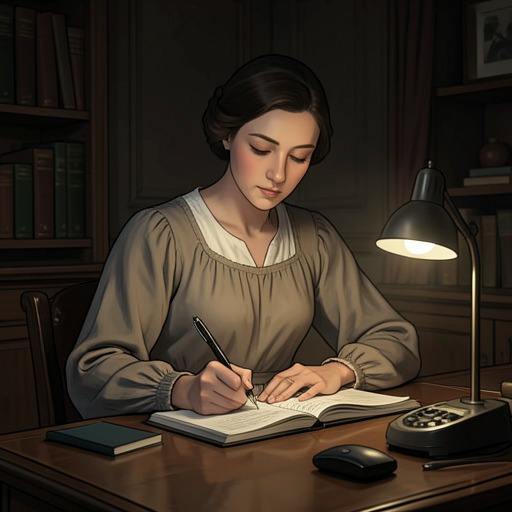
Daisy eventually recognized that her songwriting could not remain a succession of beginnings. At the time, she might find a loose melody, add lyrics, and move on after one or two passes. Sitting with her songbook in her cottage, she understood that she would have to put sustained effort into the work if she wanted it to matter. A few days later she called Teddy and agreed to record the album. Teddy answered that it was her album, and Daisy came to see that it could still belong to her even if it was not made exactly her way.
The change did not mean effortless compliance. Simone later recalled seeing a single sheet of paper covered with lyrics and taped to the refrigerator at Daisy’s place at the Marmont; Daisy said she was trying to get the song just right. Daisy described the experience as learning the difference between being given something and earning it. She credited Teddy with making her earn something, a shift from expecting opportunity to arrive without the labor of finishing the work.
During the sessions, Daisy showed up and tried to stay relatively sober. She sang the songs she was asked to sing, but did not always perform them as requested: she pushed back and held on to some of her own style. The record therefore carried both sides of the arrangement. Daisy played the professional game and completed the material, while resisting enough of the prescribed polish to leave a trace of her own vocal character in it.
The finished album contained ten ballads in what Daisy remembered as a pretty package. When Teddy asked how she felt, she could not decide whether the result was brilliant, awful, or somewhere in between. It felt like her and not like her: she had made something she had not envisioned, but could recognize as an artistic accomplishment in its own right. Teddy told her that she sounded like an artist. When she asked what the record should be called, she chose First, explaining that she planned to make many more.
Release and reception
Daisy released First at the beginning of 1975. Runner Records marketed her as a Dusty Springfield wannabe, framing the newcomer through an existing pop comparison. The cover showed Daisy looking into a mirror against a pale yellow background, a composed image for an album whose creation had involved a much less settled negotiation over her sound and authorship.
The music drew a mixed but not dismissive response. A later account described the material as not groundbreaking and the album as fairly middle of the road, while also hearing grit and edge beneath its surface. Daisy’s version of “One Fine Day,” the first single, was more complex than most other versions of the song. Her second single, a recording of “My Way Down,” was warmly received. These details suggest a debut that met the immediate demands of a pop release without erasing all the signs of the more individual artist Daisy hoped to become.
The record also did the practical work of introducing her. Daisy appeared on American Bandstand and received a substantial feature in Circus, where her trademark hoop earrings contributed to a recognizable public image. The album did not establish her as a fully formed musical force, but people learned her name. Her beauty, outspokenness, and perceived interest helped attract attention even while commentators judged that the music itself had not yet arrived at its full potential.
Significance of the debut
First is significant not as Daisy’s definitive artistic statement but as the record that converted an uncertain contract into visible momentum. Its making exposed the difference between wanting to be a songwriter and finishing songs; its release showed how a label’s packaging and publicity could shape the first impression of an artist. The contrast between Daisy’s resistance at the demo session and her eventual willingness to complete ten ballads captures the central bargain: she accepted structure without surrendering every element of her own style.
The album’s modest critical standing and its success in making Daisy known are not contradictory. The record could be conventional in much of its material and still reveal, to listeners looking back, the roughness and edge that would matter later. Its title carried Daisy’s own forward-looking intention: this was not the final measure of her work but the beginning of a career she meant to continue. The release made that future imaginable, while leaving open how far her songwriting and public identity could develop beyond the polished debut.