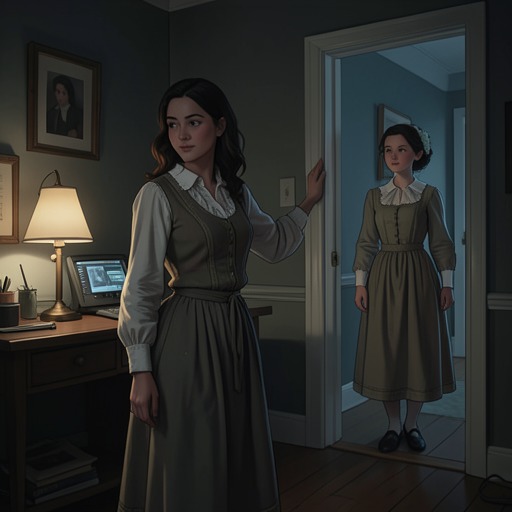
Don’t count yourself out this early
Daisy Jones & the Six“Don’t count yourself out this early” is Camila Dunne’s appeal to Daisy Jones not to treat her present self-doubt as a final verdict on who she can become. Spoken during a conversation about Daisy’s song “A Hope Like You,” the phrase becomes a turning point: Daisy says it changed her life by making room for a future she had assumed she did not deserve.
The Conversation Behind the Phrase
Daisy explains that “A Hope Like You” is not about Billy Dunne. It is about wanting a family and children while believing she would be terrible at having them, feeling too much of a failure to deserve that kind of life, and wanting it anyway. She tells Camila that, when she looks at her, she sees everything she can never be. Her admission connects desire to self-condemnation: Daisy can imagine what she wants, but not herself as someone entitled to it.
Camila responds by recognizing Daisy as an extraordinary writer, and by seeing a shared struggle in Daisy and Billy: both think they are lost souls, though Camila believes they are what other people are looking for. She also tells Daisy that the song has brought back the heartbreak, hope, and tenderness of her own first love. The reassurance thus comes after Camila has heard both the emotional truth in Daisy’s writing and the fear beneath Daisy’s account of her future.
Meaning and Effect
Camila says, “Don’t count yourself out this early, Daisy. You’re all sorts of things you don’t even know yet.” The phrase challenges Daisy’s assumption that her failures have already determined her identity. “This early” matters: it frames self-judgment not as a reliable conclusion, but as a decision made before Daisy can know what else she might become.
Daisy says the words stayed with her. She understands their force as the possibility that who she was had not been entirely decided, and that hope remained possible. She ultimately distills Camila’s recognition into a simple conviction: Camila Dunne thought she was worth saving. The phrase’s importance lies not in promising a particular outcome, but in opening a future Daisy had excluded herself from.