Songs as emotional truth
Daisy Jones & the SixSongs as emotional truth is the distinction between what happened and what it felt like to live through it. In Daisy Jones and Billy Dunne’s songs, feeling does not have to submit to a verdict about who was right: music can give shape to an emotion even when the events behind it are uncertain or disputed.
Feeling and factual truth
Daisy states the principle most directly when she considers whether Billy’s actions justified a song about him. Her answer is that they probably did not, but that art owes no one such a justification. The song’s claim is not a ruling on Billy’s conduct. It records the hurt Daisy experienced, which she treats as sufficient reason to write. Her emphasis shifts the measure of truth from whether a singer had a factual right to feel something to whether the song conveys what that feeling was like.
That shift does not make facts irrelevant; it distinguishes them from the song’s task. Daisy’s account asks whether Billy did something wrong, then refuses to make the answer a precondition for expression. A song can be emotionally truthful without functioning as testimony that establishes blame. Its authority comes instead from describing the experience of hurt. The distinction allows conflicting accounts of an intimate situation to coexist: disagreement about what happened need not erase the reality of what one person felt.
Collaboration and what remains unsaid
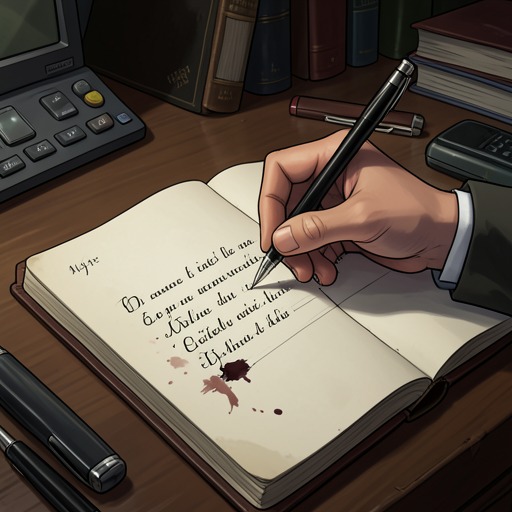
Daisy hears the songs she and Billy write together as carrying emotions that their conversations leave unspoken. In her account, the writing becomes a place where feeling can appear indirectly, through the work, even when neither songwriter states it plainly. Their collaboration therefore communicates without resolving what the participants are willing to say about the relationship itself. For Daisy, the songs’ closeness to feeling is precisely what makes the exchange powerful and difficult to dismiss.
Billy offers a less settled account of how a song acquires meaning. A writer, he says, may not know why a line arrived or what it means; songs can be drawn from wherever the writer finds them, and their meanings can change to suit the moment. He concedes that some songs came more from his heart than others, but does not assign each one a fixed autobiographical key. His account leaves room for genuine feeling while resisting the idea that a lyric is a transparent confession. The two perspectives meet in the songs but do not collapse into one explanation: Daisy detects what she believes is being said, while Billy stresses the instability of meaning.
Hurt, interpretation, and the song’s claim
Daisy also describes the strain of silence when someone insists that nothing is happening. Its effect, in her account, is suffocating: the absence of an admission does not make the feeling disappear. Her description clarifies why songs matter in this relationship. Where direct acknowledgment is withheld, the work can carry an emotional meaning that Daisy experiences as present even if Billy does not confirm her interpretation. The song becomes a way to register pressure that ordinary conversation has failed to relieve.
The distinction between fact and feeling also explains why Daisy does not treat her own songs as neutral evidence against Billy. She allows that his actions may not warrant the song in a factual sense, yet she does not retract the hurt from which she wrote it. The work asserts an experience rather than establishing a case. That position preserves the difference between a singer’s emotional truth and a definitive account of another person’s motives, while refusing to let uncertainty about the latter invalidate the former.
Performance and shared meaning
The songs’ meanings extend beyond the writing room when Daisy and Billy perform together. Billy acknowledges that writing songs with someone, writing about that person, and singing songs they wrote about one another can create an emotional pull. He remembers looking across the stage at Daisy and being unable to look away. Photographs from the tour, he says, show the two of them looking into each other’s eyes, but he can no longer separate what was performance from what was meant. The public image thus repeats the ambiguity of the songs: what appears legible may be a staged gesture, a genuine feeling, or both.
The song titles Daisy explains sharpen that ambiguity. Young Stars concerns two people drawn to one another but compelled to deny it; Turn It Off concerns trying to fall out of love with someone one cannot help loving; and This Could Get Ugly concerns knowing someone more intimately than that person’s partner does. Singing such material with Billy made Daisy feel what she had felt while writing it. Billy’s uncertainty about performance and reality does not settle whether the songs disclose a private truth, but it shows how the act of performing keeps that question active. The music gives the feeling a shared, visible form without producing a final explanation.
That visibility also affects people around the performers. Daisy says Nicky was often jealous of what happened onstage, and that keeping him comfortable became a major part of their relationship. Her account connects the emotional force of the songs to a practical consequence: their performance had to be managed within her marriage. Graham Dunne, looking back, recognizes that he once thought music was only about music; he now argues that songs concern human relationships rather than instruments. Taken together, these perspectives present songs as more than private expressions. They are interpretations of feeling that circulate among collaborators, performers, partners, and listeners, carrying emotional force even when their factual or personal meaning remains unsettled.