The Six and Daisy's Numbers Tour
Daisy Jones & the SixThe Numbers Tour was the first major road tour shared by Daisy Jones and The Six, with Daisy billed as the band’s opening act. It grew out of the response to their live performance of Honeycomb: what began as an invitation made in front of a club audience became a commercially successful joint run, bringing Daisy onto larger stages and revealing that she could attract concertgoers in her own right. The tour’s momentum also exposed the practical and emotional boundaries around the band’s success, especially Billy Dunne’s sobriety and the family life he was trying to protect.
Booking and momentum
The arrangement followed Daisy’s surprise appearance with The Six at the Whisky a Go Go. Billy invited her to sing Honeycomb while she was there, later explaining that he felt he had little choice once she had appeared. Onstage, Daisy kept the changed lyrics she had recorded rather than reverting to the version Billy preferred. She and Billy sang beside one another at the same microphone, and their voices joined in an unplanned harmony at the end. Karen Karen remembered the way they watched each other as intense; the crowd’s loud response made the performance a turning point for the band’s prospects.
Runner Records soon announced that Daisy would open for The Six on the Numbers Tour. Billy tried to persuade Rod Reyes, Teddy Price, and Rich Palentino to remove her from the bill. Teddy pointed to rising ticket sales and added dates, and Billy eventually accepted the arrangement. The band and Daisy set out with Honeycomb already in the Top 20. The booking therefore reflected more than a label decision: the audience response had made Daisy’s presence commercially valuable, even though Billy had resisted sharing the stage and tour with her.
The first dates and the shared stage
For Billy, the road brought a more immediate concern than the opening act. It was his first tour since rehabilitation, and he concentrated on staying sober. Camila told him she did not want him to keep proving himself to her through calls or a journal; she wanted him to know that she believed in him and could help make the situation easier rather than add pressure. Billy brought Camila and Julia Dunne along at the start. Camila was about two months pregnant with twins, and they expected that she would be less able to travel as the pregnancy advanced.
Daisy, by contrast, was eager to tour for the first time. Her solo album was doing reasonably well, and Honeycomb’s success was helping it sell. The first date in Nashville put her onstage alone, ahead of The Six, with the backing band Hank Allen had assembled. She was nervous, and later acknowledged that she was under the influence of cocaine. Wearing a black halter dress with gold bangles and hoop earrings, she faced a crowd that included people who had come specifically to see her. It was her first solo performance before an audience of that size, and the response showed that her appeal extended beyond her association with the band.
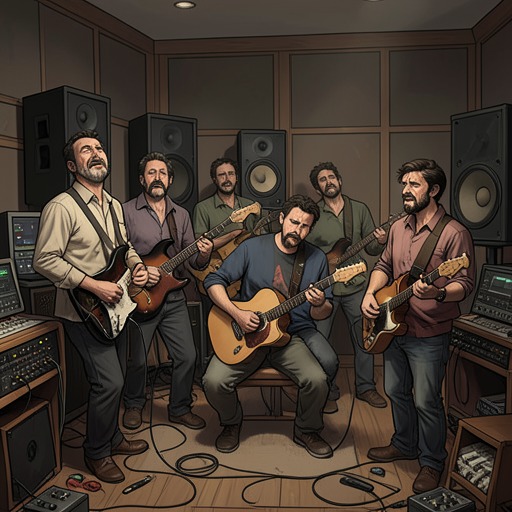
The sets culminated in Billy bringing Daisy back out to perform Honeycomb with The Six. The crowd screamed and stomped, and Billy felt the microphone vibrate in his hand. His account of recognizing that the audience already wanted the band captures a changed balance: the group was no longer trying to win over listeners who were undecided. By the end of 1976, Honeycomb had reached number 3 on the Billboard Hot 100. The band and Daisy also performed it on Don Kirshner’s Rock Concert and The Tonight Show Starring Johnny Carson, taking the song’s shared-stage impact beyond the tour venues.
Separate rhythms on the road
Touring did not mean that Billy and Daisy shared the same offstage life. Graham Dunne described a division between the band’s work and Daisy’s partying: Billy was present when there was work to do, while Daisy was with the group when it was time to socialize. Billy said that he continued as he had when Camila and Julia were with him, keeping to the limits he had set for himself. Their proximity onstage and separation in their routines formed a persistent contrast within the tour: the joint bill made them a public pairing, but sobriety and private responsibility shaped Billy’s daily conduct.
Daisy’s growing audience did not erase the difference between her career and The Six’s. She acknowledged that the band’s album was selling more than hers and considered that unsurprising, but said many people were coming to see her live. Some concertgoers who had arrived without knowing her left with Daisy Jones T-shirts. She also had new songs of her own, including When You Fly Low, a simple melody about people trying to diminish someone or keep that person from rising. The song’s subject gave her touring success a second dimension: she was not only opening for an established band, but developing a public identity and material independent of it.
The tour’s limit and significance
By the end of the year, the North American dates were finished and the group was preparing for a short European leg. Camila, then six months pregnant, returned to Los Angeles with Julia. Billy said he could not keep them on the road indefinitely and had to take responsibility for his own sobriety. Camila understood when she needed to stay and when it was acceptable to leave; her departure did not, in his account, undo the discipline he had maintained while she was present.
Before the group headed to Sweden, Rod told Billy and Graham that Runner Records was considering extending the tour for a few additional weeks after the European dates. The proposal was rejected quickly. Camila was due around the time the musicians would return, and Billy felt that the existing schedule was already close to the limit. Graham conceded that he would have liked to continue, but accepted that Billy had to go home. Warren Rhodes noted that the group could substitute musicians for some instruments, but could not replace Billy; continuing without him was not a workable solution. The tour thus reached a boundary imposed not by a lack of demand but by the need to return for the birth of Billy and Camila’s twins.
The Numbers Tour established Daisy as a draw in the live arena while carrying The Six’s commercial rise into larger audiences. Its success depended on the energy of their shared performances, but the experience was not a simple merger of their careers or private lives. Daisy’s following and songwriting were expanding, while Billy measured the tour against the continuing work of sobriety and his responsibility to return home. The demand for more dates made the band’s success unmistakable; the decision to stop extending the run showed what that success could not displace.