The Six's commercial prominence
Daisy Jones & the SixThe Six’s commercial prominence is a gradual transformation from a promising blues-rock band into a chart-topping act whose records, images, and live appearances command mass attention. Their rise is not driven by a single release alone: critical approval, radio and television exposure, touring, and the emerging public image of Billy Dunne and Daisy Jones reinforce one another. As the audience grows, so do the resources and demands surrounding the band, while fame makes their private divisions harder to keep apart.
From debut approval to a first tour
The band’s self-titled debut establishes a credible place in the rock scene. Rock critic Nick Harris describes it as restrained and economical blues rock, with a folky edge, catchy songs, swagger, large guitar riffs, hard drums, and Billy Dunne’s smooth, rough-edged vocal style. Its love songs and drug innuendo give the record a recognizable character; Harris considers it an auspicious beginning rather than an immediate sensation. The band’s commercial rise therefore starts from a solid, legible musical identity, not from instant dominance.
After the album-cover shoot, industry events, an interview with Creem magazine, and growing early attention, Runner Records and Rod Reyes begin planning a thirty-city tour. The first major confirmation arrives when Rich Palentino hears the album’s final note and praises it. Billy recalls that approval as a release from the feeling of being grounded: recognition makes the band’s imagined success feel suddenly real. At the same time, that transition unsettles him. He reflects on the difference between years as an underdog and the sudden experience of having success, and on his discomfort at receiving opportunities that people he knew did not have.
The early touring period extends beyond the original plan. After the band picks up opening dates with Rick Yates, Rod Reyes reports that the tour has been extended again and that the album is making a respectable start. “Señora” is climbing the charts. The achievement is substantial but still developing: the group is gaining exposure and commercial traction, even as Billy’s escalating drinking, drug use, and infidelity complicate the success. Rod considers the situation manageable at the time, a judgment that sits uneasily beside the speed with which the band’s career is expanding.
“Honeycomb” changes the scale
The more explicitly romantic SevenEightNine retains the band’s driving rhythm section and piercing guitar parts while moving away from some of the debut’s sexual and drug allusions. Its central commercial breakthrough is “Honeycomb.” The song demonstrates that The Six can make a first-rate pop record, marking a shift in sound and opening the way to much broader success. SevenEightNine is released on June 1, 1976; “Honeycomb” enters the Billboard Hot 100 at number 86 and begins a steady climb.
The band builds its live show during an unofficial residency at the Whisky. Billy performs “Honeycomb” without Daisy Jones, restoring the version he had originally intended, but Graham Dunne feels the missing vocal part as a hole in the song. The rest of the album is coming together onstage, and repeat visitors return two or three nights a week as the crowds grow. The contrast makes the song’s commercial and artistic significance tangible: the band can play it without Daisy, but the audience-facing version has acquired a quality her voice helps define.
By the end of 1976, “Honeycomb” has reached number three on the Billboard Hot 100. The band and Daisy perform it on Don Kirshner’s Rock Concert and The Tonight Show Starring Johnny Carson. They complete the North American dates and prepare for a short European leg. Onstage, the response feels newly undeniable to Billy; he remembers feeling his microphone vibrate as the crowd screamed and stamped. Camila Dunne, six months pregnant, returns to Los Angeles with Julia Dunne while Billy recognizes that he cannot keep them on the road indefinitely. The expanding audience is changing not just the band’s career but the practical shape of family life around it.
Publicity, image, and mass attention
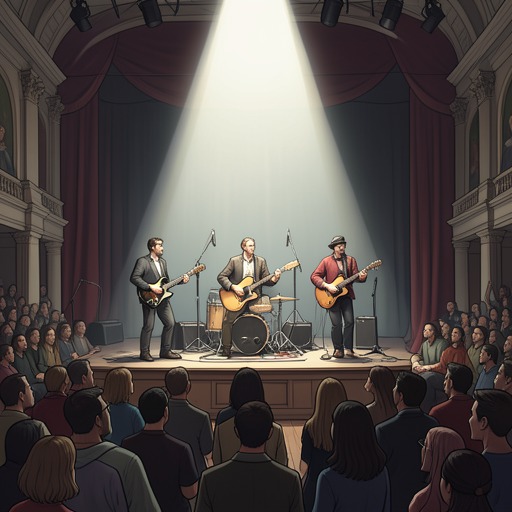
A Rolling Stone cover story gives the band a new level of cultural visibility. Jonah Berg settles on the headline “The Six That Should Be Seven,” presenting Daisy’s importance to the group as a public argument. The cover image shows Billy and Daisy singing into the same microphone, Graham and Karen Karen looking toward one another, and other band members performing as lights rise among the audience. Rod Reyes sees the photograph and headline as an effective cover; Warren Rhodes remembers the distinction of appearing in Rolling Stone even amid the rapid ascent. The story turns the band’s enlarged lineup and its defining musical partnership into a memorable public narrative.
The later Aurora cover campaign also makes publicity part of the band’s identity. Rod Reyes connects photographer Freddie Mendoza with early tracks, and Mendoza proposes the desert mountains as a setting. During the shoot in the Santa Monica Mountains, he keeps photographing as Daisy looks toward Billy and Billy turns to meet her gaze. The resulting image becomes associated with the album’s California-summer rock image. Biographer Elaine Chang recalls that the cover mattered deeply to young listeners, particularly girls, who read Daisy’s confident presentation as self-possession rather than an attempt to please a viewer. Mendoza later reflects that what seemed like an ordinary assignment became the image people most wanted to discuss. The cover’s lasting recognition extends the album’s reach beyond its songs and makes Daisy’s public image a major part of the band’s visibility.
Stadium success and its costs
By the summer of 1978, “Turn It Off” has spent four weeks at the top of the charts, while Aurora sells more than 200,000 units each week. The Aurora Tour sells out stadiums and adds holdover shows in major cities. These figures mark a different scale from the earlier chart climb: The Six is now described as the act to see, with demand strong enough to sustain additional performances in the same markets.
The tour’s arrangements reveal how success intensifies the band’s internal separation. There are two buses, both bearing the group’s name, but with different images associated with Billy and Daisy. Karen Karen recalls that they were kept apart because the two singers did not want to have to look at one another. The band’s celebrity also produces sharply unequal public attention: in San Francisco, Warren Rhodes, Pete Loving, Eddie Loving, Graham Dunne, and Karen Karen can enter a hotel without incident, but screams gather almost immediately when Billy emerges, then grow louder when Daisy follows. Their fame draws crowds while making the two central figures’ estrangement a visible feature of the touring operation.
The scale of the business brings lavish spending and careful balancing of requests. Tour accountant Opal Cunningham says that expenses kept rising and that important provisions—from baby grand pianos in suites to Sharpies for autographs—had to be matched for Billy and Daisy, lest either object to the other receiving something they lacked. Rod Reyes routinely authorized the expenses through Runner Records, acknowledging that the band was spending heavily while reasoning that the label had an interest in supporting the country’s biggest album. Commercial success thus increases the group’s purchasing power, but it also makes parity between its stars an expensive management problem.
Recognition beyond the charts
The band’s commercial visibility continues into its award-season recognition. Daisy accepts the Grammy for Record of the Year in a performance of confident command, wearing a cream silk slip dress and bangles while appearing fully in control of the band and assured of her talent. Elaine Chang treats that appearance as part of Daisy’s enduring stature as a rock singer. Shortly afterward, the band’s performance of “Impossible Woman” at Madison Square Garden is recorded in a widely noted video; Daisy sings with force and fearlessness, while Billy keeps his eyes on her. The moment links a prestigious award, a major New York venue, and a memorable performance to the public image formed during the band’s rise.
Taken together, the milestones show commercial prominence as more than sales or chart positions. The early debut wins professional approval; “Honeycomb” carries the band into the top three; the Rolling Stone cover and album imagery make the group recognizable; and Aurora converts that recognition into extraordinary sales and sold-out stadiums. The same expansion sharpens existing tensions and concentrates public attention on Billy and Daisy. The Six’s success brings reach, resources, and acclaim, but its most visible symbols also expose the distance between the people performing under one name.