Tiny Love
Daisy Jones & the SixTiny Love is the Breeze’s biggest hit, yet its chorus carries a history of authorship that its public credit conceals. Daisy Jones supplied its defining lines after finding Wyatt Stone’s song about her and deciding that his description misunderstood her; Wyatt presented the finished song as entirely his. When Daisy later tells Billy Dunne how the chorus came about, the song becomes more than a remembered grievance: it is the first occasion she feels Billy listening to her.
The chorus and its origin
One night, Daisy and Wyatt were smoking a joint on the roof of an apartment on Santa Monica when Wyatt told her that he loved her and did not understand why she did not love him. Daisy answered that she loved him as much as she was willing to love anybody. She explained that she was not willing to be vulnerable with anyone then, having felt too much vulnerability too young. That exchange supplies the emotional context for the song she finds after Wyatt goes to bed: its chorus concerns a woman with a big heart but no love in it, while its verse refers to a redhead and the hoop earrings Daisy regularly wore.
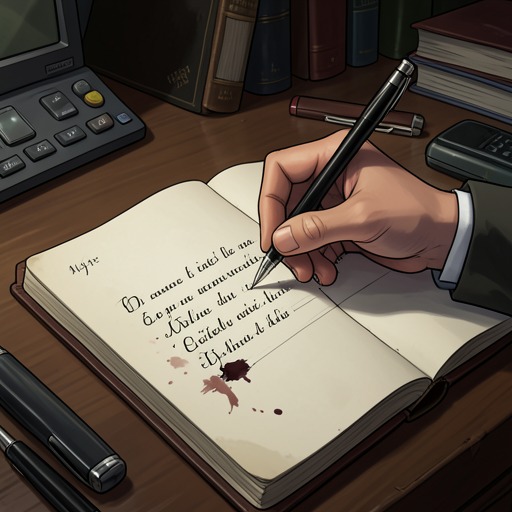
Daisy reads the words and thinks Wyatt does not understand her. Rather than accept his version of her as the song’s subject, she takes a pen and paper and revises the chorus. The lines she proposes describe big eyes, a big soul, a big heart without control, and someone whose offering is “tiny love.” The shift matters: Wyatt’s initial formulation makes lovelessness the point, while Daisy’s lines give the woman a distinctive presence and a limited but real capacity to give. The song’s phrase does not erase her guardedness; it makes that guardedness the center of the chorus.
When Wyatt wakes, Daisy offers the new wording as a suggestion for his chorus. He grabs a pen and paper and asks her to repeat it. Daisy immediately distances herself from the contribution, calling it an example and telling him to write his own song. The exchange leaves a tension at the heart of the song’s origin: she creates the memorable language, but does not claim the whole song or insist that Wyatt acknowledge her part. The evidence establishes her contribution to these lines, not sole authorship of the finished composition.
A hit with a concealed credit
Simone Jackson later identifies Tiny Love as the Breeze’s biggest hit and says Wyatt pretended he wrote the whole thing. Her account gives the private exchange a public consequence: the lines Daisy supplied became part of the band’s most successful song, while the credit Daisy describes was not shared. Wyatt, asked about the story, treats it as settled history and dismisses the question as water under the bridge. His response contrasts with Simone’s direct account and Daisy’s detailed memory, without resolving the dispute through his own explanation.
The song’s success sharpens the contrast between its public life and its private origin. Listeners could hear the chorus as Wyatt’s writing; Daisy recognizes the words as hers because she remembers finding the earlier draft and changing it. Her instruction that Wyatt write his own song can sound, in retrospect, like a retreat from claiming credit. But the later accounts make the distinction plain: refusing to claim the entire composition did not mean the defining lines had not come from her.
Billy hears the story
The song returns during a drive with Billy. When he turns on the radio, Daisy changes the station; he changes it back, and she changes it again. Billy finally puts on an 8-track of the Breeze, including Tiny Love. Daisy laughs, and his surprise that she finds it funny prompts her to challenge his understanding of the song. Billy knows Wyatt Stone wrote it, but not the story behind the chorus. Daisy tells him that she dated Wyatt and that the song is hers.
Billy asks whether she is Tiny Love, then listens as Daisy recounts her relationship with Wyatt and the lines she gave him. He already likes the chorus; hearing its history changes what it means to him. Daisy emphasizes not simply that she had an idea, but that Billy does not know anything about the song until she tells him. She remembers listening to him listen to her the whole way to the restaurant, for what felt like the first time since they met. Billy, in turn, recognizes the injustice in the story by considering how angry he would be if someone else claimed a line he had written.
Meaning and narrative function
Tiny Love links Daisy’s guardedness to her authorship. Its central phrase describes a constrained offer of affection, but the act of writing the chorus also shows Daisy interpreting herself rather than leaving that interpretation to Wyatt. The difference between the song’s original description of a big heart with no love and Daisy’s revised lyric is not a simple declaration that she can love freely; it is a more complicated self-portrait, one that holds emotional reserve and generosity in the same image.
The song also brings questions of credit and recognition into Daisy’s relationship with Billy. Its history is first preserved in competing recollections: Simone names Wyatt’s claim, Wyatt dismisses the question, and Daisy supplies the scene that explains what she contributed. In the car, the radio plays the hit before Billy knows its history; Daisy’s account makes him hear it differently. The chorus thus works both as a successful pop song and as evidence of a contribution obscured by its public attribution. For Daisy, being heard in that moment is not the same as recovering formal credit, but it marks a change in how Billy attends to her.