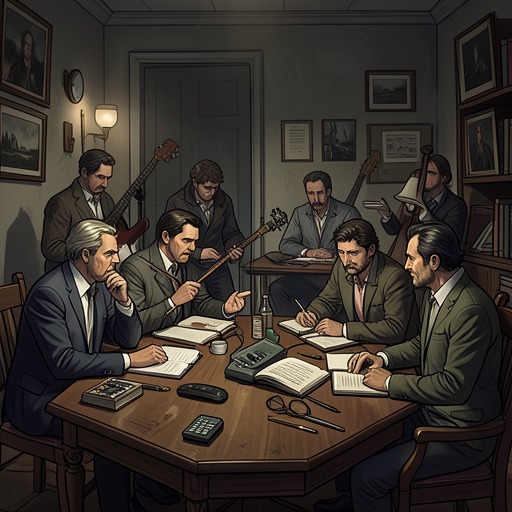
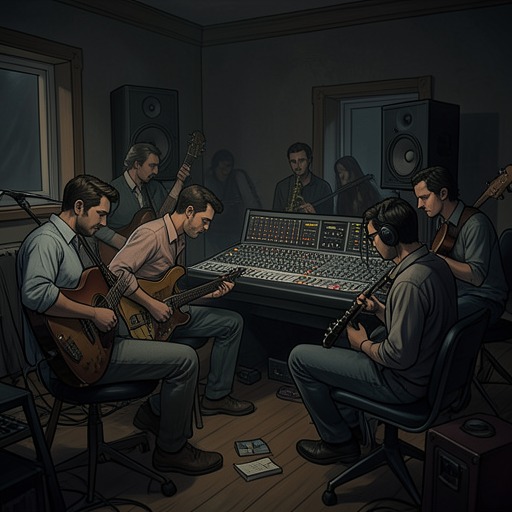
Wally Heider's Studio 3
Daisy Jones & the SixWally Heider's Studio 3 is the recording space where Daisy Jones & The Six began work on Aurora in August 1977. The studio is significant not simply as a venue but as a site where the group’s seven members became audible as a band, and where meticulous technical choices helped turn their performances into the album’s distinctive, carefully layered sound.
Setting and Recording Sessions
In August 1977, the seven members entered Wally Heider's Studio 3 to begin recording their third album. The process unfolded amid the relationships and tensions they brought with them: on the morning they headed to the studio, Graham Dunne asked Karen whether they could drive over together, and she declined because she did not want people to think they were sleeping together. The studio’s work was collective, but the personal boundaries among its musicians remained present even on the way to the session.
The recording setup made that collective work physically legible. Artie Snyder described repeated adjustments to the microphones and the placement of the players: Karen and Graham were at the side, Pete and Warren at the back, Eddie toward the front, while Billy Dunne and Daisy Jones sang from isolation booths where they could still see everyone. The separated booths offered vocal isolation without removing the singers from the group’s sightline. In the control room, Artie worked beside Teddy Price, whose cigarette ash repeatedly fell onto Artie’s boards as the setup was refined.
Capturing the Band's Sound
The first complete run-through of Aurora became a defining moment for Daisy. The musicians played the song all the way through together and repeated it as a band. Daisy remembered looking at Billy and smiling, recognizing that she was no longer merely contributing a voice: she was one of the seven people making music together. Billy, meanwhile, needed several takes to warm up, while Daisy delivered her part immediately; he recognized her as a formidable singer whose ability could be irritating as a rival and powerful as a teammate.
The studio’s sound was still being calibrated. Artie focused on the early takes’ thin, tinny quality and on getting the levels and microphones right before he could attend to anything else. Elsewhere in the album sessions, the balance of the recorded performance was deliberately reshaped: on a version featuring Daisy, Teddy asked Artie to soften the drums, raise the keys, and reduce some of Graham’s more distracting flourishes. The result foregrounded the contrast and interplay of Billy and Daisy’s voices over acoustic guitar and percussive piano, making their vocal relationship the center of the song. Eddie Loving heard the shift as a move from rock toward pop.
Production and Album Craft
The work associated with the studio extended beyond capturing live performances. Billy later described returning to the studio with Teddy to refine the album track by track, remixing repeatedly and occasionally rerecording instruments or adding details such as tack piano, Dobro, and brushed drums. Artie recalled the transformation as substantial: when the group left and came back, the album had become more nuanced and layered. The added textures included cowbells, shakers, claves, and scrapers, as well as the hollow sound of Billy’s fist striking a chair arm.
Individual songs changed through this process. For Regret Me, Teddy pushed Billy to record a second vocal layer; Billy then rewrote and recorded the main riff, while he and Teddy held Warren’s drums back until the pre-chorus. On Aurora, Billy slowed the song, thinned out Karen’s keys, and brought Graham’s part forward, producing a cleaner arrangement. The studio thus served both as a space for the band to play together and as a workshop in which performances could be dismantled, rebalanced, and rebuilt.
Significance
Wally Heider's Studio 3 concentrates the album’s central creative tension: Aurora depended on the band’s shared performance, yet its final form also emerged through selective control over what listeners would hear. The visible arrangement of musicians around microphones made room for connection across isolation booths; the later refinements altered instrumental prominence and layered voices and textures. Artie, focused on clean levels and equipment, did not initially recognize the scale of the record taking shape, while Daisy recalled knowing it would be huge. The studio’s importance lies in that gap between the technical labor of making a record and the larger musical and cultural force the finished album would acquire.