Whisky a Go Go
Daisy Jones & the SixWhisky a Go Go is a Los Angeles club whose importance in the story runs from Daisy Jones’s first clandestine encounters with the Strip’s nightlife to a defining live performance with The Six. For Daisy, it first offered the feeling of entering a world from which she had been excluded; later, it became the place where an unplanned harmony with Billy Dunne made their musical connection audible to a crowd.
Setting and Daisy’s First Entry
As a teenager of about fourteen, Daisy could walk from her home to the Strip, but she was too young to enter its bars and clubs. She went anyway, drawn to the sidewalk community around the venues and eager to seem as though she belonged. Outside Whisky a Go Go, she asked a Byrds roadie for a cigarette, tried to suppress her cough, and flirted with him, later remembering her effort as awkward. Her way inside came when another man arrived to help the roadie set up the amps and asked Daisy if she was coming too. She followed them into the club.
That first entry became a sharp break in her sense of isolation. Daisy stayed out until three or four in the morning, drinking and smoking what people offered her. She went home drunk and stoned and, by her recollection, her parents apparently did not notice she had been gone. The following night she repeated the outing. The club was therefore not simply a destination: it marked Daisy’s sudden passage from watching the nightlife around her to taking part in it, at an age when the ordinary safeguards of the adult venues did not keep her out.
A Foothold on the Strip
Daisy’s visits became regular enough that bouncers on the Strip recognized her. She recalled being allowed into the places she was headed, including Whisky a Go Go, without anyone caring how young she was. The recollection places the club within a wider circuit of nightlife, but also singles it out as the site of her first entrance and a recurring point of access. Her belonging was initially informal and precarious: she entered by attaching herself to people who could get inside, then returned until the staff knew her.
The club also brought Daisy into view. Simone Jackson remembered seeing her on the Whisky dance floor and described her as impossible to miss, a bright figure against the room’s imagined silver. Daisy later called Simone her best friend. Simone took her along wherever she went and said she had never had a sister. The club thus belongs to the beginning of a friendship as well as to Daisy’s introduction to the Strip; the young woman first trying to pass among strangers became someone whom another woman actively brought into her life.
The Six’s Residency and Daisy’s Return
By 1976, Whisky a Go Go had become a working stage for The Six. After SevenEightNine was released on June 1, the band played what Graham Dunne described as an unofficial residency while preparing to headline a national tour. Honeycomb had entered the chart at number 86 and was rising. The band used its repeated appearances to sharpen a live set, but Billy performed Honeycomb without Daisy, singing the part he had originally intended for himself. Graham thought the performance was good yet incomplete: without Daisy, the song had a hole in it.
The omission mattered because the single’s recorded identity already included Daisy, while the live version at the club did not. Rod Reyes told Billy that he should invite her to the Los Angeles shows, but Billy did not act on the suggestion. Daisy, who knew the Whisky crowd and was more connected to the Strip than the band, learned that they were playing her single without her. She said she was not trying to crash the show, but would not keep away merely because she had not been invited. Her arrival turned the club’s recurring performances into a confrontation over who belonged onstage and who had a claim to the song.
The Shared Microphone
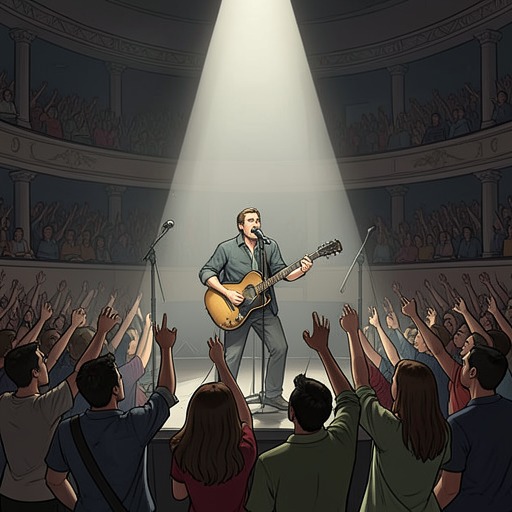
When Daisy appeared, Billy faced the immediate choice of whether to sing with her. He introduced her to the audience and proposed that they perform Honeycomb. Karen Karen recalled the pair standing close together at the same microphone, watching one another as they sang; the intensity of their attention seemed as noticeable as the performance itself. At the end, their voices harmonized in a way that had not been arranged on the record. Daisy remembered that the change simply happened.
Billy recalled knowing during the song that they had the audience. When they finished, the crowd screamed. Daisy likewise understood the response as evidence that the two of them had something special. She also recognized a more private consequence: singing that closely with someone could create a feeling of connection that survived her dislike of him. The performance did not settle their personal antagonism, but it made the musical bond difficult to dismiss. Whisky a Go Go consequently links two different forms of entry in Daisy’s life: first, her teenage entry into a scene where she wanted to belong; later, her return as a singer whose place beside Billy could no longer be treated as incidental.