
The Band’s Commercial Ascent
Daisy Jones & the SixThis thread traces The Six’s movement from regional hopefuls to national stars and shows how commercial momentum changes the group’s internal stakes.
increasing Bearing strength in each event
 decreasing
Bearing strength in each eventdecreasingEast Coast Openings

East Coast Openings
Opportunity appears
A performance impresses Rick Marks of the Winters, who offers the Dunne Brothers opening slots on a northeastern tour. The exposure teaches them that a larger audience is possible.
A sound expands
Seeing The Winters perform gives the group ideas about adding keyboards. Karen Karen’s later arrival grows from this practical recognition that their sound can develop.
A Manager Sees a Frontman

A Manager Sees a Frontman
Billy catches attention
Rod Reyes sees Billy Dunne perform and recognizes the confidence and emotional force of a natural frontman. He also hears a band with a promising sound.
Advice toward a wider audience
Rod encourages Graham to shorten solos and Billy to write from personal experience. His guidance turns raw ambition into a more focused path toward commercial reach.
The Move West

The Move West
Leaving the familiar
Rod Reyes urges The Six to move from the East Coast to Los Angeles, where his industry contacts can help them. Billy Dunne chooses the band’s future over staying with Camila Martinez.
Opportunity and separation
The group drives west, building a tour along the way. Billy’s choice increases their prospects but ends his relationship with Camila for a time.
The First Record Deal
The First Record Deal
A producer takes interest
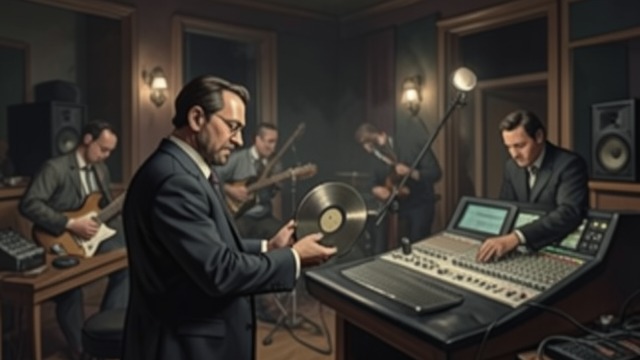
Teddy Price hears The Six at the Troubadour and recognizes Billy Dunne’s songwriting. He invites the group to Runner Records, where they receive a recording and publishing deal.
A dream made concrete
The contract gives the band studio access and a professional future. Billy immediately calls Camila, realizing that achievement feels incomplete without the person he loves.
From Hit to Headliner

From Hit to Headliner
The charts open doors
Honeycomb reaches number three, helping The Six build a national audience. Daisy Jones’s presence on tour adds another draw and broadens the group’s following.
Arena-scale consequence
By Aurora’s release, the group is headlining stadiums. Its success brings money and attention, but it also raises the pressure on every relationship and every future record.
late 1970 and early 1971
around 1971 in New York City
around 1972
after the Troubadour show, around 1972
1976 through summer 1978
