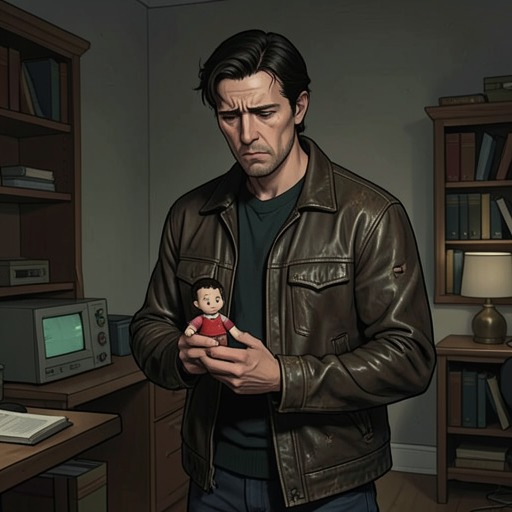
Billy meets Julia for the first time
Daisy Jones & the SixBilly meets Julia for the first time after sixty days in rehabilitation, in a reunion that turns his recovery from an effort to escape shame into a commitment to his family. At a small picnic table outside the facility, he encounters his two-month-old daughter and the life he had nearly failed to join. His first meeting with Julia becomes an act of recognition: he understands that the person he needs to become is not an abstract ideal, but a father accountable to his daughter and to Camila.
Background and Delay
Billy entered rehabilitation in the winter of 1974. The Six canceled the remaining dates of its tour, and the band members dispersed during the break. Camila rented a house in Eagle Rock and settled into motherhood; Graham, Karen, and Eddie stayed in the Topanga Canyon house, while Pete went temporarily to the East Coast to be with Jenny Manes. The tour’s interruption thus accompanied a separation from the family Billy had helped create: Julia was born while he was away, and he did not meet her until he had completed sixty days in treatment.
Billy later acknowledged that he was uncertain whether he had initially entered rehabilitation for the right reasons, naming shame, embarrassment, and avoidance. What changed the meaning of his stay was a group therapist’s challenge: instead of imagining his daughter ashamed of him, Billy was asked to imagine what he would have to do to believe that she could be proud of him. He said the question stayed with him. Day by day, the possibility of becoming a man his daughter might feel lucky to have gave his recovery a purpose beyond merely leaving the facility.
The Meeting Outside the Facility
On the day Billy was due to leave, Graham picked up Camila and the baby, and they drove to the rehabilitation center together. Graham recalled Julia as an unusually plump baby, joking about her cheeks and belly; his affectionate teasing makes the meeting concrete and familial before Billy appears. Outside, a tiny picnic table stood beneath an umbrella. Camila sat there with Julia on her lap while Graham went inside to bring Billy out.
Billy wore the same clothes Graham remembered from the last time they had seen each other, in Hartford, but he had gained weight and his face looked healthier. Graham asked whether he was ready. Billy answered yes, though Graham sensed uncertainty, and put an arm around him. Graham told him he would be a great father, later admitting that he wished he had said so earlier. His reassurance meets Billy at the threshold between treatment and home, where the prospect of fatherhood still feels uncertain rather than guaranteed.
Julia was sixty-three days old when Billy first met her. The two-day difference between completing the sixty-day program and meeting her marks the exact interval between his treatment and his arrival as a father. Billy said that even later he found it hard not to hate himself for having missed those first weeks. But when he stood at the picnic table with Julia and Camila, the encounter broke through what he described as a protective crust: he felt raw, and felt everything deeply. The meeting does not erase the time he lost; it makes that absence newly legible to him.
Recognition and Commitment
Billy saw that Julia had his eyes, but she knew nothing of the person he had been; she cared only about who he was now. That contrast gives the encounter its force. He had built a family accidentally, he said, without many of the qualities he believed a person ought to possess to deserve one. Yet Julia’s presence confronted him with a relationship that began not in judgment of his past but in dependence on the person he would choose to be. He fell to his knees, overwhelmed with gratitude for Camila.
The reunion also made Billy face what Camila had endured and the fact that she was still there, giving him another chance. He understood that he did not deserve that chance, and promised to spend the rest of their life together trying to be twice as good as she deserved. He described the promise as unusually humble and grateful. The commitment was not simply a declaration of love: it was a pledge to answer the generosity he had been shown through the way he lived.
Billy distinguished this moment from the formal marriage he and Camila had entered almost a year earlier. At the picnic table, he said, he submitted himself to her, forever and always, and dedicated himself to both Camila and Julia, intending to raise his daughter with his whole heart. As they got into the car, Camila quietly reminded him that they were a family and told him not to forget it again. Billy nodded, Camila kissed him, and Graham drove them home. The ride closes the scene by carrying the newly reunited family away together, while Camila’s reminder acknowledges that belonging must be sustained, not merely promised.
Consequences and Significance
Camila later expressed the principle underlying her response: faith in people has to precede their earning it, or it is not faith. Her choice to give Billy another chance is presented alongside his recognition of the harm he caused, not as proof that the harm has vanished. The scene holds both facts together: Billy remains ashamed of missing Julia’s first weeks, and he is received into a family willing to let his conduct from this point forward matter.
The first meeting gives Billy’s rehabilitation a lasting measure. The therapist’s question had asked him to imagine becoming someone his daughter could be proud of; meeting Julia turns that imagined future into a responsibility he can name. His recovery is therefore linked to daily fatherhood and to his promise to Camila, rather than to a claim that one emotional reunion has repaired everything. The event’s decisive change is the direction of Billy’s effort: he leaves treatment not only as a healthier man, but committed to being present for the family he had previously put at risk.