Billy puts down the tequila at a Chicago hotel bar
Daisy Jones & the SixBilly Dunne puts down the tequila in a Chicago hotel bar after the final concert, interrupting a relapse at the point when drinking has begun to feel like relief. The act is small and difficult: he has already tasted the drink and taken some, and he does not know how long his resolve will last. Its consequence reaches beyond the bar. Back in his room, beside his sleeping family, Billy recognizes that he must choose between rock ’n’ roll and his life.
The Walk Toward the Bar
After the show, Billy remains in the hotel lobby while Camila Dunne and Julia go upstairs. He is unsure what he will do, but describes himself as moving toward the bar one step at a time, intent on getting tequila. The repetition in his account makes the walk feel less like a considered decision than a course already set: he knows what he is doing, and the intention keeps returning as he follows it.
Graham Dunne finds him there because he needs help. He tries to tell Billy that the matter is important and asks him to talk, but Billy cuts him off and says he has no time. Graham’s account emphasizes the refusal; Billy’s explains its immediate context. He is absorbed in the effort to reach the drink and says he cannot help anyone else. The encounter establishes what is at stake before the glass appears: Billy is not merely choosing whether to drink, but becoming unavailable to the people around him as the compulsion narrows his attention.
The Drink and Its False Promise
At the bar, Billy speaks with a man and remarks that sometimes a person needs to clear his mind. When the man asks what problems someone like Billy could have, Billy answers by disclosing his net worth. The exchange exposes the distance between public success and private distress without suggesting that money can resolve the latter. The man is present as a listener, but Billy’s material security does not make the decision before him easier.
Billy tastes the tequila, not even taking a full sip at first. He describes the taste as comfort and freedom, while recognizing that this sensation is deceptive. The relief arrives physically: his body slackens at the prospect of drinking more. That response makes the moment dangerous precisely because the drink seems to offer what he wants, even as he understands that its promise is false.
A man sitting nearby, with a girlfriend and a full beer he sips without urgency, watches Billy. Billy glances at him and drinks. The amount is small—about half a finger—but it marks a change from tasting the tequila to consuming it. He then holds onto the glass as though it might be taken away. The gesture gives the drink a claim on him: even after taking only a little, he is already guarding it.
The Reminder and the Decision
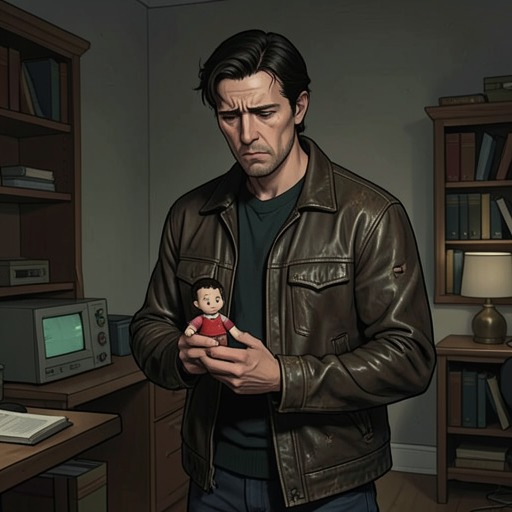
The man notices Billy’s wedding ring and asks whether he is married. Billy nods. The man mentions that his girlfriend would be crushed, then asks whether Billy has children. That question catches Billy off guard. He thinks of photographs in his wallet of Julia, Suzanne, and Maria. Rather than describing an abstract obligation, the scene brings his family into the decision through specific faces represented by the pictures he carries.
Billy puts the glass down. He stresses the effort involved: moving his hand toward the bar feels like moving it through wet cement, and he fights for every inch. The smallness of the action is central to its meaning. He has already tasted the drink and taken some; putting it down does not erase that, nor does it establish that the struggle is over. It records a choice made while the temptation remains powerful.
He leaves a twenty-dollar bill and tells the man thank you. The man returns the money, asking to pay for the drink so that he can know he has done something for somebody once. Billy accepts the gesture, and the two shake hands. The encounter does not solve Billy’s underlying struggle, but it gives the moment a human exchange beyond the solitary contest with the glass: another person’s attention helps him remain there long enough to walk away.
Aftermath and Significance
Billy returns to his hotel room and shuts the door. Camila and the girls are asleep. Watching them, he slumps against the door and breaks down crying on the floor. He understands the decision in stark terms: the choice will come down to rock ’n’ roll or his life, and he will not choose rock ’n’ roll. The bar scene therefore ends not with triumphal certainty but with a recognition of what continued drinking could cost and what he is choosing to protect.
The book presents the episode through retrospective, alternating accounts, including Billy’s description of the walk and the drink and Graham’s memory of being turned away. Those perspectives make the same interval register both as Billy’s private crisis and as a failure of connection visible to someone close to him. Billy’s return to his family supplies the scene’s final measure: the glass was not simply refused; the trajectory toward it was interrupted, and his attention returned to the people waiting upstairs.