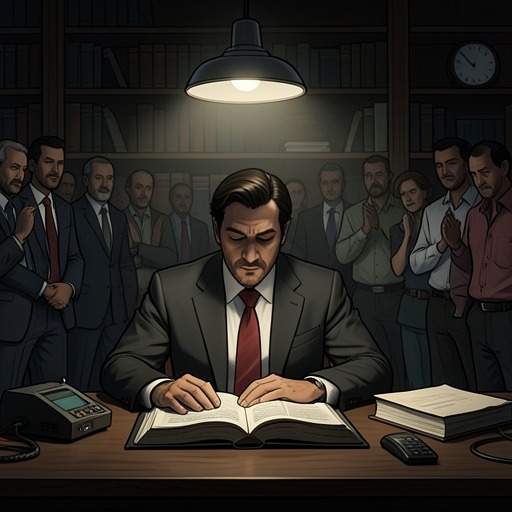
Jonah Berg
Daisy Jones & the SixJonah Berg is a journalist whose reporting helped shape both the history and public image of Daisy Jones & The Six. His articles turned the band’s lineup and the volatile creative relationship between Billy Dunne and Daisy Jones into a story with consequences beyond the page: the coverage helped set the band on the path to making an album together, then helped propel Aurora toward its commercial breakthrough.
Identity and Introduction
Berg is identified in the band’s retrospective as the writer who conceived the headline The Six That Should Be Seven. The article presented Daisy’s place in the group as a compelling possibility, and its impact was large enough that members later connected it with the decision to make an album together. Berg’s involvement therefore began not simply as outside commentary on the band, but as reporting that helped alter its direction.
By the time Aurora was approaching release, the band’s representatives wanted a prominent magazine cover to coincide with the album’s launch. They specifically sought Rolling Stone and Daisy wanted Berg to interview the group again. The renewed assignment placed him close to the band during rehearsals and gave him access to a relationship that was at once musically productive and deeply strained.
The Aurora Interview
Berg came to the rehearsals expecting the album to reveal an intense songwriting partnership. Billy and Daisy shared writing credits, and some of the album’s most gripping songs were credited to them together. His prior connection to the group also shaped his perspective: he understood that his earlier article had helped bring them into an album-making collaboration, and he felt that a disappointing record would reflect awkwardly on that history. Instead, he was impressed by the album and its lyrics.
During the interview, Berg asked Daisy what was happening between her and Billy. Before doing so, he made clear that she could decline to speak on the record if she was not in a suitable state of mind. Daisy chose to continue. Her account began to emerge, and she acknowledged that both she and Billy had done things they should not have done. The interview thus shifted from a profile of a successful collaboration toward an account of its conflict, with Daisy’s own disclosures shaping the direction of Berg’s reporting.
The Article and Its Effects
Berg’s interpretation emphasized the contrast between Billy’s familiar personal failings and the unusual spectacle of two people who disliked one another yet remained creatively in sync. The article he produced was not the celebratory account Graham Dunne had expected about the wisdom of bringing Daisy into the band. Instead, it foregrounded the antagonism between Billy and Daisy, a framing that intensified their existing resentment. Daisy objected to Billy’s disparaging remarks about her talent reaching print; Billy, in turn, faulted her for exposing other people and their families.
Berg wrote the article in forty-eight hours after returning to New York, an unusually fast process for him. He also specified what he wanted for the cover, which the photographer said could be assembled from photographs already taken. The resulting coverage joined the band’s music to the public story of its central creative tension. Rod Reyes later described the article as a crucial step in the music reaching beyond its usual limits and in Aurora becoming not merely an album but an event.
Narrative and Cultural Significance
Berg’s role is defined by the tension between reporting on the band and helping shape the circumstances he reports. His first headline helped make Daisy’s addition to the group a public and creative proposition; his later article made the hostility between Daisy and Billy the central frame through which audiences could understand their collaboration. The shift—from a story about the band’s expanded membership to one about a combustible partnership—shows how journalism can convert private tensions and creative work into a marketable public narrative.
The article’s consequences were material as well as reputational. Rod credited it as the final push behind Aurora’s wider breakthrough, and the album arrived on June 13, 1978, amid a major promotional campaign. The song Turn It Off debuted at number eight, then reached the top of the charts; Aurora sold more than 200,000 units a week during the height of the tour. Berg did not make the music, but his framing helped connect the music to the drama that drew wider attention to it.