Karen's abortion
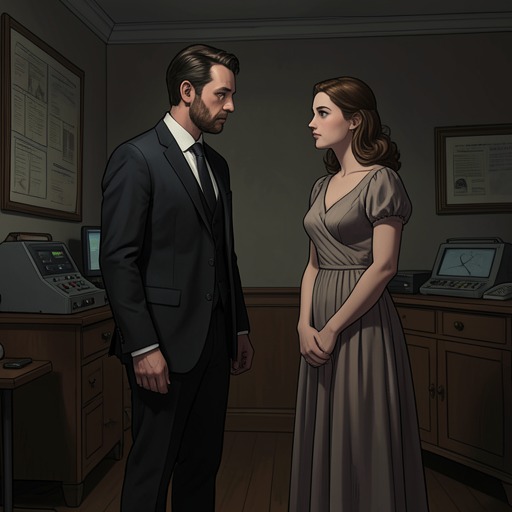
Daisy Jones & the SixKaren’s abortion, recalled during an account of The Six’s tour, is both a decision about whether to become a parent and a turning point in her relationship with Graham. Camila accompanies Karen to the clinic and supports her without asking her to adopt someone else’s idea of happiness. Graham, by contrast, experiences the pregnancy as the loss of a future he had imagined. The event’s immediate aftermath makes that difference impossible to set aside: Karen tells Graham what has happened, and their exchange leads toward the end of their relationship and their ability to share a band.
Setting and Support
The decision unfolds during a tour stop outside Chicago. Karen and the others are staying overnight at a hotel, and Camila has called ahead to arrange the clinic visit. Her practical role is joined by a steady personal presence: she walks Karen inside and sits beside her while Karen anxiously bounces her knee. Camila puts a hand on Karen’s leg, stopping the movement. The small gesture precedes a conversation in which Karen tries to determine whether she is making a mistake.
Camila does not answer that question for Karen. Instead, she prompts Karen to consider what she already knows. After thinking about Camila’s response, Karen says that she knows the decision is right for her. She also recognizes that she has been acting conflicted partly to reassure other people. Camila makes clear that Karen need not perform uncertainty to protect her feelings. The exchange establishes that support here means allowing Karen’s own judgment to stand, rather than persuading her toward a particular choice.
The Clinic Visit and Its Aftermath
When clinic staff call Karen’s name, Camila squeezes her hand and continues with her into the room. Karen had not asked her to come in and had not expected her to do so; Camila nevertheless stays beside her. While they wait through a pause in the procedure, Karen notices that Camila looks close to tears and asks whether she is sad. Camila acknowledges that she wishes Karen wanted children, because her own children make her happy, but distinguishes that personal wish from what Karen needs. She wants Karen to have the life that will make Karen happy. Karen begins to cry at being understood.
Afterward, Camila takes Karen back to the hotel and tells the others that Karen is unwell. Karen lies alone in her room and orders room service. She remembers the day as awful, while also holding to the knowledge that she had made the right decision. Those facts do not cancel each other out: certainty about the choice does not make her feel happy about its consequences. In the quiet of the hotel room, she understands herself as childless while Camila is out with her children, and finds a sense of order in that difference amid the disorder of the day.
Graham Learns What Happened
As the group prepares to leave the hotel and head toward Chicago, Karen sees Graham get into an elevator alone. She considers taking the stairs, then enters the elevator with him. When he asks whether she is all right, mentioning that Camila had said she was unwell, Karen tells him that she is no longer pregnant. The elevator doors open, but neither of them leaves or speaks. They ride back up and down before Graham presses the button for the second floor and gets off.
Graham’s separate recollection gives the silent ride an emotional aftermath. He walks repeatedly along a hotel hallway, stops at a window, and looks down at people moving below. He envies them because they are not in his position. His forehead leaves a greasy mark on the glass; when he tries to wipe it away, the window becomes cloudy, and repeated rubbing does not clear it. Rod eventually finds him. The smudge and the failed effort to remove it are concrete details in Graham’s account of grief that he feels unable to resolve.
Graham says that he understood why they could not have a baby, but felt alone in what he had lost and angry that he seemed to be the only one grieving. Karen’s account does not deny his grief; it shows that she had made a different decision about the future. When she later goes to his room, she believes there is nothing she can say that will repair the damage. Their exchange brings the conflict into focus: Karen feels Graham expects her to be someone she is not, while Graham feels she never loved him with the same intensity he brought to the relationship. Both later acknowledge that these perceptions held truth for them.
Consequences and Narrative Significance
The encounter does not end in an immediate reconciliation. Graham later says that he went to bed knowing he could not be in a band with Karen, and Karen likewise believes they could no longer be around each other day after day. Their separation follows not from a lack of love but from the collision between the future Graham wanted and the life Karen chose. Graham describes having loved her deeply, while also retaining a part of himself that cannot forgive her; Karen says that even speaking about him feels like touching a bruise. The event thus leaves affection and injury present at once, rather than resolving one into the other.
The recollection also establishes the contrast between Camila’s support and Graham’s response without making either reaction identical to the decision itself. Camila accompanies Karen, protects her privacy afterward, and accepts that Karen’s needs differ from her own. Graham experiences the outcome as a loss, and the couple’s different understandings make the relationship untenable. In the interview’s shifting accounts, Karen describes the choice and its immediate emotional texture, Camila defines friendship as staying beside someone through a difficult day, and Graham recalls his isolation. Together, their accounts show how the same event can be a settled decision for one person and a bereavement for another, with lasting consequences for both their private relationship and The Six.