The final concert at Chicago Stadium
Daisy Jones & the SixThe final concert at Chicago Stadium is the last performance of Daisy Jones & The Six, and a night when its carefully practiced show becomes an unintended farewell. A request from the crowd brings Daisy Jones and Billy Dunne together for Honeycomb, a song they had rarely performed on the tour. For three minutes, Daisy sings to the man she loves; then she sees Camila Dunne at the side of the stage, understands that Billy is not hers, and leaves. The song offers Billy encouragement and a glimpse of what he must give up, while the concert’s backstage aftermath makes the band’s other private ruptures impossible to contain.
A familiar show begins to come apart
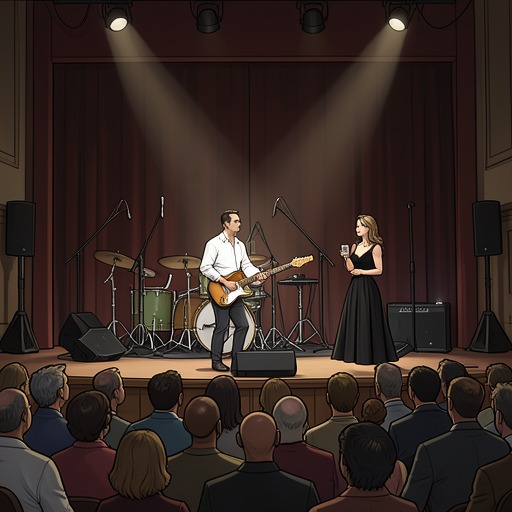
The concert initially follows a well-established routine. The lights rise, the band takes the stage, and Graham Dunne begins This Could Get Ugly as the audience responds. Billy recalls Camila standing behind the curtains with Julia on her hip; the twins are at the hotel with a babysitter. Camila and Julia wear earplugs, and Camila’s smile gives Billy, for a brief moment, the sense that things will be all right. This view from the stage’s edge gives the performance a domestic counterpoint: Billy’s family is present, not as part of the spectacle but as the life he is trying to protect.
The band proceeds through familiar material, including Young Stars, Chasing the Night, and Turn It Off, but Billy feels that something is going wrong. The unease is not his alone. Warren Rhodes notices that Karen Karen and Graham seem angry with each other, that Pete appears checked out, and that Eddie Loving is again complaining about Billy. Graham describes himself as present but not fully engaged; Karen wants to get through the performance and return to her hotel rather than remain onstage under Graham’s scrutiny. The concert’s polish therefore coexists with a band whose members are preoccupied with conflicts the audience cannot see.
A sign in the front row asks for Honeycomb. Requests for the song have followed the band throughout the tour, but Billy has usually ignored them because he does not want to sing it. He knows Daisy is proud of the song, however, and this time he asks the audience whether it wants to hear it. The response is so loud that Daisy accepts. The choice interrupts the expected set and brings back a song with a history between them; it is not simply another number in the show.
Honeycomb becomes a farewell
Billy moves to Daisy’s microphone, then immediately regrets standing so close. He senses that she does not want him beside her, but he stays because leaving would expose how strained the encounter is. Daisy, for her part, finds proximity difficult: she is close to someone she loves while knowing that he has chosen a life with Camila. Billy remembers Daisy in a white dress, with her hair tied back, hoop earrings, and bracelets. He wonders in retrospect whether he understood that he was losing her. His account does not settle exactly what he knew at the time; memory leaves the recognition tangled with the performance itself.
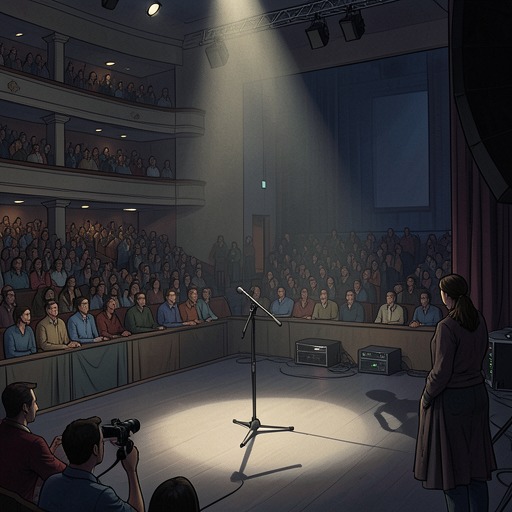
Once they begin singing, the crowd of twenty thousand recedes from Daisy’s attention. For the length of the song, she experiences herself as singing directly to Billy rather than performing as a member of the band. The intensity does not erase the circumstances around them. Near the end, she looks toward the side of the stage and sees Camila. That sight makes the boundary plain: Billy is Camila’s husband, and Daisy cannot treat their closeness as a promise that he will leave his family.
Daisy then sings the ending as Billy originally wrote it, including its imagined future of a shared life and the promise of being held until that future arrives. The choice carries two meanings at once. For Billy, Daisy’s return to his lyrics is an act of belief: at a moment when he doubts his capacity to continue on the path he has chosen, she sings as though he can succeed. Yet the reassurance hurts him too, because the future those lines describe is the future he has promised Camila, not one he can share with Daisy. The performance briefly gives each of them recognition from the other while making their separation more definite.
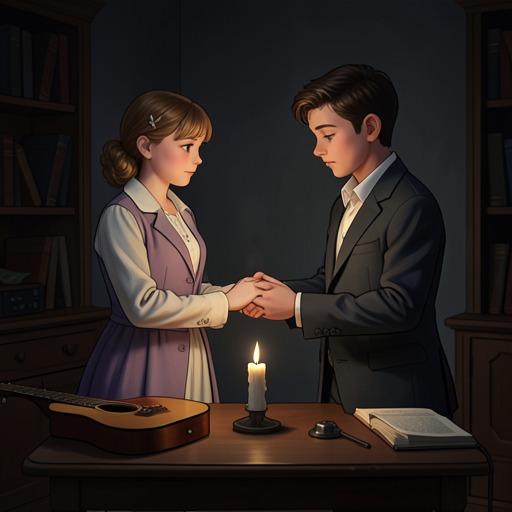
After they leave the stage, Billy cannot find words. Daisy gives him a smile that does not communicate happiness, then walks away. Billy realizes that he has been holding on to the possibility of Daisy, and struggles with the prospect of giving it up. Daisy sees him coming offstage but does not trust herself to speak; she waves goodbye and leaves instead. The sequence ends not with a declaration between them but with departure. The song allows their love to surface, while the choice Daisy makes after seeing Camila prevents that feeling from becoming a claim on Billy’s family.
The concert’s other fractures surface backstage
The emotional break between Daisy and Billy is only one part of the night’s unravelling. After the show, Karen accidentally bumps into Graham and apologizes. Graham responds with anger, accusing her of having much to answer for; he later acknowledges that he yelled and called her names. Karen recognizes that he is hurt but rejects the idea that his pain entitles him to direct his anger at her. Warren finds the two of them screaming backstage. Eddie intervenes before Karen can strike Graham, and Rod Reyes takes Karen to another room while someone holds Graham back. The scene turns the tensions noticed during the performance into open conflict and physical separation, without resolving the pain between them.
Billy and Graham also collide after the concert. Graham grabs Billy’s shirt and demands time to talk, invoking everything he has done for his brother. Billy removes Graham’s hand and tells him to go away; Graham does. Graham’s later reflection broadens the conflict beyond that moment: he regrets the amount of time spent with his brother and the decision to work with him. Their confrontation shows how the band’s professional partnership and sibling relationship have become difficult to disentangle, even as the final performance brings their shared work to an end.
The dispersal afterward is as telling as the concert. Karen returns to the hotel, shuts her door, and cries. Warren, Eddie, Pete, and Rod remain together and smoke; the others are nowhere to be found. The accounts offer no shared backstage reconciliation and no single explanation that would make the different conflicts equivalent. Instead, they record separate departures into rooms, silence, or company. The final concert gathers the band onstage one last time, but its aftermath leaves them scattered.
Significance of the final performance
Honeycomb’s return gives the night its central reversal. Billy had repeatedly refused the crowd’s requests, but on this occasion he invites the song, and the performance he initiates becomes a goodbye he did not intend to stage. Daisy’s decision to sing the original ending affirms Billy’s chosen future with Camila even as it registers what Daisy herself will lose. Billy receives the confidence he needs from the person he may have hoped to keep, but that confidence confirms the life he must continue without her.
The concert’s public form and private meaning remain in tension. The audience hears a requested song; the two singers experience a moment charged by their relationship; Camila’s presence on the side of the stage sets a limit that the performance cannot change. The band’s practiced ability to play familiar material cannot contain the conflicts visible afterward. As the last show, Chicago Stadium brings the group’s shared musical life to a close, but it does not offer a neat collective ending: Daisy leaves Billy, Karen and Graham remain at odds, and Billy and Graham part after an unresolved confrontation.