“pointing upward”
David Copperfield“Pointing upward” is the image through which David Copperfield finally describes Agnes Wickfield’s lasting place in his life: a source of guidance through sorrow and toward “something better.” First associated with her kindness in his schooldays, the image returns after loss as a measure of his gratitude, a way of understanding their bond, and, at the novel’s close, a hope that her presence will remain with him even as life ends.
From loss to the need for shelter
The phrase’s emotional ground is laid in David’s childhood experience of bereavement. When he learns that his mother has died, he feels himself “an orphan in the wide world.” His grief unfolds in bodily and domestic details: he cries until he sleeps, wakes and cries again, and imagines the house shut up and hushed. The memory of his father’s grave and his mother beneath a familiar tree makes loss part of the landscape of home. The later image of guidance answers, without erasing, that early vulnerability: it gives a name to the care and moral direction David has needed.
His attachment to Peggotty also shows how strongly he associates care with loyalty and shelter. When Betsey Trotwood speaks harshly of Peggotty’s marriage, David defends the woman who loved both him and his mother, recalling that she held his mother’s dying head. He says Peggotty’s home would have been his refuge if he had not feared that his humble station might bring trouble upon her. His appeal moves Betsey to acknowledge that the child is right to stand by those who have stood by him. The scene makes guidance inseparable from remembered acts of fidelity: the people who helped David become the measure by which he understands goodness.
Compassion, forgiveness, and the river
The novel also associates moral direction with the capacity to interrupt despair and make room for another person’s suffering. When Daniel Peggotty is driven to seek Emily Peggotty in the immediate anguish of her disappearance, Mrs. Gummidge asks him to pause, remember how he had sheltered her when she was a poor widow, and forgive her for having been a burden. Recalling the household’s history softens his grief; he becomes passive and weeps, and David’s own urge to condemn Steerforth gives way to a better feeling. The episode presents compassion not as a general sentiment but as an action rooted in remembered shelter and offered at a moment when grief threatens to overwhelm judgment.
When Daniel Peggotty appeals to Mrs. Steerforth for Emily’s sake, he asks her to imagine losing a child and insists that, if Emily can be saved from disgrace, her family will not shame her. They will accept separation and wait for a time when all stand equal before God. His plea places forgiveness above social standing, even as Mrs. Steerforth refuses because she believes such a marriage would ruin her son’s prospects. The appeal’s moral force lies in the contrast between Daniel’s willingness to relinquish contact with Emily and the protection of reputation and career that governs the refusal.
The image of upward guidance gains a darker counterpart in Martha’s fixation on the river. She sees it as the natural company of someone like herself: flowing from the country through polluted streets toward a troubled sea, as though it traced the course of her life. She says it haunts her and that she feels she must go with it. Yet when she speaks of Emily, her despair includes remorse and affection: Emily had always treated her kindly, and Martha grieves that others might think she corrupted her. She wishes she could have restored Emily’s good name. These scenes place the novel’s images of direction beside one another: the river draws Martha toward a despairing vision of her fate, while the care extended by others keeps open the possibility of rescue, forgiveness, and return.
Agnes as guide and enduring presence
After Dora’s death, David tells Agnes that she has been to him as a sister, “ever pointing upward,” leading him toward better and higher things. His language makes the image explicitly relational: Agnes’s importance lies not only in his affection for her but in the direction he believes she has given his life. He says he will continue to look to and love her through whatever changes or new ties may come, and calls her his solace and resource. The declaration is also a retrospective recognition of a bond he has long understood through gratitude and trust.
David’s inward response complicates the confidence of that declaration. Riding home alone, with the wind passing like a restless memory, he fears that Agnes is not happy; he acknowledges that he is not happy either. He nevertheless believes he has set the seal upon the past, and imagines Agnes pointing toward the sky, where he might one day love her in a way unknown on earth. The upward image therefore expresses both devotion and renunciation: it gives spiritual shape to an affection David does not then claim as a present marriage.
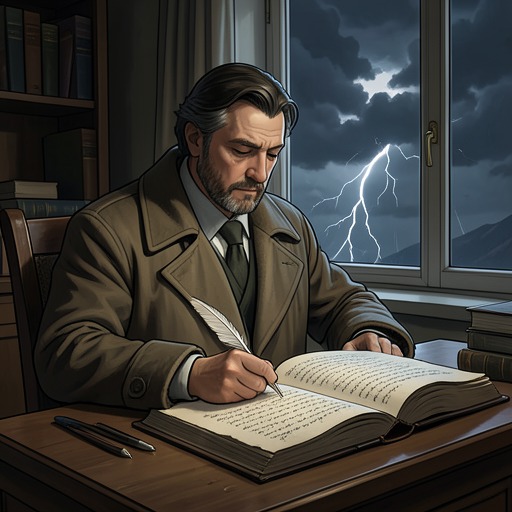
At the novel’s close, the image returns in David’s writing. His lamp burns low as he writes far into the night, while Agnes’s dear presence seems to accompany him. He hopes that her face will be near when he closes his life, and that, as present realities fade, he will still find her “pointing upward.” The phrase gathers the novel’s earlier acts of care into its final vision: guidance is at once a remembered human bond, a direction toward a better life, and David’s imagined consolation at the threshold of death.