Clara Copperfield's death and funeral
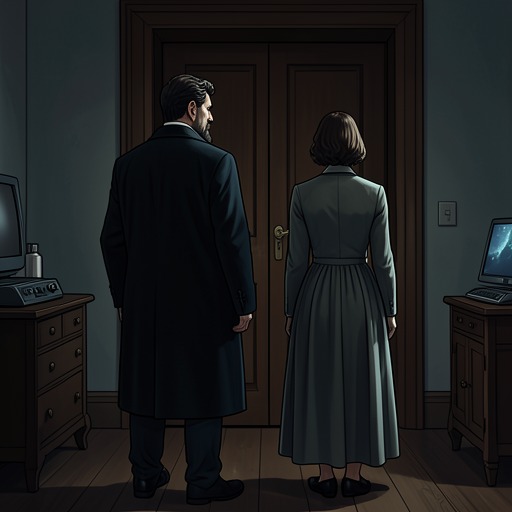
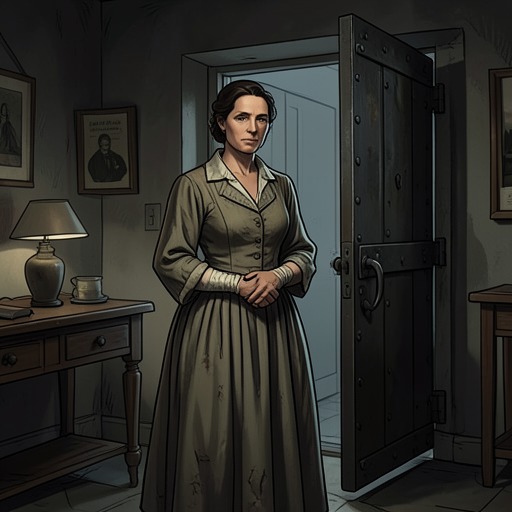
David CopperfieldClara Copperfield’s death and funeral are the first great bereavement of David Copperfield’s childhood, abruptly turning his sense of home into a place of absence. The event unfolds through three connected stages: the news delivered at school, the funeral that returns David to the family house and churchyard, and Peggotty’s later account of Clara’s final hours. David’s retrospective narration gives the loss both the immediacy of a child’s shock and the shaping power of a memory that will preserve his mother as she was in his earliest years.
News and Recognition
Near the end of a school vacation, Mrs. Creakle asks David whether his family had been well when he left home, then specifically asks about his mother. The pauses and questions prepare him for news he does not yet understand. When Mrs. Creakle tells him that Clara is dangerously ill, David trembles without knowing why. Her declaration that Clara is dead completes the recognition: before anyone can explain further, he has broken into a desolate cry and feels himself an orphan in the world.
Mrs. Creakle keeps him with her throughout the day, sometimes leaving him alone. David cries until he sleeps, wakes and cries again, and finds that when the tears stop, grief settles into a heavy, unrelieved pain. His thoughts move around the loss rather than steadily confronting it. He imagines the house shut and hushed, remembers his father’s grave by their home, and pictures his mother beneath the familiar tree. He also knows he is going home for the funeral, and wonders what the loss will mean when he reaches the place associated with his mother. The scene presents bereavement as a child’s dawning knowledge: the fact is stated plainly, but its full force arrives through images of home and the dead.
The Family’s Loss
At the home of Mr. Omer, David asks after his little brother. Mr. Omer confirms that the baby is dead, too. The news reopens David’s grief; he leaves his scarcely tasted breakfast and rests his head at another table. A young worker gently moves his hair from his eyes, while the practical work of mourning continues around him. The small domestic details set the child’s private sorrow against the ordinary activity of others, without making that activity any less kind.
In the days before the burial, David sees little of Clara Peggotty, who remains close to the room where Clara and the baby lie. Peggotty nevertheless comes each night and sits by David’s bed as he falls asleep. A day or two before the burial, she takes him into the room. The bed is covered in white, and the cleanliness and stillness of the room impress themselves on him. When Peggotty would gently turn back the covering, David cries out and holds her hand. His refusal makes the body’s presence almost impossible to face; the memory retains the room’s solemn stillness rather than a description of Clara’s face.
The Funeral at the Churchyard
The funeral brings together a defined procession of people and places. Mr. Murdstone, a neighbour, Mr. Chillip, and David leave the house as the bearers carry the coffin through the garden, down the path, past the elms and out through the gate to the churchyard. David knows the ground from earlier visits, when he had heard birds singing there on summer mornings. Now the day seems altered, its light sadder, and the solemn hush of the house accompanies the mourners to the grave.
At the graveside, the clergyman’s words sound both remote in the open air and distinct to David. He hears sobbing and sees Clara Peggotty standing apart among the onlookers, the person he loves most. Familiar village faces are present, including people who had known Clara since her youthful arrival in the village. David registers them but says that grief occupies him completely. When the service is over and the earth has been filled in, the unchanged house comes into view. Its prettiness and familiarity intensify his sorrow because it remains linked in his mind with the young mother who is gone. Mr. Chillip leads him home gently and gives him water before allowing him to go upstairs.
Peggotty’s Account and David’s Memory
Afterward, Clara Peggotty tells David about Clara’s last hours. Clara had asked that, if the baby died, he be laid in her arms and buried with her; he lived only one day longer, and her wish was carried out. She also wanted David brought to their resting place and told that she had blessed him many times. These requests make the funeral’s joined burials more than a detail of ceremony: they express Clara’s wish to keep her children close even in death.
At daybreak, Clara spoke tenderly of Mr. Copperfield’s kindness and of the strength of a loving heart. As she weakened, she asked Peggotty to bring her nearer and support her head on Peggotty’s arm, wanting Peggotty’s face close because it seemed to be going far away. She died there. Peggotty’s narration gives the death an intimate witness that David, absent from the bedside, could not have had himself.
David explains that, from the moment he learned of the death, his image of Clara as she had been in her later years vanished. Peggotty’s account did not restore that later version. Instead, it rooted the earlier image more firmly: Clara as the young mother of his first impressions, winding her bright curls around her finger and dancing with him at twilight. In his memory, the mother in the grave becomes the mother of his infancy, while the child once hushed in her arms is remembered as himself. The funeral therefore closes one part of his childhood and fixes the maternal image that will endure through the loss.