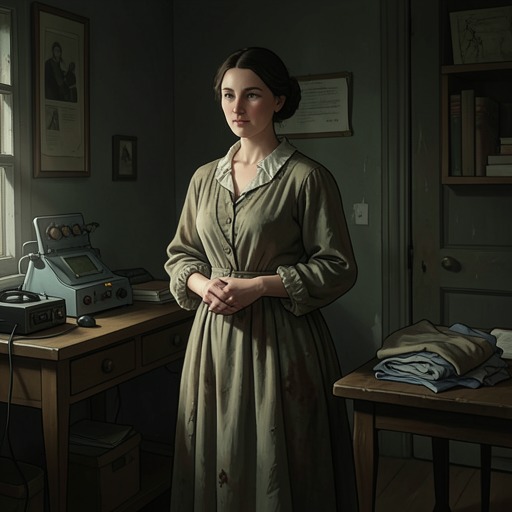
Miss Trotwood's cottage
David CopperfieldMiss Trotwood's cottage is the Dover home where David Copperfield’s flight from mistreatment ends and his life under Betsey Trotwood’s protection begins. Its neat garden and cheerful windows offer a striking contrast to the insecurity and coercion from which he has escaped; more decisively, it becomes the setting for Betsey’s refusal to surrender him to Edward Murdstone.
Setting and Approach
After reaching Dover, David follows a young woman who tells him she can show him where Betsey Trotwood lives. They soon arrive at a neat cottage with cheerful bow windows and a small, square gravelled garden, its flowers carefully tended. The contrast between this ordered, welcoming exterior and David’s condition is immediate: he waits outside the gate in torn, dirt-stained clothes, with ruined shoes, an uncombed head, and skin darkened by exposure to sun and air.
The cottage’s interior is glimpsed before David meets his aunt. Through a partly drawn muslin curtain, he can make out a large green screen or fan fastened to the windowsill, a small table, and a great chair. These ordinary domestic objects suggest that Betsey may be seated inside, but the view leaves David outside, anxiously waiting to make his first impression. The young woman hurries into the house and leaves him at the gate, making his entrance a vulnerable crossing from the road into an unfamiliar household.
David’s Arrival and Reception
At the threshold, David identifies himself as Betsey’s nephew and tells her what has brought him there. He explains that since his mother died he has been slighted, taught nothing, and put to work at labor unsuited to him; he ran away in the hope of reaching his aunt. He has been robbed at the outset of his journey, walked the whole way, and not slept in a bed since leaving. As he gestures toward his ragged state, his effort to hold himself together gives way to a burst of crying.
Betsey first sits down on the gravel, staring at him; once he begins to cry, she hurries to take him into the parlour. There she unlocks a tall press and gives him several restoratives, apparently at random: he tastes aniseed water, anchovy sauce, and salad dressing. When he remains too hysterical to control his sobs, she puts him on the sofa, places a shawl under his head and her handkerchief beneath his feet to protect the cover, and sits behind the green screen. Her repeated exclamations of alarm register her shock, while the practical care she gives him turns the parlour from a place of intimidating first impressions into immediate shelter.
Refuge and Custody
The cottage’s importance becomes clear when Edward Murdstone comes to reclaim David. Betsey tells him he may leave and that she will take her chance on the boy; she rejects his account of David and refuses to hand him over. Her response reverses the powerlessness David has experienced elsewhere: rather than accepting Murdstone’s authority, she undertakes responsibility for the child and openly challenges the man who had controlled his home life.
That contrast reaches back to the household David left. After marrying his mother, Murdstone and his sister, Miss Murdstone, took control of the keys and domestic arrangements, while David’s mother’s protests were checked by Murdstone’s doctrine of firmness. His lessons at home became a daily burden under their supervision, and the possibility of boarding school was raised at their initiative. Eventually, at ten years old, David was sent to work in the dirty, rat-infested warehouse of Murdstone and Grinby, washing and examining bottles and helping prepare them for shipment. These experiences explain why his account at the cottage is not merely an appeal for a visit: he has been left to support himself and needs protection from the authority he has escaped.
Narrative Significance
The cottage marks a turning point because Betsey’s welcome is proved through action rather than sentiment alone. David arrives physically depleted and ashamed of his appearance; within the house he is given care, and when Murdstone appears, he is defended. The movement from the garden gate to the parlour, and from the parlour to Betsey’s explicit refusal to return him, charts his passage from exposure toward security.
The cottage is therefore more than a picturesque refuge. Its tended garden and domestic interior stand against the earlier home in which David’s mother’s authority was displaced and the child himself was eventually sent into labor. Betsey does not erase what happened to him, but she changes what can happen next: at her house, an adult believes his suffering enough to take his side and assume responsibility for his future.