Poverty and class hierarchy
David CopperfieldPoverty and class hierarchy in David Copperfield are not confined to the contrast between rich and poor: they govern who may command a household, whose education is protected, whose labor is used, and whose needs institutions consider worth meeting. David’s changing fortunes expose the vulnerability of a child without economic power, while episodes involving Samuel Mell, Mr. Micawber, Clara Peggotty, and Mr. Barkis show how status and money shape both humiliation and obligation. The novel’s social criticism is sharpest when private hardship is set beside the resources spent on those already protected by authority.
Domestic authority and education
After Edward Murdstone marries Clara Copperfield, his sister Miss Murdstone presents her arrival as a way to relieve Clara of household work. She asks for Clara’s keys and thereafter keeps them herself, even placing them under her pillow at night. The keys make authority tangible: Miss Murdstone takes control of household arrangements, while Clara’s protest that she should have been consulted is met by Edward Murdstone’s stern rebuke. The scene shows power being exercised through apparently practical domestic management, not merely through open confrontation.
That imbalance continues in the education imposed on David. Mr. and Miss Murdstone originate talk of sending him to boarding school, while lessons at home become an occasion for teaching Clara their doctrine of firmness. David remembers that learning with his mother had once seemed easy and companionable; after the Murdstones’ intervention, the lessons become long, difficult, often unintelligible, and a daily misery. The contrast links the loss of affection at home to the loss of educational possibility: the child’s abilities remain, but the adults who control his circumstances turn learning into discipline rather than support.
At Salem House, the school’s class relations are visible even in the boys’ accounts of its everyday economy. They report that Samuel Mell and Mr. Sharp are poorly paid, that Mr. Sharp is expected to accept cold meat when hot meat is served at Mr. Creakle’s table, and that a coal merchant’s son attends as a kind of offset against the school’s coal bill. The boys also complain that the table beer and pudding are poor value for their parents’ money. These reports are schoolroom gossip, not a formal account of the school’s finances, but their details make education look like a business in which adult workers, paying families, and pupils occupy unequal positions.
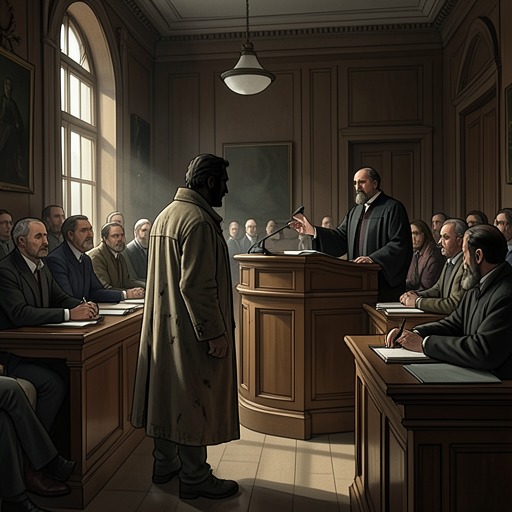
The episode involving Samuel Mell makes the hierarchy more personal. J. Steerforth enjoys a position of favoritism and can encourage younger pupils to outrage the teacher without fearing the punishment Mr. Creakle uses elsewhere. When Samuel Mell challenges him, Steerforth turns the teacher’s poverty into an insult, calling attention to his dependence and to his mother’s residence in an almshouse. Samuel Mell confirms the underlying fact rather than hiding it. Mr. Creakle then requires him to answer publicly, and the confrontation ends with Samuel Mell dismissed. David, whom Samuel Mell gently pats on the shoulder while Steerforth exposes his family’s poverty, feels shame and remorse: economic vulnerability becomes a weapon wielded by someone whose privilege protects him from the schoolmaster’s authority.
Child labor and the experience of poverty
At ten years old, after his mother’s death, David is sent to work for Murdstone and Grinby. The retrospective narrator stresses the abandonment as well as the employment: a perceptive and capable child is put to work, and no one intervenes on his behalf. The warehouse in Blackfriars is a decaying waterside building, dirty and overrun with rats. David and a few other boys wash and inspect empty bottles, paste labels on full ones, fit corks, seal bottles, and pack them. These are not occasional chores but the work that fills his days.
The labor’s deepest cost is the future David had imagined for himself. He compares the warehouse boys with his former school companions, including J. Steerforth and Thomas Traddles, and feels that his hope of becoming a learned and distinguished man has been crushed. While washing bottles, he weeps into the water. The scene makes class inequality a loss of time and possibility: David is not shown lacking ability, but deprived of the conditions in which that ability might develop.
His small weekly allowance does not provide meaningful independence. At the Micawbers’ home, he buys his own penny loaf and milk for breakfast and keeps another loaf and a little cheese for supper. The six or seven shillings he has must last the week, although he works all day. He receives no advice, encouragement, or assistance, and an impulsive purchase of stale pastry can leave him without dinner. His meals vary according to what he can afford, from inexpensive pudding to bread and cheese, beer, or a small portion of meat. The exactness of these routines shows poverty as daily calculation, with a child required to manage an adult burden while still being poorly equipped to do so.
Debt, credit, and mutual obligation
The Micawbers’ financial distress makes debt both a household crisis and a relationship among people. When Mrs. Micawber says there is almost nothing to eat, David offers the two or three shillings he has left from his week’s money. She refuses the cash but asks him to help by selling household possessions. He carries Mr. Micawber’s books to a bookstall and also becomes familiar with the pawnbroker’s shop. The family’s need is severe, yet the episode is not presented as a simple transfer from a secure adult to a helpless child: David’s small wages become part of the household’s survival, and Mrs. Micawber responds to his offer with affection and a request for practical help.
When Mr. Micawber is arrested for debt and taken to King’s Bench Prison, the change in his circumstances does not extinguish their friendship. David visits him, shares a meal in his room, and hears his rule for living: a person whose income is twenty pounds a year can be happy by spending slightly less than that sum, but miserable by spending slightly more. Mr. Micawber then borrows a shilling from David for porter and gives him a written order for repayment by Mrs. Micawber. The scene holds comic ceremony and real deprivation together: financial advice is followed immediately by another small borrowing, while the child visitor and the imprisoned debtor share both food and trust.
Money later changes meaning in the case of Mr. Barkis. After his death, David discovers that the man who had guarded his savings for years possessed nearly three thousand pounds. Mr. Barkis leaves the interest on one thousand pounds to Daniel Peggotty for life; after Daniel Peggotty’s death, that principal is to be divided among Clara Peggotty, Emily Peggotty, and David, or whoever survives. The rest of the estate goes to Clara Peggotty, who is also named residuary legatee and sole executrix. David reads the will aloud and helps Clara Peggotty arrange the affairs that follow. The bequest provides material security, but it also makes the handling of property an act of care and practical responsibility within a family network.
Mr. Micawber’s departure offers a further measure of the moral obligations attached to credit. Before leaving London, he arranges to repay Thomas Traddles for two bills of exchange signed to accommodate him. He calculates the combined debt as forty-one pounds, ten shillings, and elevenpence halfpenny, checks the amount, and gives Thomas Traddles an IOU. His insistence on acknowledging the liability distinguishes a debt that remains unpaid from one he is willing to pretend does not exist. Across these episodes, money can expose dependence, but lending, repayment, and inheritance also test whether people recognize obligations to one another.
Institutional priorities and narrative significance
The later visit by David and Thomas Traddles to the prison where Mr. Creakle holds authority extends the novel’s attention from private poverty to public priorities. The building is immense and solid, and its construction has consumed substantial expense. As they approach, David reflects that the country would have protested if half that sum had been proposed for an industrial school for young people or a refuge for deserving older people. At dinner time, prisoners’ meals are being set out separately for delivery to their cells, with clockwork regularity. David contrasts their plentiful, high-quality food with the meals of paupers, soldiers, sailors, laborers, and the broader working population, most of whom, he observes, do not eat so well.
The contrast does not erase the fact of imprisonment or claim that every poor person shares the same experience. Instead, it gives material form to a question that runs through the novel: which forms of need attract organized provision, and which are left to individual endurance? The child laborer’s hunger, Samuel Mell’s dependence, and the Micawbers’ debt have no comparable institutional comfort in the episodes presented. By placing them alongside the prison’s costly architecture and carefully distributed dinners, the narrative turns social hierarchy into a visible allocation of resources.
At the same time, the book does not reduce every relationship to rank or every hardship to an impersonal system. David’s help to the Micawbers, Mr. Barkis’s bequest, and the careful administration of Clara Peggotty’s inheritance show that gifts and obligations can alter individual lives. Yet such acts arrive within a world where a child can be sent to a warehouse, poverty can silence a teacher, and public money can shelter prisoners more lavishly than many working people eat. Poverty and class hierarchy therefore shape both the obstacles in David’s life and the standard by which the novel judges households, schools, commerce, and public institutions.