The Great Storm at Yarmouth
David CopperfieldThe Great Storm at Yarmouth is the novel’s climactic maritime disaster, in which escalating weather turns a familiar working coast into a landscape of shipwreck and loss. David Copperfield travels toward Yarmouth to deliver a letter from Emily to Daniel Peggotty; as he arrives, the storm has already battered the inland roads, flooded the low country, and gathered the town’s inhabitants anxiously toward the sea. There he witnesses Ham Peggotty risk his life trying to reach a wreck, while the ship and its crew are overwhelmed by the waves.
Coastal Setting and Warning
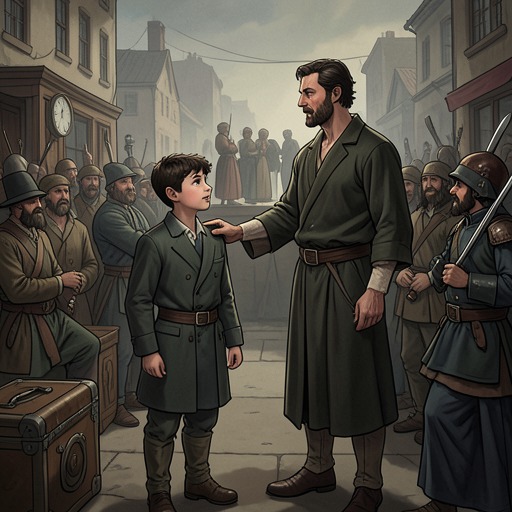
Yarmouth’s relationship with the sea is established well before the storm. On David’s childhood visit, the low, flat coast first strikes him as an unlikely landscape, with town and tide seeming almost mixed together. The impression changes as he enters the streets: fish, pitch, oakum, and tar mark a busy place shaped by sailors and maritime trades. His route with Ham Peggotty passes gasworks, rope-walks, boatbuilders, shipwrights, shipbreakers, caulkers, and riggers. These details give the later disaster a material setting: Yarmouth is not simply a seaside backdrop but a community organized around boats, coastal work, and the hazards of the water.
The storm also arrives against an earlier account of local seafaring. J. Steerforth had told David that he had bought a clipper near Yarmouth and that Daniel Peggotty would be its master in his absence. That earlier episode places a boat within the novel’s network of work, generosity, and local connection; the storm later makes the sea’s capacity for destruction impossible to separate from those ordinary uses. The evidence does not identify the wrecked vessel as that clipper, but the contrast between a boat entrusted to Daniel and ships at the mercy of the storm sharpens the danger surrounding the community.
The Journey Into the Storm
David sets out from London at night, restless and intent on carrying Emily’s letter to Daniel before the ship sails. The mail coachman remarks that the sky promises trouble at sea. Above the road, clouds heap and tangle across the darkening sky; the moon appears to plunge through them, while the wind rises with an extraordinary sound. As the night advances, the coach struggles to face the gusts. The leaders turn around or stop, the passengers fear the vehicle may be blown over, and driving rain forces them to take shelter wherever trees or walls offer some protection.
By daybreak the wind is stronger still. The coach reaches Ipswich late, having fought its way forward from a point ten miles outside London. People in the market-place describe damage from the night: lead has been torn from a church tower and thrown into a street, while trees lie uprooted and ricks are scattered across fields and roads. The reports make clear that the storm is not confined to the open coast. Yet, as the coach presses nearer the sea, the wind grows more terrifying. Salt spray reaches the travelers before the shore comes into view, and water covers miles of the flat country around Yarmouth, with waves breaking against every bank and puddle.
Yarmouth Under the Weather
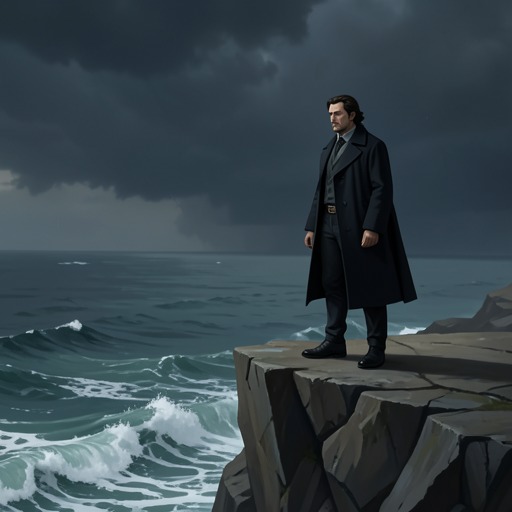
When David reaches Yarmouth, the town’s people come out to watch the mail coach that has made it through the night. David struggles down streets strewn with sand, seaweed, and flying sea-foam, clinging to people at exposed corners and wary of falling slates and tiles. Near the beach, boatmen and townspeople shelter behind buildings; those who venture out to look toward the sea can be blown off course as they try to return.
The danger is personal and communal. Women fear for husbands away in herring or oyster boats, which may have foundered before reaching safety. Old sailors watch the water and sky, shipowners look on in distress, and children huddle together while even stout mariners survey the sea from cover. At the inn, David hears that two colliers have gone down with all hands and that other ships are struggling to keep off shore. The news intensifies his unease about Ham, who is away at Lowestoft on urgent ship-repair work. David fears Ham may try to return by sea and considers going to Lowestoft to prevent it. The storm’s force therefore registers not only in the spectacle of waves but in the uncertain fate of workers whose skills and livelihoods bring them onto the water.
The Wreck and Ham’s Rescue Attempt
When the wreck is sighted, the sea has grown still more violent through the added agitation of the night. Breakers rise over and behind one another in seemingly endless ranks. In the confusion, David initially sees only foaming waves. A boatman points toward the left, where a ship appears close inshore, rolling violently with one mast broken short above the deck and its sails and rigging tangled over the side. Men aboard are using axes to cut away part of the wreck. Among them, David notices a conspicuous figure with long curling hair. A wave sweeps over the vessel, carrying men and debris into the boiling water; after the wreck is seen again, a red cap on the man clinging to it revives David’s recognition of a once-dear friend, identifying the peril as bound up with his broken friendship with J. Steerforth.
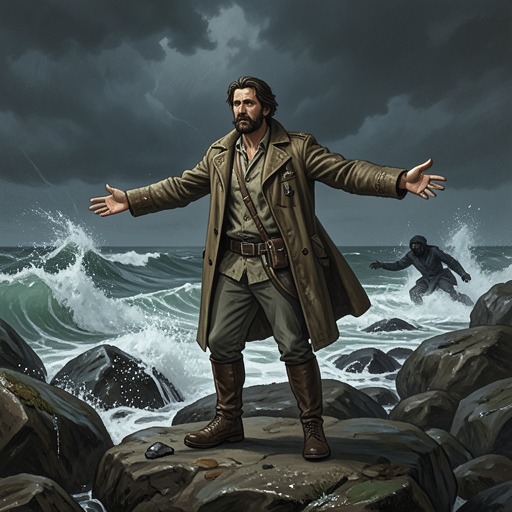
Ham stands alone watching the sea while other men prepare a rope around his body. He waits for a great wave to recede, glances back at those holding the line, and then plunges into the water. The men haul him back to shore. Though blood is visible on his face, he appears to give directions to be freed for another attempt. He again fights toward the wreck, rising and falling with the waves, until he comes close enough that one more stroke might bring him to it. A vast wave surges from beyond the ship; Ham seems to leap toward it, and the ship disappears. The scene ends not in a successful rescue but in the sudden erasure of the vessel and the destruction of Ham’s attempt.
Narrative Significance
The storm converts the sea from an element of local work and familiar travel into an overwhelming force that human effort cannot master. David’s journey, initially undertaken as an act of kindness toward Daniel and Emily, places him among a town waiting for news of its sailors and finally before the wreck itself. The movement from coach-road damage to flooded countryside, exposed streets, and the breaking ship enlarges the disaster step by step, while the townspeople’s shared vigil makes its consequences communal rather than private.
Ham’s repeated efforts give the climax its moral focus. He risks himself to reach the endangered man, persisting even after being pulled back injured; the storm makes his courage visible but offers no assurance that courage can prevail. David’s recognition of Steerforth on the wreck brings personal betrayal into the same scene as public catastrophe. In the closing image, the ship is gone, and the sea has overwhelmed both the vessel and the possibility of Ham reaching the man he sought to save.