The Yarmouth storm and shipwreck
David CopperfieldThe Yarmouth storm and shipwreck brings the novel’s maritime dangers into a single fatal scene: Ham Peggotty enters the storm to save a stranger, dies in the attempt, and is followed in death by the stranger he sought to reach, J. Steerforth. David Copperfield witnesses both outcomes. The wreck thus becomes not only a coastal disaster but the convergence of Ham’s enduring grief over Emily Peggotty and David’s broken friendship with Steerforth.
Yarmouth and the events before the storm
Yarmouth has been part of David’s story since childhood. On his first visit with Peggotty, he approached through a working landscape of gasworks, rope-walks, boatbuilders, shipwrights, shipbreakers, caulkers, riggers, and smiths before reaching the low coastal ground. The town’s daily life is closely bound to boats and the sea; the storm’s danger falls on a community whose work and homes are already situated within that maritime world.
Years later, J. Steerforth tells David that he has bought a clipper and arranged for Mr. Peggotty to command it in his absence. The gesture connects Steerforth to the Yarmouth family and its seafaring life, but it does not undo the harm he has caused. After Emily Peggotty’s flight, Mr. Peggotty searches for her, while the family faces the shame others attach to her departure. When he pleads with Steerforth’s mother, he insists that the family would rather lose sight of Emily than add to her disgrace. That insistence on love without rejection stands in sharp contrast to the rupture behind the later wreck.
Ham’s response to the disaster carries the memory of Emily’s flight. As David sees Ham arrive on the beach, he recognizes in his expression the same fixed determination he remembers from the morning after she left. Earlier, Mrs. Gummidge had urged Mr. Peggotty not to begin searching while overcome by grief, recalling the shelter he had given her and the children. These scenes establish the family’s history of loss and mutual care; the storm tests that care in a new, immediate crisis.
The wreck and Ham’s attempt
A report reaches David that a schooner from Spain or Portugal, carrying fruit and wine, is close to breaking apart. He hurries with the crowd to the beach. Although the wind seems to have eased somewhat, the sea is more dangerous than before: successive breakers rise over one another, and the noise and confusion make it difficult to see the wreck or hear what is happening.
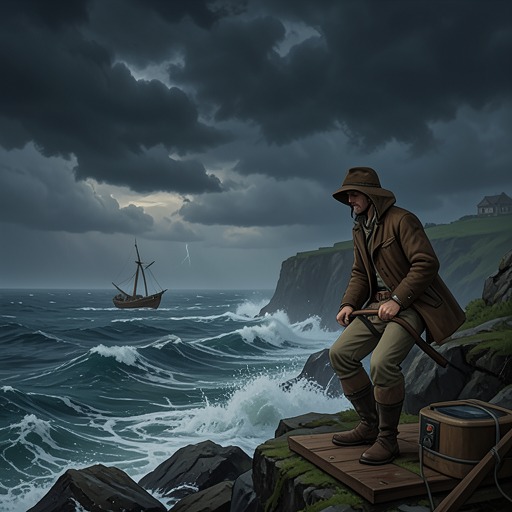
A boatman points out the vessel. One mast has broken and fallen against the ship, tangled with sail and rigging. People aboard try to cut the wreckage away, but a wave sweeps across the deck and carries men and pieces of the ship into the sea. Four men are then seen clinging to the remaining mast. The wreck rolls repeatedly, and its bell sounds as the vessel turns in the water. Two of the men disappear. On shore, people can offer little practical help: the lifeboat had already gone out and failed to reach the ship, while attempting to carry a rope through the sea is considered too dangerous.
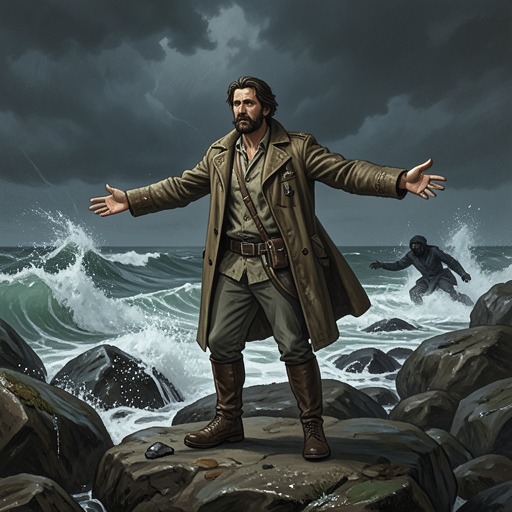
Ham pushes through the crowd. David recognizes the peril in his determination and tries to restrain him, asking the sailors not to let him go. Ham nevertheless prepares for the rescue with a rope secured around him and other men holding its line from shore. He waits for a retreating wave, enters the water, and is hauled back. Though hurt, he makes another attempt, swimming toward the wreck as the sea repeatedly carries him away from it. The effort requires both Ham’s knowledge of the water and the support of the men managing the rope, but the conditions overwhelm them. Just as he nears the ship, a large wave passes over it and the vessel disappears.
Deaths and recognition
The men on shore haul Ham back. He is dead, and the attempts to revive him do not succeed. David remains beside him, while the crowd’s effort to save the wreck’s survivors has ended in the loss of the rescuer as well. The scene makes the cost of Ham’s decision plain without separating it from the loyalty and grief that have shaped his actions.
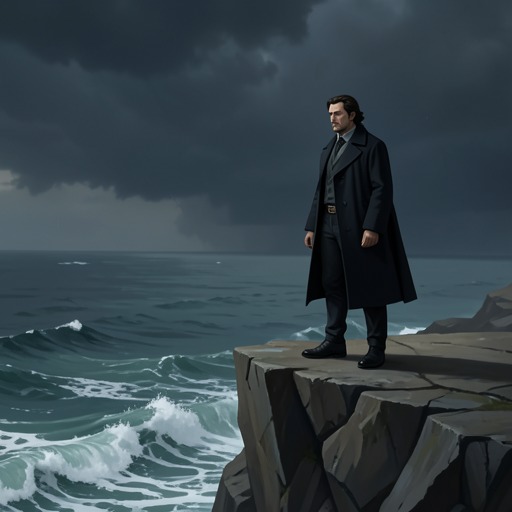
A fisherman who has known David since childhood leads him to another part of the shore. There, near the place where David and Emily once searched for shells and among the remains of the family’s former home, lies the body of the last man seen on the mast. It is J. Steerforth. The location identifies the wreck’s survivor and brings the sea’s disaster back to the family whose home he wronged. The remains of the boat-house beside him make the recognition an especially stark reversal: the man who had been welcomed into the Peggotty circle is found amid the ruins left by his betrayal of it.
Aftermath and narrative significance
The storm produces two connected deaths but not a reconciliation. Ham’s attempt to rescue the stranger does not erase what happened to Emily, and Steerforth’s death does not repair his friendship with David. Instead, the disaster forces David to confront both the friend he had lost through Steerforth’s actions and the man Ham had become in the aftermath of Emily’s departure. David recalls Steerforth’s request to be remembered at his best, but the sight on the shore cannot undo the betrayal or the consequences it set in motion.
As an event in David’s retrospective account, the shipwreck joins public spectacle to private recognition. The crowd watches a vessel break apart, yet David’s knowledge of the people involved changes what the wreck means: Ham is not simply a volunteer lost in a storm, and the final survivor is not an anonymous sailor. The sequence moves from failed rescue efforts, through Ham’s repeated attempts, to the discovery of Steerforth, binding maritime risk to the novel’s larger account of home, loyalty, disgrace, and bereavement.